
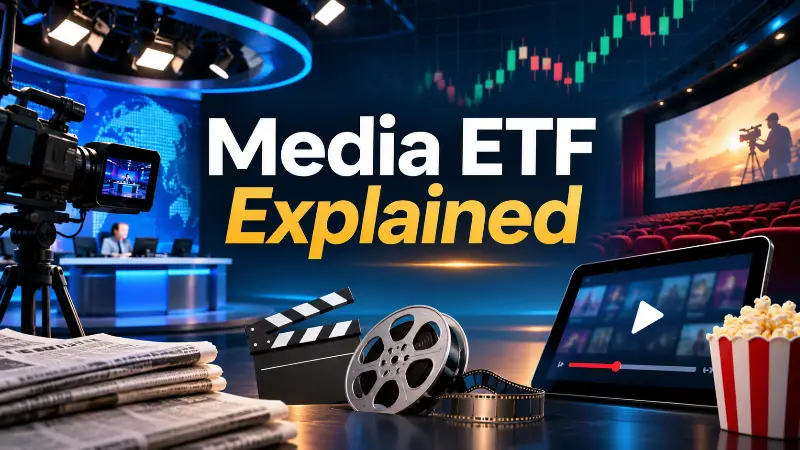
The media and entertainment industry is undergoing a significant transformation. Traditional television networks, newspapers and film studios now compete with streaming platforms, digital publishers, gaming companies and online advertising businesses. As consumer attention shifts towards digital platforms, investors are increasingly looking at the media sector as a potential long-term investment opportunity.
One way to gain exposure to this industry is through a Media Exchange-Traded Fund (ETF). Instead of purchasing shares of individual broadcasting, entertainment or digital media companies, investors can use a single investment product to access a basket of businesses operating across the media ecosystem.
What Is a Media ETF?
A Media ETF is an exchange-traded fund that invests primarily in companies involved in the media, entertainment, broadcasting, publishing, advertising and digital content industries. Its objective is to provide investors with diversified exposure to businesses that generate revenue from producing, distributing or monetising content.
Depending on its investment strategy, a Media ETF may track a dedicated media industry index or follow an actively managed portfolio of media-related companies.
Unlike buying individual media stocks, an ETF spreads investments across multiple businesses. This reduces dependence on the performance of a single company, although investors remain exposed to the overall risks of the sector.
How Does a Media ETF Work?
A Media ETF collects money from investors and uses it to purchase shares of companies operating within its investment universe. Investors purchase ETF units through a stock exchange, just as they would purchase ordinary shares.
Most index-based Media ETFs follow a benchmark that determines which companies qualify for inclusion and how much weight each company receives. The portfolio is periodically reviewed and rebalanced to reflect changes in the underlying index.
The ETF’s market price changes throughout the trading session according to demand, supply and the value of its underlying investments. Its Net Asset Value (NAV) represents the per-unit value of the fund’s assets after deducting liabilities.
Also Read: Liquid ETF Explained: How Liquid ETFs Work in India, Returns, Risks and Who Should Buy Them
Investors can potentially benefit from rising share prices of constituent companies and distributions, where applicable.
What Companies Does a Media ETF Hold?
The holdings depend on the fund’s benchmark and investment mandate. A typical Media ETF may include companies from several segments of the entertainment and communications industry.
| Industry segment | Business examples |
|---|---|
| Broadcasting | Television networks and broadcasters |
| Streaming | Video and digital entertainment platforms |
| Film and entertainment | Movie studios and production companies |
| Publishing | Newspapers, magazines and digital publishers |
| Advertising | Advertising agencies and marketing businesses |
| Gaming | Video game publishers and entertainment platforms |
Some funds may also hold companies with exposure to telecommunications, internet services and digital content distribution.
International media ETFs can provide exposure to established global entertainment and streaming businesses, while region-specific funds may concentrate on domestic broadcasting and entertainment companies.

Also Read: Liquid ETF Explained: How Liquid ETFs Work in India, Returns, Risks and Who Should Buy Them
Importantly, investors should examine the actual holdings rather than assuming every fund labelled as a Media ETF offers identical exposure.
Media ETF Opportunities for Indian Investors
India has a large media and entertainment industry, supported by television broadcasting, cinema, digital advertising, gaming and the expansion of online streaming.
However, Indian investors should understand the distinction between a media index and an investable ETF. The Nifty Media Index provides a benchmark for tracking listed Indian media companies, but a dedicated ETF directly tracking this index is not currently available in the domestic market.
Investors can explore individual media stocks, relevant sectoral mutual funds and broader thematic products with internet or digital entertainment exposure. International Media ETFs may also provide another route, subject to overseas investment access, currency movements and applicable regulations.
Advantages of Investing in a Media ETF
1. Sector diversification: A single ETF provides exposure to multiple businesses instead of concentrating the entire investment in one media company.
2. Digital growth exposure: Investors can participate in the expansion of streaming, digital advertising, online entertainment and content distribution.
3. Convenient investment: ETFs can be purchased and sold through a trading account during exchange hours.
4. Transparency: Most ETFs regularly disclose their holdings, allowing investors to understand where their money is invested.
Also Read: Railway and Capital Goods ETF Explained: How It Works, Holdings, Risks and Who Should Buy It
5. Lower company-specific risk: Weak performance from one constituent may be partly offset by stronger performance elsewhere in the portfolio.
Risks of Investing in a Media ETF
Despite its growth potential, the media industry faces several challenges.
- Changing consumer preferences: Audiences can quickly move between television, streaming and alternative entertainment platforms.
- Intense competition: Streaming services and content producers compete heavily for subscribers, advertising budgets and audience attention.
- Regulatory uncertainty: Content restrictions, broadcasting regulations and copyright rules can affect business operations.
- Advertising sensitivity: Economic slowdowns can reduce advertising expenditure, affecting broadcasters and publishers.
- Valuation risk: Popular entertainment and technology-related companies can trade at expensive valuations.
- Concentration risk: A fund heavily weighted towards a few large companies may offer less diversification than its name suggests.
- Currency risk: Indian investors purchasing overseas ETFs face additional exposure to exchange-rate movements.
Investors should also consider expense ratios, tracking error, trading liquidity and bid-ask spreads before selecting an ETF.
Who Should Invest in a Media ETF?
A Media ETF may suit investors who understand the entertainment and digital media business cycle and want targeted exposure to the industry’s long-term development.
It may be appropriate for investors with a long investment horizon, an established diversified portfolio and the ability to tolerate sector-specific volatility.
However, it may not suit conservative investors, those requiring stable returns or individuals who depend on their investments for short-term financial goals.
Media ETFs should generally be considered a satellite allocation within a diversified equity portfolio rather than a replacement for broad-market index funds.
How to Evaluate a Media ETF Before Investing
Before investing, examine these important factors:
Also Read: Bharat 22 ETF Explained: How It Works, Holdings, Risks and Who Should Buy It
- Underlying index: Understand the companies and industry segments covered by the benchmark.
- Top holdings: Check whether the fund is excessively dependent on a few companies.
- Expense ratio: Compare the annual cost of owning competing funds.
- Tracking error: Evaluate how closely the ETF follows its benchmark.
- Liquidity: Prefer funds with sufficient trading activity and reasonable bid-ask spreads.
- Geographical exposure: Understand the countries, currencies and markets represented in the portfolio.
Key Takeaways
A Media ETF offers investors an opportunity to access the broadcasting, entertainment, publishing, advertising and digital content industries through one investment product. Its appeal comes from the long-term expansion of digital consumption and changing entertainment habits.
However, industry disruption, competition, advertising cycles and changing valuations can create substantial volatility. Indian investors should also distinguish between international Media ETFs and domestic thematic investment options.
The most sensible approach is to evaluate the underlying businesses, portfolio concentration, costs and liquidity before investing. A Media ETF can complement a diversified portfolio, but it should not become the foundation of an investor’s entire equity allocation.
Financial Disclaimer
This article is for educational and informational purposes only and should not be considered investment advice or a recommendation to buy or sell any ETF or security. Investments in securities markets are subject to market risks. Investors should conduct independent research and consult a qualified financial adviser before making investment decisions.
Also Read: CPSE ETF Explained: How India’s PSU Enterprise ETF Works, Holdings, Risks and Who Should Buy It



Keep learning with OneTrader
Explore structured lessons and practical guides to build your market knowledge.

Need a laugh after all that money talk?
Paisa LOL: India's funniest finance page, with memes, comics, jokes and long funny stories.
