
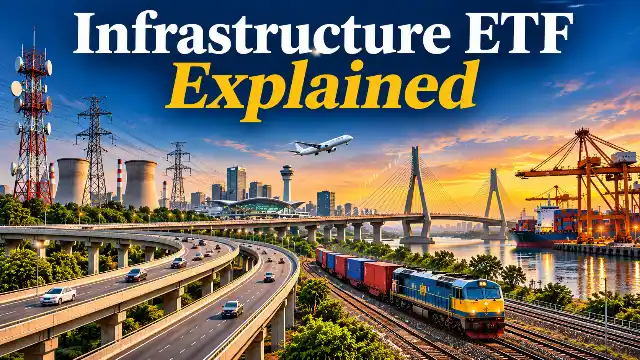
Infrastructure is one of the important themes shaping India’s long-term economic growth. Roads, highways, railways, airports, ports, power generation, telecom networks and construction projects require enormous investment, creating business opportunities for companies operating across these industries. Investors looking to participate in this development can consider infrastructure-focused exchange-traded funds (ETFs).
An Infrastructure ETF offers exposure to a basket of companies connected to infrastructure development without requiring investors to research and purchase individual stocks. Instead of betting on one construction, power or engineering company, investors gain access to multiple businesses through a single exchange-traded investment. However, understanding what these funds actually hold, how they perform and what risks they carry is important before investing.
In simple words
An Infrastructure ETF is an exchange-traded fund that invests in companies involved in infrastructure-related industries. It allows investors to participate in themes such as roads, power, telecom, construction and transportation through one investment. Its performance depends on the underlying companies and the index it tracks.
What Is an Infrastructure ETF?
An Infrastructure ETF is a passive investment fund designed to track an infrastructure-related stock market index. The fund holds shares of companies included in its benchmark and attempts to deliver returns similar to the index, after expenses and tracking differences.
In India, infrastructure-focused ETFs can track indices such as the Nifty Infrastructure Index. These indices include companies operating across several infrastructure-related industries rather than concentrating exclusively on construction companies.
For example, an investor purchasing an infrastructure ETF may indirectly gain exposure to businesses involved in engineering, cement, electricity generation, telecommunications, oil and gas, airports and ports.
Unlike actively managed mutual funds, most infrastructure ETFs follow a predefined index methodology. The portfolio changes when the underlying index is reviewed and rebalanced.
Also Read: Liquid ETF Explained: How Liquid ETFs Work in India, Returns, Risks and Who Should Buy Them
How Does an Infrastructure ETF Work?
The working mechanism is similar to other equity ETFs. An asset management company launches the ETF, collects investments and builds a portfolio that replicates its selected benchmark index.
Investors can purchase ETF units through a stock exchange using a demat and trading account, just as they would buy listed shares.
The ETF’s value moves according to the performance of its underlying holdings. When infrastructure companies perform well, the ETF generally benefits. When these stocks decline, the ETF’s market price can also fall.
Three important factors influence an ETF’s performance:
Also Read: Liquid ETF Explained: How Liquid ETFs Work in India, Returns, Risks and Who Should Buy Them
- Underlying index: Determines which companies the ETF invests in and their respective weightages.
- Expense ratio: Represents the annual operating expenses charged by the fund.
- Tracking error: Measures how closely the ETF follows its benchmark.
Investors should also check liquidity, trading volumes and the difference between buying and selling prices before placing an order.
What Are the Major Holdings of an Infrastructure ETF?
Infrastructure ETFs typically provide exposure to businesses from several interconnected industries. However, the actual holdings depend on the benchmark index.

For example, an ETF tracking the Nifty Infrastructure Index can include companies such as Reliance Industries, Larsen & Toubro, Bharti Airtel, NTPC, Power Grid Corporation, UltraTech Cement and Adani Ports.
These businesses represent different parts of India’s infrastructure ecosystem.
| Industry | Business exposure |
|---|---|
| Construction | Roads, bridges and engineering projects |
| Power | Electricity generation and transmission |
| Telecommunications | Mobile networks and connectivity |
| Cement | Construction materials |
| Transportation | Airports, ports and logistics |
| Oil and gas | Energy infrastructure and distribution |
| Utilities | Essential infrastructure services |
One important point is that an infrastructure ETF does not necessarily distribute its investments equally across these industries. Larger companies can have significantly higher portfolio weightages.
Therefore, investors should examine the latest portfolio disclosure instead of assuming that every infrastructure segment receives similar exposure.
Why Are Investors Interested in Infrastructure ETFs?
India’s infrastructure development requires sustained investment in transportation, electricity, logistics, urban development and digital connectivity.
Government spending, private-sector participation and increasing demand for essential services can create long-term business opportunities for companies operating in these areas.
Also Read: Railway and Capital Goods ETF Explained: How It Works, Holdings, Risks and Who Should Buy It
An infrastructure ETF provides a convenient way to participate in this broader theme.
It also offers diversification across several companies, reducing dependence on the performance of a single stock. Investors do not need to select individual engineering, cement, power or telecom companies themselves.
For long-term investors, this approach can provide thematic exposure without the complexity of managing multiple individual stock positions.
However, infrastructure growth does not automatically translate into higher stock market returns. Valuations, execution capabilities and profitability remain important.
Risks of Investing in Infrastructure ETFs
Despite their potential, infrastructure ETFs carry meaningful investment risks.
1. Sector concentration: These ETFs concentrate investments in infrastructure-related businesses. They are less diversified than broad-market ETFs such as Nifty 50 ETFs.
2. Government policy risk: Changes in infrastructure spending, regulations, project approvals and government priorities can influence company performance.
3. Economic cycles: Construction and infrastructure businesses can experience slower demand during economic downturns.
Also Read: Bharat 22 ETF Explained: How It Works, Holdings, Risks and Who Should Buy It
4. Debt and interest rate risk: Infrastructure companies often require substantial capital. Higher borrowing costs can affect financing expenses and project profitability.
5. Project execution risk: Delays, cost overruns, land acquisition problems and regulatory hurdles can affect revenue and cash flows.
6. Valuation risk: Even strong companies can deliver disappointing investment returns when purchased at excessively high valuations.
7. Tracking and liquidity risk: An ETF may not perfectly replicate its benchmark. Low trading volumes and wider bid-ask spreads can also increase transaction costs.
Also Read: CPSE ETF Explained: How India’s PSU Enterprise ETF Works, Holdings, Risks and Who Should Buy It
Infrastructure ETF vs Infrastructure Mutual Fund
Both investment products provide exposure to infrastructure companies, but their investment and trading mechanisms differ.
| Feature | Infrastructure ETF | Infrastructure Mutual Fund |
|---|---|---|
| Trading | Stock exchange | Mutual fund platform |
| Account | Demat account | Demat not necessary |
| Pricing | Market price | End-of-day NAV |
| Management | Usually passive | Usually active |
| Investment | Exchange purchase | SIP or lump sum |
| Costs | Expense ratio and brokerage | Expense ratio |
Investors who prefer exchange-based trading and passive investing may find ETFs convenient. Those who prefer systematic investments without managing exchange orders may consider infrastructure mutual funds.
Who Should Buy an Infrastructure ETF?
Infrastructure ETFs may suit investors who already have a diversified equity portfolio and want additional exposure to India’s infrastructure development theme.
They are more appropriate for investors with a long investment horizon, tolerance for sector-specific volatility and an understanding that thematic investments can underperform the broader market for extended periods.
Before investing, consider these points:
- Keep infrastructure ETFs as a satellite allocation rather than the foundation of an equity portfolio.
- Compare expense ratios and tracking differences.
- Examine the underlying index and top holdings.
- Check trading liquidity and bid-ask spreads.
- Avoid investing solely because infrastructure spending or related stocks are attracting market attention.
Investors who need capital in the near term or cannot tolerate significant fluctuations may find this category unsuitable.
Key Takeaways
- Infrastructure ETFs provide exposure to multiple infrastructure-related companies through one investment.
- Their performance depends on the underlying index and its constituent stocks.
- Holdings can include construction, power, telecom, cement, transportation and energy businesses.
- They offer convenience and thematic diversification but remain exposed to sector concentration and economic cycles.
- Investors should evaluate valuations, liquidity, expense ratios and tracking error before investing.
- A broad-market ETF should generally remain the foundation of a diversified equity portfolio, with thematic ETFs serving a supporting role.
Financial Disclaimer
This article is for educational and informational purposes only and should not be considered investment advice or a recommendation to buy or sell any ETF or security. Mutual fund and ETF investments are subject to market risks. Investors should read the scheme-related documents carefully and evaluate their financial objectives, investment horizon and risk tolerance before investing.
Also Read: Nifty 50 Equal Weight ETF Explained: How It Works, Holdings, Risks and Who Should Buy It






Keep learning with OneTrader
Explore structured lessons and practical guides to build your market knowledge.

Need a laugh after all that money talk?
Paisa LOL: India's funniest finance page, with memes, comics, jokes and long funny stories.
