
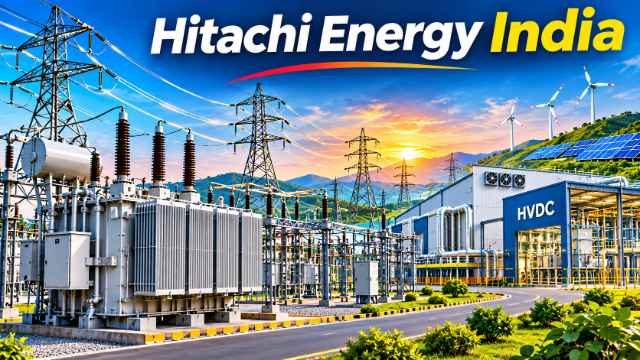
Explore Hitachi Energy India's business model, transformer manufacturing, high-voltage equipment, HVDC technology, grid automation, renewable energy opportunities and infrastructure growth strategy.
- Hitachi Energy India makes the equipment and technology that help electricity travel safely and efficiently from power generation facilities to consumers.
- Hitachi Energy India is a specialist in power technology and electrical infrastructure.
- The company generates revenue through equipment sales, engineering contracts, integrated infrastructure projects and lifecycle services.
Hitachi Energy India operates in one of the most important parts of India’s infrastructure economy: the technology required to generate, transmit, distribute and manage electricity. The company supplies high-voltage equipment, power transformers, grid automation systems and integrated power solutions to utilities, industries, railways, renewable energy developers and infrastructure companies. Its products and services help maintain reliable electricity networks as power consumption and system complexity increase.
The company’s growth opportunity is closely connected to India’s expanding electricity requirements, renewable energy capacity, modernisation of transmission networks and investment in high-voltage infrastructure. Its expertise in transformers, grid integration and High Voltage Direct Current (HVDC) technology gives it exposure to complex projects where specialised engineering and technical capabilities matter. It is also expanding its focus on digital grid solutions, services and advanced manufacturing.
In simple words
Hitachi Energy India makes the equipment and technology that help electricity travel safely and efficiently from power generation facilities to consumers. It earns money by supplying transformers, high-voltage equipment, grid automation systems and complete power infrastructure solutions. Its long-term growth depends on India’s investment in stronger electricity networks, renewable energy integration and modern transmission technology.
What Hitachi Energy India Does
Hitachi Energy India is a specialist in power technology and electrical infrastructure. It develops, manufactures and supplies equipment, systems, software and services used across electricity transmission, distribution, transportation and industrial applications.
Its portfolio includes power transformers, circuit breakers, switchgear, substations, grid automation systems, power quality solutions and HVDC technology.
The company also undertakes engineering, installation, commissioning, maintenance and modernisation projects. This allows it to participate throughout the lifecycle of electrical infrastructure rather than depending entirely on equipment sales.
Its operations are supported by the global technology capabilities of the Hitachi Energy group, combined with manufacturing and engineering activities in India.
How Hitachi Energy India Makes Money
The company generates revenue through equipment sales, engineering contracts, integrated infrastructure projects and lifecycle services.
Its business combines specialised manufactured products with technical services. Customers may purchase transformers or high-voltage equipment individually, while larger projects can involve designing and commissioning complete substations or grid integration systems.
| Revenue stream | Main activities |
|---|---|
| Equipment sales | Transformers, switchgear and circuit breakers |
| Grid integration | HVDC systems and substations |
| Grid automation | Control, protection and monitoring systems |
| Engineering projects | Installation and commissioning |
| Services | Maintenance, upgrades and asset modernisation |
| Exports | Power equipment and technology solutions |
Equipment manufacturing provides a foundation for revenue, while engineering and service activities allow the company to develop longer-term customer relationships.
Business Segments: Transformers, High Voltage and Grid Technology
Hitachi Energy India operates through five business units: Transformers, High Voltage Products, Grid Integration, Grid Automation and Service.
Each addresses a different requirement within the electricity value chain.
| Business unit | Products and services | Main customers |
|---|---|---|
| Transformers | Power and traction transformers | Utilities and railways |
| High Voltage Products | Switchgear, breakers and disconnectors | Transmission companies |
| Grid Integration | HVDC and substations | Utilities and renewable developers |
| Grid Automation | Control, protection and digital systems | Grid operators and industries |
| Service | Maintenance, upgrades and lifecycle support | Existing equipment owners |
Transformers
Transformers are essential for changing voltage levels across electricity networks. They allow electricity to travel efficiently over long distances and make it suitable for industrial, commercial and residential consumption.
Hitachi Energy India supplies power transformers, traction transformers and specialised transformer solutions. Demand comes from transmission projects, railway electrification, renewable energy infrastructure and industrial installations.
Transformer manufacturing requires engineering expertise, specialised components and testing capabilities. These requirements create technical barriers for new competitors.
High Voltage Products
High-voltage equipment protects and controls electricity networks. Products include circuit breakers, gas-insulated switchgear, disconnectors, surge arresters and instrument transformers.
Also Read: BSE Ltd: How Asia’s Oldest Stock Exchange Earns from Trading, Data, Listings and Derivatives
These products are used in substations and transmission networks where reliable operation is critical.
As electricity networks expand and existing infrastructure is modernised, demand for high-voltage equipment can increase.
Grid Integration
Grid Integration brings together equipment and technologies required to connect power generation and transmission systems.
Its portfolio includes HVDC systems, substations, power quality solutions and other integrated technologies. These solutions are particularly important when connecting large renewable energy projects to electricity networks.

Grid Automation
Modern electricity networks require continuous monitoring and control. Grid automation systems help operators manage power flows, identify faults, protect equipment and maintain system stability.
The business includes digital substations, protection systems, control technologies and grid management software.
Service
The service business supports customers throughout the lifecycle of electrical assets. Activities include installation support, maintenance, upgrades, refurbishment and modernisation.
This creates opportunities to generate revenue from equipment already installed in electricity networks.
Growth Strategy: India’s Power Infrastructure Expansion
Hitachi Energy India’s growth strategy is closely linked to the transformation of the country’s electricity system.
Transmission network expansion
India needs stronger transmission infrastructure to connect generating facilities with cities, industries and consumers. New transmission lines and substations require transformers, switchgear, protection systems and grid automation equipment.
The company is positioned to participate in these projects through its integrated product portfolio.
Renewable energy integration
Solar and wind power generation are often located far from major consumption centres. Connecting these projects to the national electricity network requires transmission infrastructure and technologies that can manage variable power generation.
Also Read: Federal Bank: How the Lender Is Building Growth Through Retail Banking and Digital Finance
Hitachi Energy India supplies equipment and systems that support renewable energy integration and grid stability.
Manufacturing expansion
Local manufacturing is important for meeting India’s infrastructure requirements and participating in international supply chains.
The company is strengthening its manufacturing capabilities to support demand for large power transformers and other specialised equipment. Its investment in a new large power transformer facility at Karjan, Vadodara, reflects this focus.
Digitalisation of electricity networks
Electricity networks are becoming more complex as renewable generation, storage, electric mobility and data centres increase demand on the grid.
Also Read: IDFC FIRST Bank: How the Lender Is Building Growth Through Retail Banking and Digital Finance
Digital protection, monitoring and automation systems can help utilities improve reliability and operational efficiency.
Services and exports
The company is also focusing on lifecycle services and international business. Its manufacturing and engineering capabilities provide opportunities to serve customers beyond India, while its installed equipment base creates demand for maintenance and modernisation.
HVDC Technology: A Major Competitive Advantage
High Voltage Direct Current technology is one of the most important parts of Hitachi Energy India’s business opportunity.
Traditional AC transmission is widely used in electricity networks, but HVDC can offer advantages when transmitting large amounts of electricity over long distances, connecting separate power grids and integrating remote renewable energy projects.
Also Read: IndusInd Bank: How the Lender Is Rebuilding Growth Through Retail Banking and Vehicle Finance
HVDC systems convert electricity between alternating current and direct current at converter stations. The technology helps manage power flows efficiently and supports large-scale transmission requirements.
Hitachi Energy has established expertise in HVDC technology and participates in India’s high-voltage transmission infrastructure.
The technology is particularly relevant for:
Long-distance electricity transmission.
Connecting renewable energy generation centres.
Interconnecting separate electricity networks.
Improving control over large power flows.
Supporting grid stability and transmission efficiency.
Also Read: Vedanta: How Commodity Prices, Higher Volumes and Debt Reduction Drive Its Business
HVDC projects are technically complex and require specialised equipment, engineering and commissioning capabilities. This creates opportunities for companies with established technology and execution experience.
Infrastructure Demand: Where Future Growth Can Come From
Several areas of India’s economy can support demand for Hitachi Energy India’s products and services.
| Sector | Business opportunity |
|---|---|
| Power transmission | Transformers and HVDC systems |
| Renewable energy | Grid integration and substations |
| Railways | Traction transformers |
| Metro networks | Electrical and automation systems |
| Data centres | Reliable power infrastructure |
| Heavy industries | Transformers and high-voltage equipment |
| Utilities | Grid automation and modernisation |
Data centres are an emerging opportunity because their electricity requirements are substantial and uninterrupted power supply is essential.
Railway electrification and metro expansion also create demand for specialised transformers and electrical systems.
The company’s exposure to multiple infrastructure categories reduces its dependence on any single end market.
Competition in the Power Technology Industry
Hitachi Energy India competes in a specialised market where product quality, engineering capabilities, technology, manufacturing capacity and project execution are important.
Its competitors include Indian electrical equipment manufacturers and international power technology companies.
| Competitor | Main competitive strengths |
|---|---|
| Siemens Energy | Grid technology and power equipment |
| GE Vernova | Grid solutions and power systems |
| Siemens India | Electrical and industrial technology |
| CG Power | Transformers and electrical equipment |
| Bharat Heavy Electricals | Power equipment and engineering |
| Schneider Electric | Electrical distribution and automation |
Hitachi Energy India’s strengths include its global technology expertise, established installed base, specialised HVDC capabilities and integrated power infrastructure portfolio.
However, competition remains significant, particularly in large equipment contracts where pricing, delivery schedules and technical specifications influence project awards.
Key Business Risks
Despite its exposure to long-term infrastructure investment, Hitachi Energy India faces several business risks.
Project execution: Large transmission and grid integration projects require complex engineering and coordination. Delays can affect revenue recognition and profitability.
Raw material costs: Copper, electrical steel and other specialised materials influence manufacturing costs.
Also Read: Siemens Energy India: How Power Transmission, Generation and Project Backlogs Drive Its Business
Supply chain constraints: Delays in specialised components can affect production and project delivery.
Order concentration: Large infrastructure contracts can create dependence on a limited number of major projects and customers.
Capital expenditure: Manufacturing expansion requires substantial investment and efficient capacity utilisation.
Competition: International and domestic manufacturers compete for high-value equipment and infrastructure contracts.
Also Read: Shree Cement: How Premium Products, Sales Growth and Cost Management Drive Its Business
Technology changes: Companies must continuously invest in research, digital solutions and next-generation grid technologies.
The company’s ability to manage project costs, maintain delivery standards and generate adequate returns from manufacturing investments will be important for sustainable growth.
What Investors Should Watch
Order book quality: Investors should examine the composition of new orders across transformers, HVDC, grid integration, automation and services. A diversified order pipeline can improve business visibility.
Order execution: Winning contracts is only one part of the business. Timely delivery, project commissioning and effective cost control determine how successfully orders translate into revenue and profits.
Manufacturing capacity: New facilities and production expansion should improve the company’s ability to meet demand while generating adequate returns on capital.
HVDC opportunities: Large transmission projects and renewable energy connections can create demand for specialised HVDC equipment and integrated solutions.
Service revenue: Maintenance, refurbishment and modernisation can strengthen recurring business opportunities and deepen customer relationships.
Export growth: International orders can help diversify revenue and improve manufacturing utilisation.
Also Read: REC: How Power and Infrastructure Financing Drive Its Business
Operating efficiency: Investors should monitor whether higher production volumes and improved project execution translate into stronger profitability.
Key Takeaways
Hitachi Energy India is a specialist in power transmission, grid equipment and electrical infrastructure technology.
Its five business units cover transformers, high-voltage products, grid integration, grid automation and services.
HVDC technology provides exposure to large transmission projects and renewable energy integration.
Also Read: Punjab National Bank: How Deposits, Lending and Improving Asset Quality Drive Its Business
Transformer demand is supported by electricity network expansion, industrial investment and railway electrification.
Digital grid automation is becoming increasingly important as electricity networks grow more complex.
Manufacturing expansion and exports provide additional growth opportunities.
Long-term infrastructure demand supports the business, but project execution and capital efficiency remain important.
Also Read: PFC: How Power Sector Financing and Renewable Energy Loans Drive Its Business
Raw material costs, supply chain constraints and competition are key risks.
Hitachi Energy India’s business is closely connected to the future of India’s electricity infrastructure. The expansion of renewable energy, transmission networks, data centres and industrial power requirements creates demand for advanced grid technology. Its capabilities in transformers, high-voltage equipment and HVDC provide a strong platform to participate in this transformation. The company’s long-term performance will depend on converting infrastructure demand into profitable orders, executing complex projects efficiently and generating attractive returns from manufacturing expansion.
Financial Disclaimer: This article is intended for educational and informational purposes only. It does not constitute investment advice or a recommendation to buy, sell or hold Hitachi Energy India shares. Investors should independently evaluate the company’s financial performance, valuation, competitive position, order book, execution risks and investment objectives before making any investment decision.
Also Read: Muthoot Finance: How Gold Loans, Rising Gold Prices and Lending Growth Drive Its Business






Keep learning with OneTrader
Explore structured lessons and practical guides to build your market knowledge.
