
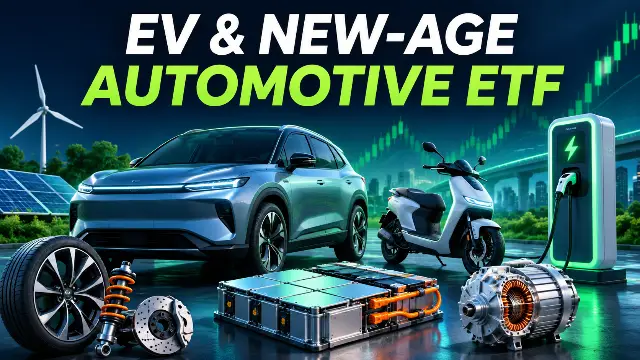
India’s automobile industry is going through a significant transformation. Electric vehicles, battery technology, charging infrastructure, connected mobility and advanced automotive components are changing how vehicles are manufactured and used. This transition has also created a new investment opportunity for investors looking beyond traditional automobile stocks.
An EV and New-Age Automotive ETF offers a way to participate in this evolving industry through a single exchange-traded fund. Instead of selecting individual electric vehicle manufacturers or battery companies, investors can gain exposure to a basket of businesses connected to India’s emerging automotive ecosystem. However, understanding its holdings, investment strategy and risks is essential before investing.
In simple words
An EV and New-Age Automotive ETF invests in companies involved in electric vehicles, batteries, automotive technology, components and related businesses. It allows investors to participate in the growth of India’s changing automobile industry without having to select individual stocks.
What Is an EV and New-Age Automotive ETF?
An EV and New-Age Automotive ETF is a thematic equity ETF that tracks an index designed to represent businesses participating in the next generation of mobility. Its investment universe extends beyond companies manufacturing electric cars and two-wheelers.
The underlying index can include manufacturers of electric and hybrid vehicles, battery producers, automotive component suppliers, companies supplying battery materials and businesses developing advanced automotive technologies. This broader approach gives investors exposure to different stages of the automotive supply chain.
In India, the Nifty EV and New Age Automotive Index is an important benchmark in this category. It includes eligible companies from the Nifty 500 universe that have meaningful involvement in the EV and new-age automotive ecosystem. Nifty Indices +1
How Does an EV ETF Work?
An EV ETF generally follows a passive investment strategy. Instead of allowing a fund manager to select stocks based on individual opinions, the fund replicates an underlying index by purchasing its constituent shares in broadly similar proportions.
Also Read: Liquid ETF Explained: How Liquid ETFs Work in India, Returns, Risks and Who Should Buy Them
For example, when an investor purchases units of an EV ETF through a stock exchange, the investment provides exposure to the underlying basket of companies. The ETF’s market price fluctuates during trading hours according to demand, supply and the value of its underlying investments.
The index undergoes periodic reviews and portfolio rebalancing. This helps maintain its intended exposure as companies grow, business activities change and new eligible businesses enter the automotive ecosystem.

Investors need a demat and trading account to purchase exchange-traded units. Unlike conventional mutual funds, ETF units are bought and sold on the stock exchange.
What Companies Does an EV ETF Hold?
The portfolio is not limited to pure-play electric vehicle manufacturers. It can include established automobile companies, battery manufacturers, component suppliers, chemical producers and technology businesses.
Also Read: Liquid ETF Explained: How Liquid ETFs Work in India, Returns, Risks and Who Should Buy Them
Some examples of companies represented in the Nifty EV and New Age Automotive ecosystem include:
| Category | Representative companies |
|---|---|
| Vehicle manufacturers | Mahindra & Mahindra, Maruti Suzuki, Tata Motors |
| Two-wheelers and mobility | Bajaj Auto, TVS Motor |
| Automotive components | Bosch, UNO Minda, Sona BLW |
| Battery and materials | Exide Industries, Amara Raja Energy & Mobility |
| Automotive technology | KPIT Technologies, Tata Technologies |
| Industrial and electrical components | CG Power, KEI Industries |
These are illustrative constituents, not a permanent holdings list. Actual allocations change with index reviews and market movements. Factsheet +1
This diversification across the automotive supply chain is important because the growth of electric mobility does not depend on vehicle manufacturers alone. Battery technology, power electronics, charging infrastructure and component suppliers can also benefit from industry expansion.
Why Are Investors Interested in EV ETFs?
India’s electric mobility transition is creating opportunities across several industries.
First, increasing interest in electric two-wheelers, passenger vehicles and commercial mobility could expand the addressable market for manufacturers and component suppliers.
Second, domestic battery manufacturing and localisation of automotive components could create opportunities for Indian businesses as supply chains evolve.
Third, government initiatives supporting electric mobility and advanced manufacturing may encourage investment in the sector. However, policy incentives and regulatory priorities can change.
An EV ETF offers exposure to this broader transformation without requiring investors to identify which individual company will emerge as the biggest winner.
Also Read: Railway and Capital Goods ETF Explained: How It Works, Holdings, Risks and Who Should Buy It
Major Risks of Investing in EV ETFs
Despite the industry’s growth potential, EV ETFs carry considerable investment risks.
- Valuation risk: Investors may pay high valuations for companies based on expected future growth. If earnings fail to match expectations, share prices can decline.
- Technology risk: Battery chemistry, vehicle architecture and charging technologies continue to evolve. Companies that fail to adapt may lose competitiveness.
- Competition: Established automobile manufacturers and new EV-focused businesses compete aggressively on pricing, technology and distribution.
- Policy risk: Changes in subsidies, import duties, taxation and environmental regulations can influence industry profitability.
- Concentration risk: Although the ETF holds multiple companies, its performance remains linked to a specific industrial theme. Several holdings may also depend on similar economic conditions.
- Market risk: Broader equity market corrections can affect the ETF even when the long-term EV outlook remains positive.
Investors should also examine the expense ratio, tracking error, trading liquidity and bid-ask spread before choosing an ETF.
EV ETF vs Traditional Automobile ETF
Both investment categories provide exposure to the automotive industry, but their focus differs.
| Feature | EV and New-Age ETF | Traditional Auto ETF |
|---|---|---|
| Investment focus | Future mobility ecosystem | Broader automobile industry |
| Battery exposure | Greater emphasis | Usually indirect |
| Technology exposure | Advanced automotive technology | Relatively conventional |
| Risk profile | Very high | High |
| Growth drivers | Electrification and innovation | Vehicle demand and economic growth |
An EV ETF may offer broader exposure to emerging automotive technologies, while a traditional automobile ETF provides exposure to the established vehicle manufacturing industry.
Who Should Consider Buying an EV ETF?
An EV ETF may suit investors who have a long investment horizon and believe India’s automotive industry will gradually shift towards electric and advanced mobility solutions.
It can be considered as a satellite allocation within a diversified equity portfolio rather than a replacement for broad-market investments such as Nifty 50 or Nifty 500 index funds.
Investors with a five-to-seven-year or longer horizon may find the theme worth evaluating, provided they can tolerate significant price fluctuations. Those seeking stable returns, regular income or capital protection should generally avoid treating this as a core investment.
Before investing, compare available ETFs tracking the same index. Lower expenses, reasonable liquidity and smaller tracking differences can make a meaningful difference over time.
Also Read: Bharat 22 ETF Explained: How It Works, Holdings, Risks and Who Should Buy It
Key Takeaways
- EV ETFs provide exposure to India’s electric mobility and new-age automotive ecosystem.
- Holdings can include vehicle manufacturers, battery companies, component suppliers and technology businesses.
- These ETFs generally follow an index-based passive investment strategy.
- Industry growth does not automatically translate into attractive stock market returns.
- Valuation, technology, competition and policy changes are important risks.
- EV ETFs are better considered as thematic allocations within diversified portfolios.
Financial Disclaimer
This article is for educational and informational purposes only and should not be considered investment advice. Investments in EV ETFs are subject to market risks, including the potential loss of capital. Investors should review scheme documents, portfolio holdings, expenses and risk factors before making investment decisions.


Keep learning with OneTrader
Explore structured lessons and practical guides to build your market knowledge.

Need a laugh after all that money talk?
Paisa LOL: India's funniest finance page, with memes, comics, jokes and long funny stories.
