
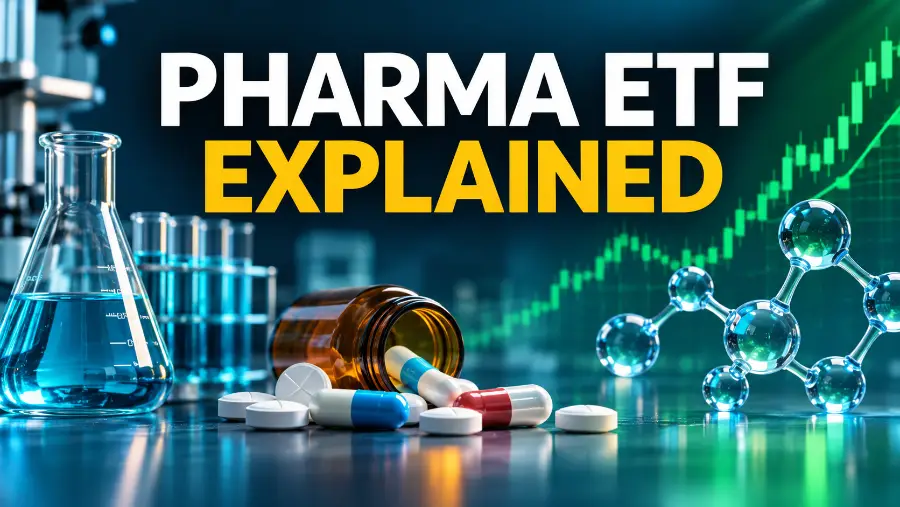
India’s pharmaceutical industry occupies an important position in the global healthcare supply chain. From generic medicines and vaccines to active pharmaceutical ingredients (APIs), contract manufacturing and speciality drugs, Indian companies serve both domestic patients and international markets. For investors looking to participate in this industry without selecting individual pharmaceutical stocks, Pharma ETFs offer a convenient route.
A Pharma ETF provides exposure to a basket of listed pharmaceutical companies through a single investment. In India, these funds generally track the Nifty Pharma Index, allowing investors to participate in the performance of leading listed pharma businesses. However, the sector has its own growth drivers, regulatory challenges and valuation risks that investors should understand before investing.
In simple words
A Pharma ETF is an exchange-traded fund that invests in pharmaceutical companies and typically tracks the Nifty Pharma Index. Instead of buying shares of several drug manufacturers individually, investors can purchase one ETF unit to gain exposure to the pharmaceutical sector.
What Is a Pharma ETF?
A Pharma ETF is a passive investment fund designed to replicate the performance of a pharmaceutical stock market index. In India, the commonly followed benchmark is the Nifty Pharma Index, which represents major companies involved in pharmaceuticals and related businesses.
The ETF holds shares of companies included in its benchmark, broadly following their index weightings. Its objective is to deliver returns close to the underlying index, before expenses and tracking differences.
Unlike actively managed pharmaceutical mutual funds, an ETF does not depend on a fund manager regularly selecting stocks based on individual market views. Its portfolio follows the index methodology and changes when the benchmark is reconstituted.
How Do Nifty Pharma ETFs Work?
The Nifty Pharma Index tracks eligible pharmaceutical companies listed on the National Stock Exchange. Its constituents are selected and weighted according to the index’s methodology, subject to eligibility requirements and periodic reviews.
Also Read: Liquid ETF Explained: How Liquid ETFs Work in India, Returns, Risks and Who Should Buy Them
A Pharma ETF attempts to mirror this portfolio. When an investor purchases ETF units through a demat and trading account, the investment provides exposure to the underlying basket rather than ownership of a single pharmaceutical company.
ETF units trade on the stock exchange during market hours, with prices changing according to demand, supply and the value of their underlying holdings. Investors can buy or sell units at prevailing market prices, just like listed shares.

Major Holdings in Pharma ETFs
Nifty Pharma ETFs provide exposure to established pharmaceutical businesses as well as companies operating in speciality medicines, generics, vaccines and biotechnology-related segments.
Some prominent companies commonly associated with the Indian pharmaceutical index include:
Also Read: Liquid ETF Explained: How Liquid ETFs Work in India, Returns, Risks and Who Should Buy Them
| Company | Business focus |
|---|---|
| Sun Pharmaceutical | Specialty and generic medicines |
| Dr. Reddy’s Laboratories | Global generics and APIs |
| Cipla | Respiratory and generic medicines |
| Divi’s Laboratories | APIs and custom synthesis |
| Lupin | Branded and generic formulations |
| Zydus Lifesciences | Pharmaceuticals and healthcare |
| Torrent Pharmaceuticals | Branded formulations |
| Aurobindo Pharma | Generic medicines and APIs |
The actual holdings and weightings vary between index reviews. Investors should examine the latest portfolio disclosure before investing rather than assuming every Pharma ETF has identical exposure.
Why Do Investors Consider Pharma ETFs?
The pharmaceutical sector has several long-term growth drivers. Rising healthcare spending, an ageing population, increasing demand for medicines, healthcare infrastructure development and India’s position in global generic drug manufacturing can support industry expansion.
Pharma ETFs also offer diversification within a sector. Instead of depending on one company’s product pipeline, management decisions or regulatory outcomes, investors gain exposure to multiple pharmaceutical businesses.
Another attraction is the possibility of participating in global healthcare demand. Several Indian pharmaceutical companies generate meaningful revenue from international markets, particularly the United States.
Risks of Investing in Pharma ETFs
Sector exposure does not eliminate investment risk. Pharma ETFs can experience substantial price fluctuations, particularly when the pharmaceutical industry faces regulatory or business challenges.
Important risks include:
- Regulatory risk: Quality observations, manufacturing restrictions and regulatory actions can affect pharmaceutical companies.
- US market exposure: Pricing pressure and competition in international generic markets can reduce profitability.
- Research risk: Clinical trial failures and unsuccessful drug development can affect future growth.
- Concentration risk: A few large companies may account for a significant share of the index.
- Valuation risk: Even fundamentally strong pharmaceutical businesses can become expensive during market optimism.
- Tracking error: An ETF may not perfectly replicate its benchmark because of expenses, cash holdings and trading-related differences.
Investors should also remember that Pharma ETFs are sector funds, not diversified equity investments. Their performance can differ significantly from the broader Nifty 50.
How to Choose a Pharma ETF
Not all Pharma ETFs offer the same investment experience. Before buying, investors should compare several important factors:
Also Read: Railway and Capital Goods ETF Explained: How It Works, Holdings, Risks and Who Should Buy It
| Factor | What to examine |
|---|---|
| Expense ratio | Lower annual costs are generally preferable |
| Tracking error | How closely the ETF follows its benchmark |
| Liquidity | Trading volumes and bid-ask spreads |
| AUM | Overall size of the fund |
| Holdings | Concentration in leading pharmaceutical stocks |
Investors should avoid choosing an ETF purely because its recent returns are higher. A fund with better liquidity, reasonable expenses and consistent benchmark tracking may be more suitable for long-term ownership.
Who Should Buy Pharma ETFs?
Pharma ETFs may suit investors who have a positive long-term view of India’s pharmaceutical industry and want targeted exposure without researching individual companies.
They can also be considered by investors who already hold diversified equity investments and want to allocate a limited portion of their portfolio to healthcare and pharmaceuticals.
However, these ETFs may not be appropriate as a core investment for beginners, conservative investors or people seeking predictable returns. A diversified Nifty 50 or broad-market ETF offers wider sector exposure.
Investors should approach Pharma ETFs with a long investment horizon and be comfortable with sector-specific volatility. Buying gradually rather than investing the entire amount at once can also help manage entry-point risk.
Key Takeaways
- Pharma ETFs provide exposure to multiple pharmaceutical companies through one exchange-traded investment.
- Nifty Pharma ETFs generally track a 20-stock pharmaceutical index.
- Sun Pharma, Divi’s Laboratories, Dr. Reddy’s and Cipla are among the important constituents.
- Healthcare demand and global generic medicine markets offer long-term growth opportunities.
- Regulatory challenges, pricing pressure, concentration and valuation risks remain important concerns.
- Expense ratio, liquidity and tracking error deserve attention before investing.
A Pharma ETF can be a useful sector allocation for investors who understand the pharmaceutical industry’s opportunities and risks. It should complement a diversified portfolio rather than replace broad-market investments.
Financial Disclaimer
This article is for educational purposes only and should not be considered investment advice. Pharma ETFs are subject to market risks, including the possibility of capital loss. Investors should evaluate their financial goals, risk tolerance and investment horizon before making investment decisions.
Also Read: Bharat 22 ETF Explained: How It Works, Holdings, Risks and Who Should Buy It




Keep learning with OneTrader
Explore structured lessons and practical guides to build your market knowledge.

Need a laugh after all that money talk?
Paisa LOL: India's funniest finance page, with memes, comics, jokes and long funny stories.
