
Understand Siemens Limited's businesses, Q2 FY27 results, order backlog, infrastructure exposure, growth drivers and key risks.
- Siemens Limited is the listed Indian arm of Siemens AG, with its business focused on electrification, automation and digitalisation.
- Siemens Limited serves institutional and industrial customers rather than depending primarily on individual consumers.
- Infrastructure investment is a central growth driver for Siemens Limited.
What Siemens Does
Siemens Limited is the listed Indian arm of Siemens AG, with its business focused on electrification, automation and digitalisation. The company operates across industrial and infrastructure markets, supplying technology and systems used in buildings, electricity networks, factories and railway infrastructure.
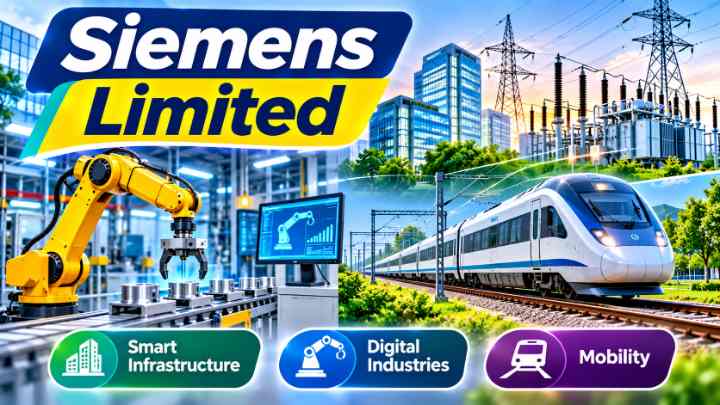
Its business is organised around three principal areas: Smart Infrastructure, Digital Industries and Mobility. Together, these segments give Siemens Limited exposure to different parts of India’s industrial and infrastructure investment cycle.
Smart Infrastructure focuses on electrification, buildings and grid products. Its activities connect the company to infrastructure development and the requirements of utilities and other customers investing in electrical and building systems. As electrification and infrastructure projects require specialised equipment and technology, this business is an important part of the company’s operations.
Digital Industries focuses on factory automation and software. It serves industrial customers looking to automate manufacturing processes and use digital technologies in their operations. This business gives Siemens Limited a presence in the technology requirements of factories and industrial companies.
Also Read: Vedanta: How Commodity Prices, Higher Volumes and Debt Reduction Drive Its Business
Mobility focuses on rail systems and rail electrification. Its business is linked to railway infrastructure, where customers require systems and solutions for rail networks and their electrical infrastructure.
One important structural change is the separation of Siemens’ energy business. That business has been separated into Siemens Energy India, which is listed independently. Siemens Limited’s business should therefore be understood through its continuing operations rather than by treating the separated energy business as part of its current operating structure.
Customers and How Siemens Makes Money
Siemens Limited serves institutional and industrial customers rather than depending primarily on individual consumers. Its customer base includes infrastructure developers, utilities, railways, manufacturers, data centres and industrial companies.
The company generates business by supplying products, systems and technology across its three operating areas. Smart Infrastructure serves customers involved in electrification, buildings and grid-related requirements. Digital Industries provides factory automation and software, while Mobility addresses railway systems and rail electrification.
This business model connects Siemens Limited to investment decisions made by both public and private sector customers. Infrastructure developers and utilities require electrification and grid products, while manufacturers and industrial companies invest in automation. Railways form another customer group through the company’s Mobility business.

The nature of these customers also means that orders and project execution are important indicators of business performance. Revenue reflects work delivered and recognised during a period, while new orders indicate incoming business. The order backlog provides visibility into the value of orders yet to be executed.
Investors should distinguish between the company’s three continuing businesses and Siemens Energy India. The separation means that the energy business is no longer part of Siemens Limited’s operating portfolio, making it important to assess the listed Indian company on the basis of its current structure.
The company has also changed its financial year from the October-September cycle to April-March. This change is relevant when comparing reporting periods and interpreting annual results. Investors should pay attention to the applicable reporting period rather than assume that the company’s financial-year presentation is unchanged.
Growth Drivers
Infrastructure investment is a central growth driver for Siemens Limited. Its Smart Infrastructure business serves electrification, buildings and grid requirements, while Mobility connects it to railway systems and rail electrification. Continued investment in these areas can create business opportunities across the company’s operating segments.
Also Read: Shree Cement: How Premium Products, Sales Growth and Cost Management Drive Its Business
The company’s management identified continued infrastructure capex as one of the factors supporting growth. An increase in private sector capex was another contributor. This matters because Siemens Limited serves both infrastructure-related customers and industrial businesses, giving it exposure to investment activity across different parts of the economy.
Factory automation and software provide another area of business exposure through Digital Industries. Manufacturers are among the company’s customers, and their investment in automation is directly relevant to this segment.
The order pipeline is also important. Higher new orders indicate incoming business, while the backlog represents orders that remain to be executed. The ability to convert these orders into revenue through successful project delivery will influence the company’s future performance.
Smart Infrastructure’s revenue growth is another development to follow. Its contribution to the business makes performance in electrification, buildings and grid products an important indicator of demand from infrastructure and utility customers.
Competition and Risks
Siemens Limited competes with established industrial technology companies, including ABB, Schneider and Hitachi Energy, along with other players. Competition across electrification, automation and infrastructure systems can influence customer decisions and the company’s ability to secure orders.
Project execution is another important risk. The order backlog represents business awaiting execution, but securing orders alone does not guarantee that the associated revenue and profit will be realised as expected. Delivery and execution will matter when assessing the quality of the order pipeline.
The company’s performance is also linked to capital expenditure cycles. Infrastructure developers, utilities, railways and manufacturers make investment decisions based on their own project plans and spending priorities. A slowdown in capex could affect demand for the products and systems supplied by Siemens Limited.
Also Read: REC: How Power and Infrastructure Financing Drive Its Business
Valuation expectations are an additional risk for investors. A company can report higher revenue and orders while still facing pressure on margins. Investors need to assess the share price in relation to the company’s operating performance, profitability and ability to execute its business pipeline.
What Investors Should Watch
Investors should first monitor the conversion of new orders into revenue. The order backlog provides visibility into pending work, but execution will determine how effectively that business contributes to financial performance.
Smart Infrastructure deserves attention because of its exposure to electrification, buildings and grid products. Its revenue performance can help investors understand how infrastructure-related demand is translating into business for Siemens Limited.
Also Read: Punjab National Bank: How Deposits, Lending and Improving Asset Quality Drive Its Business
Developments in Digital Industries and Mobility also matter. Investors should follow demand from manufacturers and railway customers, as these businesses provide separate sources of exposure within the company’s operating structure.
The change in financial-year reporting should be kept in mind when comparing results across periods. Investors should use the company’s revised April-March financial year and continuing-operations presentation to make meaningful comparisons.
Finally, the balance between order growth and profitability will be important. Strong incoming orders can support future business, but investors should also assess project execution, material costs and the margins earned on that work.
Conclusion
Also Read: PFC: How Power Sector Financing and Renewable Energy Loans Drive Its Business
However, the decline in profit from operations and operating margin highlights the importance of cost control and project execution. For investors, the key factors to follow are order conversion, Smart Infrastructure performance, demand across industrial and railway customers, and the company’s ability to protect margins as business expands.
Financial Disclaimer: This article is for educational and informational purposes only. It is not investment advice or a recommendation to buy or sell Siemens Limited shares. Investors should conduct independent research before making financial decisions.





Keep learning with OneTrader
Explore structured lessons and practical guides to build your market knowledge.

Need a laugh after all that money talk?
Paisa LOL: India's funniest finance page, with memes, comics, jokes and long funny stories.
