
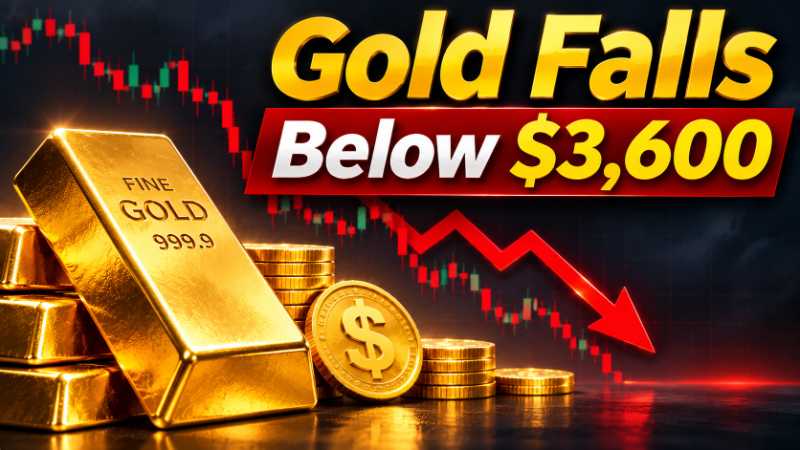
Gold prices suffered another sharp overnight decline, falling below the psychologically important $3,600 per ounce level on Friday as a stronger US dollar, rising Treasury yields and expectations of further Federal Reserve tightening triggered widespread selling across precious metals.
International spot gold had already fallen below $3,650 on Thursday, November 19, before closing near $3,625 per ounce, marking a decline of approximately 2.6% for the session. The selling continued during Friday’s Asian trading hours, with spot prices slipping to around $3,594. December Comex gold futures also declined approximately 3% to around $3,630 in early trading.
The latest correction has significantly widened gold’s retreat from its record of approximately $5,596 near the beginning of the year. The metal is now roughly one-third below that peak, while its decline over the past month has reached approximately 10%.
For long-term investors, the important question is whether this correction represents a change in gold’s underlying investment appeal or a broader liquidation event driven by financial market conditions.
Also Read: How Gold Prices Are Set in India: Rupee, Import Duty and GST Explained
Gold Extends Its Decline as Selling Accelerates
The speed of the latest decline has attracted considerable attention across international financial markets. Gold has moved below several important price thresholds in a short period, while silver has also fallen below $45 per ounce.
The simultaneous weakness in precious metals and equities suggests that investors are dealing with broader financial market pressure rather than a correction limited to gold.
A firmer US dollar has made dollar-denominated gold less attractive to international buyers. At the same time, rising Treasury yields have increased the relative appeal of interest-bearing investments.
However, market participants are also pointing to forced liquidation as an important reason behind the intensity of the decline. When financial markets experience sharp losses, investors facing margin calls or fund redemption requirements may be compelled to sell liquid assets, including gold and silver, to raise cash.
Also Read: Why Gold Prices Have Fallen and What It Means for Long-Term Investors
This can accelerate selling beyond what changes in the underlying investment outlook would normally suggest.
Federal Reserve Rate Hike Expectations Weigh on Gold
The changing outlook for US monetary policy remains one of the biggest challenges for precious metals.
Federal Reserve Governor Christopher Waller has indicated that inflation is moving in the wrong direction and that a 50-basis-point interest rate increase could be warranted.
Market expectations for another rate increase have consequently strengthened, with reported probabilities approaching 90%.
Also Read: Commodity News Today: Gold Prices Slip as Hot US Inflation Raises Rate Hike Concerns

The US 10-year Treasury yield has also climbed to approximately 5.07%, increasing the opportunity cost of holding gold.
Unlike bonds and other interest-bearing financial instruments, gold does not generate regular income. When yields rise, investors may become more selective about maintaining exposure to non-yielding assets.
The stronger dollar adds to this pressure by making gold more expensive for international buyers.
Together, these developments have created an unfavourable environment for precious metals, particularly after their substantial gains earlier in the year.
Forced Liquidation Is Intensifying the Gold Sell-Off
One important distinction in the current market is the difference between investors deliberately changing their long-term gold allocation and investors being forced to sell because of immediate financial pressures.
Margin calls occur when leveraged investors need to provide additional funds to maintain their positions. If they cannot meet those requirements, brokers or exchanges may liquidate their holdings.
Fund redemptions can create similar pressure. When investors withdraw money from investment funds, managers may need to sell liquid assets to meet those obligations.
Gold is widely traded and can therefore become a source of liquidity during periods of broader market stress.
Also Read: Gold Price Outlook: Is Gold Going Up or Down After the Latest Crash?
A veteran trader has attributed the latest decline primarily to forced liquidation and rising yields rather than a breakdown in gold’s longer-term investment thesis.
This distinction matters for investors because a temporary liquidity-driven correction and a sustained deterioration in long-term demand are different market developments.
What the Correction Means for Long-Term Gold Investors
Gold is generally held as a portfolio diversification asset, a store of value and a potential hedge against certain financial and economic risks.
Its investment role does not depend entirely on short-term price momentum. Monetary uncertainty, currency movements, geopolitical developments and investor demand can continue to influence its relevance over longer periods.
Also Read: Gold ETF vs Physical Gold: Key Differences, Costs, Benefits and Risks
However, the latest correction demonstrates that gold is not immune to rising interest rates, a stronger dollar or broader financial market stress.
Long-term investors should therefore avoid assuming that every sharp decline automatically represents an attractive buying opportunity. Gold can remain under pressure when monetary conditions favour higher-yielding assets.
Investors holding gold through ETFs or other financial instruments should also review their portfolio exposure, investment horizon and ability to withstand further volatility.
For those considering gold as part of a diversified portfolio, the focus should remain on the intended allocation rather than attempting to identify the exact market bottom.
Also Read: Gold ETF: How It Works, Benefits, Risks and How to Invest
What Investors Should Watch Next
The Federal Reserve’s policy outlook will remain central to gold’s direction. Investors will closely monitor inflation developments, comments from policymakers and movements in US Treasury yields.
The US dollar will also remain important. Further strength could continue to weigh on internationally traded precious metals, while a change in currency and interest rate expectations could alter investor positioning.
Another factor worth monitoring is whether the forced selling across financial markets begins to ease. A reduction in margin-related liquidations and fund redemption pressure could help stabilise precious metals, although it would not automatically reverse the broader monetary headwinds.
For long-term investors, the current correction is a reminder that gold can experience substantial declines even when its broader portfolio role remains relevant. Understanding the reasons behind the selling is more important than reacting to individual price levels.
Also Read: Gold Investment: A Complete Guide to Investing in Gold
The distinction between forced liquidation, changing interest rate expectations and long-term investment demand will be central to understanding what happens next in the gold market.
Financial Disclaimer: This article is for educational and informational purposes only. It is not investment advice or a recommendation to buy or sell gold or any related product. Investors should conduct independent research before making financial decisions.






Keep learning with OneTrader
Explore structured lessons and practical guides to build your market knowledge.

Need a laugh after all that money talk?
Paisa LOL: India's funniest finance page, with memes, comics, jokes and long funny stories.
