
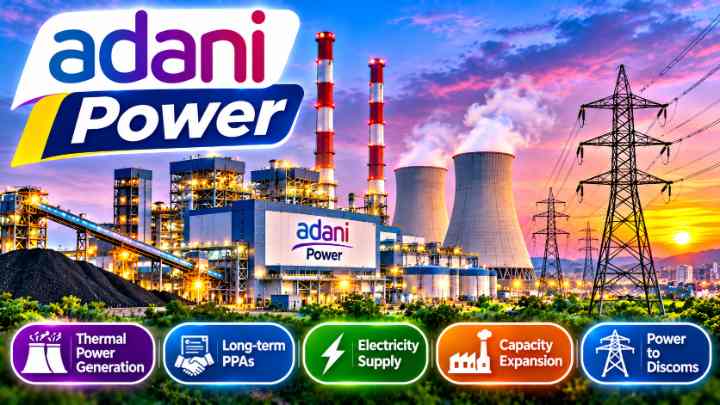
Explore Adani Power's thermal generation business, Q2 FY27 results, electricity sales, capacity expansion and key investment risks.
- Adani Power is part of the Adani portfolio and is described as India’s largest private-sector thermal power generator.
- Adani Power earns revenue by selling electricity to state distribution companies under long-term PPAs and through merchant market transactions.
- Electricity demand is an important driver for Adani Power.
What Adani Power Does
Adani Power is part of the Adani portfolio and is described as India’s largest private-sector thermal power generator. Its business focuses on generating electricity and supplying it to state distribution companies and other buyers through long-term power purchase agreements (PPAs) and the merchant market.
The company has an operating power generation capacity of 18,150 MW. Its portfolio includes imported coal-based capacity, with most of this capacity operating under PPAs that allow fuel-cost pass-through. This arrangement is important because it provides a mechanism to account for changes in fuel costs within the terms of the power supply agreements.
Adani Power also participates in the merchant electricity market, where power is sold outside long-term contracted arrangements. This gives the company exposure to market-based electricity sales, although merchant prices can fluctuate.
Its business is closely connected to India’s electricity demand and the need for dependable power generation. Thermal power remains the company’s core operating area, with management emphasising reliable electricity supply and timely capacity additions to meet baseload requirements.
Also Read: Vedanta: How Commodity Prices, Higher Volumes and Debt Reduction Drive Its Business
Adani Power also holds a stake in Jaiprakash Power Ventures as an associate. This forms part of its wider corporate interests beyond its directly operated power generation business.
Customers and How Adani Power Makes Money
Adani Power earns revenue by selling electricity to state distribution companies under long-term PPAs and through merchant market transactions. These are the two principal routes through which the company supplies the electricity generated by its power plants.
Long-term PPAs provide an agreed framework for supplying electricity to distribution companies. Most of the company’s imported coal-based capacity operates under agreements that permit fuel-cost pass-through. This is an important feature of its business model because coal costs are a major consideration for thermal power generation.
Merchant sales provide another source of revenue. Unlike long-term contracted supply, merchant market transactions expose the company to prevailing electricity prices. This can create opportunities when market prices are favourable, but it also introduces volatility.

Electricity sales and plant load factor are important operating indicators for the business. Sales show the amount of electricity supplied, while plant load factor reflects how much of the available generation capacity is being utilised.
The company’s performance therefore depends on electricity demand, plant operations, fuel arrangements and the balance between contracted and merchant sales. Payments from state distribution companies are also important because they affect the collection of revenue from power supplied.
Growth Drivers
Electricity demand is an important driver for Adani Power. The increase in India’s power demand during the September quarter provided a supportive environment for generation and electricity sales. Higher utilisation and sales contributed to the company’s operating performance.
The company’s existing generation capacity provides the base for its electricity supply business. Its ability to operate plants reliably and supply power under contracted arrangements is central to its performance.
Management, led by CEO S B Khyalia, has emphasised reliable power supply and timely capacity additions to meet baseload needs. This focus reflects the importance of dependable generation and project execution to the company’s business.
Also Read: Shree Cement: How Premium Products, Sales Growth and Cost Management Drive Its Business
The combination of electricity demand, plant utilisation and additional capacity provides the main areas to monitor when assessing Adani Power’s growth. The contribution from new capacity will depend on successful project completion and its integration into the operating portfolio.
Competition and Risks
Coal supply and fuel costs are major risks for a thermal power generator. Changes in fuel availability or costs can affect operating performance. Although most of Adani Power’s imported coal-based capacity operates under PPAs with fuel-cost pass-through provisions, investors should still monitor fuel arrangements and the terms governing cost recovery.
Dependence on state distribution companies creates another risk. These entities are important customers under long-term power agreements, making their ability to pay for electricity supplied relevant to the company’s cash flows.
Merchant market exposure introduces price volatility. Electricity sold outside long-term PPAs is subject to market prices, which can change and affect the revenue earned from those sales.
Project execution and large capital expenditure are further considerations. Capacity additions require timely completion, and delays can affect when new generation assets contribute to the business.
Environmental regulation is another risk for the company’s thermal power operations. In addition, group-level sentiment can influence how investors view Adani Power as part of the wider Adani portfolio.
What Investors Should Watch
Investors should monitor electricity sales and plant load factor to understand how effectively the company is using its operating capacity. These measures help distinguish actual operating performance from changes in reported financial results.
Also Read: REC: How Power and Infrastructure Financing Drive Its Business
The next important area is the commissioning of the Korba Phase 2 unit. Its progress will indicate whether the company is delivering the capacity additions highlighted by management.
Fuel supply and cost arrangements also deserve attention. Investors should assess how coal-related costs affect profitability and how effectively the company’s PPA provisions address fuel-cost changes.
The balance between long-term contracted sales and merchant market transactions is another factor to follow. Contracted arrangements provide a different revenue structure from merchant sales, where market prices can fluctuate.
Finally, investors should examine the quality of reported earnings. The latest profit increase included substantial one-time items, so future performance should be assessed through recurring operating results, electricity sales and cash generation rather than headline profit growth alone.
Also Read: Punjab National Bank: How Deposits, Lending and Improving Asset Quality Drive Its Business
Conclusion
The company’s future performance will depend on power demand, reliable plant operations, fuel arrangements and timely capacity additions. Investors should balance its operating scale and expansion plans against payment risks, merchant price volatility, project execution, environmental regulation and the quality of reported earnings.
Financial Disclaimer: This article is for educational and informational purposes only. It is not investment advice or a recommendation to buy or sell Adani Power shares. Investors should conduct independent research before making financial decisions.
Also Read: PFC: How Power Sector Financing and Renewable Energy Loans Drive Its Business




Keep learning with OneTrader
Explore structured lessons and practical guides to build your market knowledge.

Need a laugh after all that money talk?
Paisa LOL: India's funniest finance page, with memes, comics, jokes and long funny stories.
