
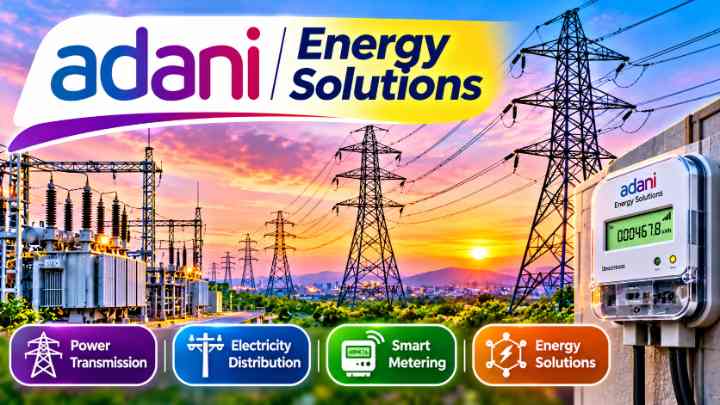
Explore Adani Energy Solutions' transmission, distribution and smart metering businesses, Q2 FY27 results, expansion plans and risks.
- Adani Energy Solutions (AESL), part of the Adani portfolio, is described as India’s largest private transmission, distribution, smart metering and energy solutions platform company.
- AESL’s business serves the electricity sector through transmission, distribution and smart metering.
- Expansion of the transmission network is a central growth driver for AESL.
What Adani Energy Solutions Does
Adani Energy Solutions (AESL), part of the Adani portfolio, is described as India’s largest private transmission, distribution, smart metering and energy solutions platform company. Its business is built around electricity transmission, distribution infrastructure and smart metering, placing it across important parts of the power supply chain.
Transmission is a major part of its operations. AESL owns and operates a transmission network spanning 29,739 circuit kilometres. The business earns long-term, availability-based revenue once transmission assets are commissioned. This model links revenue to the availability of operating infrastructure rather than relying only on the volume of electricity transmitted.
The company also operates in electricity distribution and smart metering. These businesses extend its presence beyond the movement of electricity across transmission networks to other parts of the power distribution system and energy solutions platform.
Also Read: Vedanta: How Commodity Prices, Higher Volumes and Debt Reduction Drive Its Business
Together, these activities give AESL exposure to large power infrastructure projects as well as the development of smart metering operations. Its business combines long-term transmission assets with distribution and metering activities.
Customers and How Adani Energy Solutions Makes Money
AESL’s business serves the electricity sector through transmission, distribution and smart metering. Its revenue comes from operating energy infrastructure and providing services through these business areas.
In transmission, the company develops and operates network assets. Once these assets are commissioned, the business earns long-term availability-based revenue. This makes commissioning and maintaining the availability of infrastructure important to its operating model.
Electricity distribution is another part of the platform. Smart metering adds a further business area, with the rollout of meters forming an important part of its expansion plans. The company’s proposed acquisition of IntelliSmart Infrastructure is relevant to this business, as it represents an expansion of its smart metering platform.
The financial performance of these activities is reflected in the company’s reported operational revenue and operational EBITDA, alongside the wider consolidated results. Investors should distinguish between the performance of the operating businesses and total consolidated income when assessing the company’s growth.

AESL’s model is infrastructure-intensive. It requires investment in projects and assets before they can contribute to the business. The timing of project execution and commissioning therefore matters, particularly in transmission, where availability-based revenue follows the commissioning of assets.
Growth Drivers
Expansion of the transmission network is a central growth driver for AESL. The company has a substantial operating network and continues to pursue new transmission projects. The Vizag and Satara wins added to its active order book, providing a pipeline of projects to be executed.
The transmission business has a distinctive revenue model. Once assets are commissioned, they earn long-term availability-based revenue. This makes timely project completion and consistent system availability important to the company’s ability to build its operating base.
Smart metering is another area of expansion. The agreed acquisition of IntelliSmart Infrastructure, following CCI approval, is a significant development for the company’s energy solutions platform. The smart metering business adds to its presence in electricity distribution and related infrastructure.
Also Read: Shree Cement: How Premium Products, Sales Growth and Cost Management Drive Its Business
The broader growth opportunity rests on developing and operating transmission assets while expanding distribution and smart metering. The pace at which projects are completed and new infrastructure becomes operational will influence how effectively AESL converts its investment programme into business performance.
Competition and Risks
AESL operates in a capital-intensive business where large infrastructure projects require substantial investment and careful execution. High debt and large capex needs are important risks because the company must fund its expansion while managing its financial commitments.
Project execution is another key consideration. Transmission projects must progress through their development and construction timelines before they can be commissioned. Delays can affect the timing at which assets become operational and begin earning availability-based revenue.
The regulatory and tariff framework also matters. Transmission and distribution infrastructure operates within a regulated environment, making the applicable framework an important factor in the business model.
Smart metering expansion carries a separate execution dependency. The rollout depends on distribution companies, or discoms. The pace of adoption and implementation therefore cannot be assessed solely by looking at AESL’s own expansion plans.
Group-level sentiment is another risk for investors. AESL is part of the Adani portfolio, so sentiment towards the wider group can influence how the market views the company, independently of its operating performance.
These risks make it important to assess the company’s financial growth alongside its capital requirements, project progress and operating performance.
What Investors Should Watch
The first area to monitor is the progress of transmission projects, particularly the conversion of the active order book into commissioned assets. Since transmission earns availability-based revenue after commissioning, execution timelines are directly relevant to future operating performance.
Also Read: REC: How Power and Infrastructure Financing Drive Its Business
System availability is another important indicator. AESL’s transmission business depends on keeping commissioned assets available, making this measure useful when evaluating operating performance.
Investors should also track the level of capex and how effectively the company deploys capital. Large infrastructure investments can support expansion, but they also increase funding requirements and make project execution more important.
The IntelliSmart Infrastructure acquisition is worth following as the company expands its smart metering activities. The pace of rollout and dependence on discoms will be relevant to assessing how this business develops.
Finally, investors should consider debt, the regulatory and tariff framework, and group-level sentiment alongside reported earnings. Strong income and EBITDA growth are important, but the sustainability of performance also depends on how the company manages its investment programme and executes its projects.
Also Read: Punjab National Bank: How Deposits, Lending and Improving Asset Quality Drive Its Business
Conclusion
The investment case depends on converting infrastructure orders and capital expenditure into commissioned assets, maintaining high system availability and developing the smart metering business. Investors should balance the company’s growth opportunities against its debt, capex requirements, execution timelines and regulatory risks.
Financial Disclaimer: This article is for educational and informational purposes only. It is not investment advice or a recommendation to buy or sell Adani Energy Solutions shares. Investors should conduct independent research before making financial decisions.
Also Read: PFC: How Power Sector Financing and Renewable Energy Loans Drive Its Business



Keep learning with OneTrader
Explore structured lessons and practical guides to build your market knowledge.

Need a laugh after all that money talk?
Paisa LOL: India's funniest finance page, with memes, comics, jokes and long funny stories.
