
Explore Siemens Energy India's power transmission and generation businesses, Q3 FY26 results, order backlog, renewable energy opportunities and key risks.
- Siemens Energy India Limited was demerged from Siemens Limited and listed separately on 19 June 2025.
- Siemens Energy India serves utilities, power producers, grid operators and industrial customers.
- Expansion in India’s electricity infrastructure is an important opportunity for Siemens Energy India.
What Siemens Energy India Does
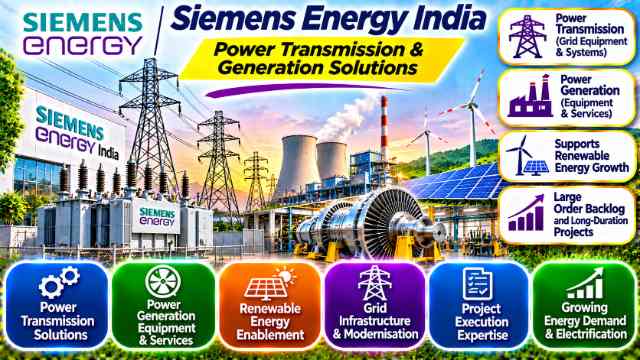
Siemens Energy India Limited was demerged from Siemens Limited and listed separately on 19 June 2025. The company operates in two main areas: power transmission and power generation.
Its power transmission business supplies grid equipment and systems, while its power generation business provides equipment and services. These activities serve the infrastructure required to generate electricity and move it through power networks.
Customers and How Siemens Energy India Makes Money
Siemens Energy India serves utilities, power producers, grid operators and industrial customers. These organisations require equipment and services for power generation and transmission projects.
Also Read: Vedanta: How Commodity Prices, Higher Volumes and Debt Reduction Drive Its Business
The company earns revenue by supplying equipment, systems and services under project contracts. Its transmission business contributes through grid equipment and systems, while power generation provides another source of project revenue.
Because projects can take time to execute, revenue does not necessarily follow a smooth quarterly pattern. The size of the order backlog and the pace at which existing projects are completed influence how much business is recognised as revenue.
Growth Drivers
Expansion in India’s electricity infrastructure is an important opportunity for Siemens Energy India. Management noted that India added more than 30 GW of renewable capacity during the first half of calendar 2026, while electricity demand continues to rise alongside electrification.

Growth in renewable capacity creates requirements for power transmission infrastructure and related grid systems. This makes the company’s transmission business relevant to the development of electricity networks.
Power generation projects provide another source of business. Demand from power producers for equipment and services can support activity in this segment.
The existing order backlog is also important. Converting secured projects into revenue through timely execution will determine how effectively the company translates its project pipeline into financial performance.
Competition and Risks
Dependence on large project orders creates uncertainty in quarterly performance. Order inflows can be uneven, and delays in project execution can affect the timing of revenue recognition.
Competition from other heavy electrical and grid-equipment manufacturers is another consideration. Winning new projects and executing existing contracts effectively will be important to maintaining business momentum.
Also Read: Shree Cement: How Premium Products, Sales Growth and Cost Management Drive Its Business
Investors should also consider the expectations reflected in the share price following the sharp profit growth. Strong recent results may raise expectations for continued performance, making future order wins, execution and profitability important measures.
What Investors Should Watch
Investors should track the order backlog and the company’s ability to convert it into revenue. New project orders and execution progress will provide important indications of future business activity.
The performance of power transmission and power generation should also be assessed separately. Their respective revenue contributions can help investors understand which segment is driving growth.
India’s renewable capacity additions and rising electricity demand are important developments for the company’s operating environment. However, the key financial question is whether these opportunities translate into sustained orders, timely project completion and continued profitability.
Conclusion
Siemens Energy India operates in power transmission and generation, supplying equipment, systems and services to utilities, power producers, grid operators and industrial customers. Its project-based business model makes order backlog and execution central to revenue growth.
The latest reported results showed strong increases in revenue and profit, supported by growth across both major business segments. India’s expanding renewable capacity and rising electricity demand provide opportunities, but investors should continue to monitor order flow, project execution, competition and the expectations already reflected in the share price.
Financial Disclaimer: This article is for educational and informational purposes only. It is not investment advice or a recommendation to buy or sell Siemens Energy India shares. Investors should conduct independent research before making financial decisions.
Also Read: REC: How Power and Infrastructure Financing Drive Its Business



Keep learning with OneTrader
Explore structured lessons and practical guides to build your market knowledge.

Need a laugh after all that money talk?
Paisa LOL: India's funniest finance page, with memes, comics, jokes and long funny stories.
