
Explore GAIL's natural gas transmission, marketing, petrochemicals, Q2 FY27 results, operating volumes, capex and key risks.
- GAIL (India) Limited is a Maharatna state-owned company under the Ministry of Petroleum and Natural Gas.
- GAIL serves customers across several energy-intensive industries.
- Natural gas transmission is a central part of GAIL’s business.
What GAIL Does
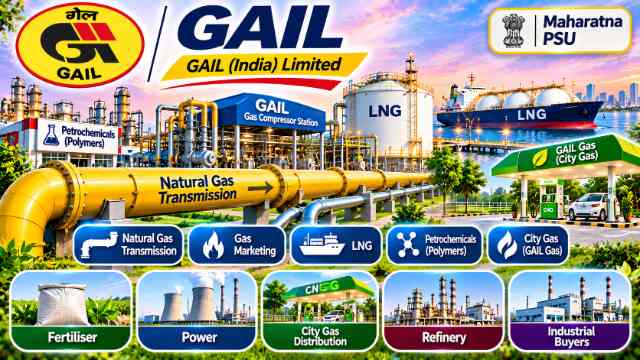
GAIL (India) Limited is a Maharatna state-owned company under the Ministry of Petroleum and Natural Gas. Its business is centred on natural gas transmission and marketing, supported by interests in LNG, petrochemicals and city gas distribution.
The company operates a natural gas pipeline network across India, transporting gas to different customers and markets. Alongside transmission, GAIL markets natural gas to buyers across industries. Its other business interests include LNG and petrochemicals, particularly polymers, while its city gas interests include subsidiary GAIL Gas.
This combination gives GAIL exposure to multiple parts of the natural gas value chain, from transporting and selling gas to participating in related downstream businesses.
Customers and How GAIL Makes Money
GAIL serves customers across several energy-intensive industries. Its buyers include fertiliser manufacturers, power producers, city gas distribution companies, refineries and industrial businesses.
Also Read: Vedanta: How Commodity Prices, Higher Volumes and Debt Reduction Drive Its Business
The company earns revenue through natural gas transmission and marketing. Transmission involves transporting gas through its pipeline network, while marketing involves selling natural gas to customers. Its LNG and petrochemical businesses provide additional sources of business activity, and its city gas interests extend its presence into the distribution market.
The distinction between transmission and marketing is important. Transmission revenue comes from the movement of gas through the network, whereas marketing revenue is linked to the sale of gas. Their performance can therefore respond differently to changes in volumes, prices and market conditions.

Growth Drivers
Natural gas transmission is a central part of GAIL’s business. Higher volumes moving through its pipeline network can support the transmission segment, making demand from fertiliser, power, city gas and industrial customers important to its performance.
GAIL’s investments across LNG, petrochemicals and city gas also give it exposure beyond pipeline transmission and gas marketing. The board’s approval of plans to list subsidiary GAIL Gas through an IPO is another significant corporate development for investors to follow.
The company’s capital expenditure programme is also relevant. The H1 spending figure reflects progress against its annual investment plan, and the deployment of this capital will be important to monitor as the company continues its business activities.
Competition and Risks
Gas price and LNG price volatility can affect GAIL’s marketing business. Changes in purchase costs and selling prices can influence business performance, making the relationship between gas procurement and sales conditions important.
Geopolitical developments can disrupt gas supplies and create uncertainty around availability and pricing. This is particularly relevant to a business with exposure to LNG and natural gas markets.
Also Read: Siemens Energy India: How Power Transmission, Generation and Project Backlogs Drive Its Business
Petrochemical margins can also fluctuate, creating variability in the performance of that business. Changes in regulated transmission tariffs may affect the economics of pipeline operations, while competition in gas marketing can influence customer relationships and commercial terms.
GAIL’s performance is also linked to domestic natural gas consumption. If demand from major customer industries weakens, it could affect the volumes transported or marketed by the company.
What Investors Should Watch
Investors should track gas transmission and marketing volumes to understand whether the recent sequential improvement continues. The record transmission volume during September provides an important reference point, while subsequent quarterly figures will show whether higher utilisation is sustained.
The relationship between revenue growth and net profit also deserves attention. Gas and LNG price movements, supply conditions and petrochemical margins can influence how changes in business activity translate into financial performance.
Also Read: Shree Cement: How Premium Products, Sales Growth and Cost Management Drive Its Business
Capital expenditure progress is another area to monitor, particularly in relation to the company’s annual plan. Investors should also follow developments around the proposed GAIL Gas IPO, including any subsequent steps towards the listing.
Conclusion
GAIL combines natural gas pipeline transmission and marketing with interests in LNG, petrochemicals and city gas. Its broad customer base across fertilisers, power, refineries, industrial users and city gas distribution connects the company to several parts of India’s energy market.
Financial Disclaimer: This article is for educational and informational purposes only. It is not investment advice or a recommendation to buy or sell GAIL shares. Investors should conduct independent research before making financial decisions.





Keep learning with OneTrader
Explore structured lessons and practical guides to build your market knowledge.

Need a laugh after all that money talk?
Paisa LOL: India's funniest finance page, with memes, comics, jokes and long funny stories.
