
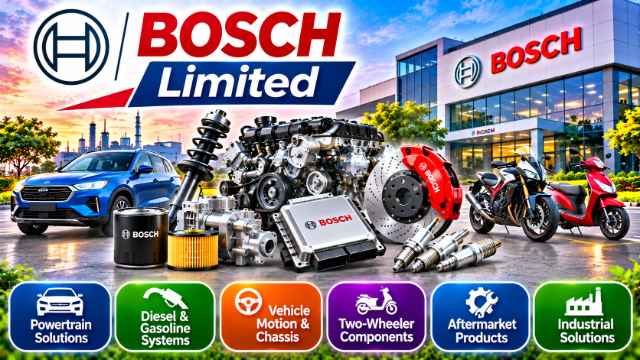
Explore Bosch Limited's automotive technology business, Q2 FY27 results, RBIC integration, OEM demand and key investment risks.
- Bosch Limited is the listed Indian arm of Bosch, a leading supplier of automotive technology with additional businesses in consumer goods and other areas.
- Bosch Limited earns revenue by supplying automotive technology, components and related products to vehicle manufacturers, the aftermarket and other industrial users.
- Vehicle production is an important driver for Bosch Limited because its automotive technology and components are supplied to vehicle manufacturers.
What Bosch Does
Bosch Limited is the listed Indian arm of Bosch, a leading supplier of automotive technology with additional businesses in consumer goods and other areas. Its automotive portfolio covers powertrain solutions, diesel and gasoline systems, vehicle motion and chassis technology, two-wheeler products and aftermarket components.
The company’s business connects it closely to the automotive industry. Its products and technology are supplied to vehicle manufacturers and serve requirements across different vehicle categories. Powertrain systems and fuel-related technologies form part of its traditional automotive offering, while vehicle motion and chassis solutions add another important area of activity.
Bosch also operates in the two-wheeler segment and the automotive aftermarket. This gives it exposure beyond the production requirements of vehicle manufacturers, with products and components also serving the replacement market.
Also Read: Vedanta: How Commodity Prices, Higher Volumes and Debt Reduction Drive Its Business
Customers and How Bosch Makes Money
Bosch Limited earns revenue by supplying automotive technology, components and related products to vehicle manufacturers, the aftermarket and other industrial users.
Vehicle manufacturers, commonly known as original equipment manufacturers or OEMs, are an important customer group. Bosch supplies systems and components that are incorporated into vehicles during production. Its business therefore has a direct connection to vehicle manufacturing activity and the production plans of its customers.
The aftermarket provides another source of business. Vehicles already on the road require replacement products and components, creating demand beyond the initial sale of a vehicle. Bosch’s aftermarket products give it exposure to this part of the automotive value chain.

Its two-wheeler products and other industrial businesses broaden the customer base further. The company’s revenue is consequently linked to different areas of automotive production and component demand rather than a single vehicle category.
The addition of RBIC is also important to understanding the company’s current business. Its results are now included in Bosch Limited’s consolidated financial statements, so investors need to consider the contribution of the acquired chassis systems business when assessing revenue and profitability.
Growth Drivers
The company’s broad automotive portfolio provides exposure to several areas of vehicle technology. Powertrain solutions, diesel and gasoline systems, vehicle motion and chassis products, and two-wheeler components connect it to different customer requirements.
The aftermarket adds another source of demand. Bosch serves replacement needs through its aftermarket products, giving the company business beyond components supplied during the original manufacturing process.
RBIC’s integration is another important development. Its contribution is now reflected in consolidated results, adding chassis systems revenue and EBITDA to Bosch Limited’s reported business. The extent to which this business supports future consolidated performance will be important to monitor.
Also Read: Shree Cement: How Premium Products, Sales Growth and Cost Management Drive Its Business
Competition and Risks
Bosch Limited’s close connection to the automotive industry exposes it to vehicle production cycles. If OEM production slows, demand for components and automotive technology can weaken. The aftermarket provides a separate source of demand, but the company’s overall performance remains closely linked to automotive activity.
The transition towards electric vehicles and other technology shifts is a longer-term consideration. Changes in vehicle technology can influence the mix of components and systems required by manufacturers, making the evolution of Bosch’s product portfolio important.
Input costs can also affect profitability. In addition, the integration of RBIC creates a need to assess how effectively the acquired business is incorporated into Bosch Limited’s consolidated operations.
What Investors Should Watch
Also Read: REC: How Power and Infrastructure Financing Drive Its Business
Profit quality is another important area. Investors should separate reported PAT from the impact of provision reversals to understand how the underlying business is performing. Consolidated EBITDA and revenue provide additional measures of operating progress.
The aftermarket and two-wheeler businesses should also be considered alongside OEM demand. They represent other parts of Bosch’s customer base and help provide a broader view of its automotive exposure.
Conclusion
Also Read: Punjab National Bank: How Deposits, Lending and Improving Asset Quality Drive Its Business
Financial Disclaimer: This article is for educational and informational purposes only. It is not investment advice or a recommendation to buy or sell Bosch Limited shares. Investors should conduct independent research before making financial decisions.






Keep learning with OneTrader
Explore structured lessons and practical guides to build your market knowledge.

Need a laugh after all that money talk?
Paisa LOL: India's funniest finance page, with memes, comics, jokes and long funny stories.
