
Understand Indian Oil's refining, fuel marketing, pipelines, Q2 FY27 profit recovery, sales volumes and key business risks.
- Indian Oil Corporation (IOC) is India’s largest state-owned oil company and a Maharatna public sector undertaking.
- Indian Oil serves a broad customer base.
- Fuel demand across retail, household and industrial customers remains central to Indian Oil’s business.
What Indian Oil Does
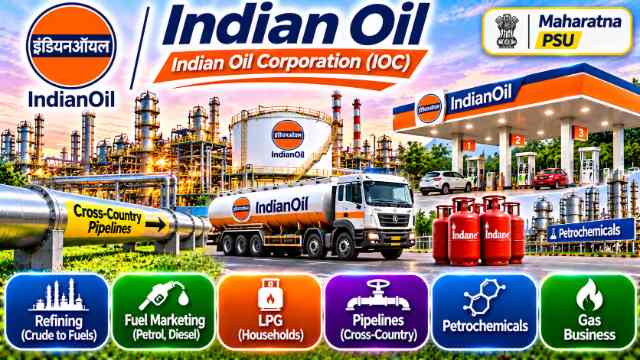
Indian Oil Corporation (IOC) is India’s largest state-owned oil company and a Maharatna public sector undertaking. Its business spans crude oil refining, fuel marketing, transportation through pipelines, petrochemicals and gas.
The company processes crude oil into petroleum products and markets petrol, diesel, LPG and other fuels through its retail network. It also operates cross-country pipelines that transport oil and petroleum products. Its petrochemical and gas businesses add further activities beyond conventional fuel refining and sales.
This integrated business connects Indian Oil to several parts of the energy value chain, from processing crude oil to supplying fuels to end users and industrial customers.
Customers and How Indian Oil Makes Money
Indian Oil serves a broad customer base. Retail motorists purchase petrol and diesel through its fuel network, while households depend on its LPG business. Industrial customers, airlines and export buyers provide additional markets for its products.
Also Read: Vedanta: How Commodity Prices, Higher Volumes and Debt Reduction Drive Its Business
The company earns revenue by refining crude oil and selling the resulting fuels and petroleum products. Its marketing business generates sales through petrol, diesel, LPG and other fuels, while pipelines support the transportation of oil and petroleum products. Petrochemicals and gas provide additional sources of business activity.

Its financial performance depends on several factors, including crude oil prices, refining and petrochemical margins, fuel sales volumes and the economics of selling fuels in the domestic market.
Growth Drivers
Refinery throughput is another important factor. Higher processing volumes can support the company’s ability to supply petroleum products, while refining profitability remains influenced by crude oil prices and market conditions.
The pipeline network contributes to the movement of oil and petroleum products across the country. Growth in pipeline throughput provides an indication of increased transportation activity within this part of the business.
Competition and Risks
Crude oil price movements are a major source of uncertainty for Indian Oil. Changes in crude prices can affect refining economics and create inventory gains or losses, making quarterly profitability sensitive to the timing of price movements.
Fuel pricing and domestic LPG economics are also important risks. Government influence over fuel pricing can limit the company’s ability to pass on higher costs, while under-recoveries in LPG can affect financial performance and make government compensation relevant.
Also Read: Siemens Energy India: How Power Transmission, Generation and Project Backlogs Drive Its Business
What Investors Should Watch
Investors should monitor crude oil prices and the effect of price movements on refining economics and inventory gains or losses. The direction of refining, petrochemical and gas margins will help determine whether the latest improvement in profitability can continue.
Domestic fuel sales, refinery throughput and pipeline volumes are useful indicators of business activity. The relationship between fuel prices, operating costs and government compensation for LPG under-recoveries also deserves attention.
Also Read: Shree Cement: How Premium Products, Sales Growth and Cost Management Drive Its Business
Conclusion
Indian Oil operates across refining, fuel marketing, pipelines, petrochemicals and gas, serving customers ranging from individual motorists and households to industrial buyers and airlines. Its scale across these activities gives it exposure to multiple parts of India’s energy market.
Financial Disclaimer: This article is for educational and informational purposes only. It is not investment advice or a recommendation to buy or sell Indian Oil shares. Investors should conduct independent research before making financial decisions.




Keep learning with OneTrader
Explore structured lessons and practical guides to build your market knowledge.

Need a laugh after all that money talk?
Paisa LOL: India's funniest finance page, with memes, comics, jokes and long funny stories.
