

Starting stock trading in India has become easier with online trading platforms, digital KYC and mobile applications. However, opening an account is only the first step. A beginner also needs to understand how the stock market works, how orders are placed, what charges apply and how to manage risk.
This Onetrader Guide explains the basic process of starting trading in the Indian stock market in 2026.
What Do You Need to Start Trading?
To begin trading in Indian equities, you generally need a PAN card, bank account, demat account and trading account. NSE states that investors should select a SEBI-registered broker and complete the required KYC process before buying or selling securities.
The demat account holds your securities electronically, while the trading account allows you to place buy and sell orders. These accounts work together with your bank account to complete market transactions.
Also Read: How to Read a Contract Note from Your Stockbroker: Charges, Taxes and Settlement Explained
Step 1: Choose a Stock Trading Platform
The first practical decision is choosing a suitable stock broker. Platforms such as Zerodha, Groww, Upstox and Angel One offer online trading services, but their brokerage structures, tools and additional charges can differ.
Instead of selecting a broker only because it advertises low brokerage, compare its trading platform, charting tools, order types, customer support, annual maintenance charges and other applicable fees.
Step 2: Open a Demat and Trading Account
After choosing a broker, you can complete the account-opening and KYC process online. Typical requirements include PAN, identity and address information, along with bank-account details.
The exact process varies between brokers, but digital verification can make account opening relatively quick. Investors should carefully review the account terms and charges before completing registration.
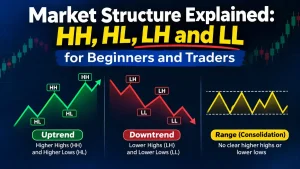
Also Read: Market Structure Explained: HH, HL, LH and LL
Step 3: Learn How the Stock Market Works
Before placing your first trade, understand basic concepts such as market orders, limit orders, stop-loss orders, delivery trading, intraday trading, support, resistance and volume.
A beginner should also understand the difference between investing and trading. Investing generally focuses on owning securities for longer periods, while trading involves taking positions based on shorter-term price movements.
Step 4: Start With a Simple Trading Strategy
New traders often make the mistake of entering the market without defined rules. A basic strategy should specify what creates an entry, where the stop-loss will be placed and when the position will be exited.
Technical indicators such as moving averages, volume and price-action patterns can help traders structure their analysis. However, no indicator guarantees a profitable trade.
Also Read: How to Choose a Financial Advisor: 7 Things to Check Before Hiring One
The objective should be to develop a repeatable process rather than continuously switching between different strategies.
Step 5: Understand Trading Costs
Trading costs go beyond brokerage. Depending on the transaction, investors may also encounter securities transaction tax, exchange transaction charges, GST, stamp duty and depository-related charges.
For example, equity delivery and intraday transactions have different STT treatment. Investors should therefore calculate the complete cost of a trade rather than looking only at the broker’s advertised brokerage.
Step 6: Manage Risk Before You Trade
Risk management is one of the most important parts of trading. A trader should decide the maximum amount they are willing to lose on a trade before entering the position.

Also Read: How to Change Bank Account in Demat Account Online: Step-by-Step Guide
Using a stop-loss, controlling position size and avoiding excessive leverage can help prevent a single unsuccessful trade from causing significant damage to trading capital.
Beginners should also avoid trading with money required for essential expenses or financial commitments.
Can You Start Trading With a Small Amount?
Yes. There is no requirement to begin with a large trading capital for learning equity trading. A beginner can start with a small amount and gradually gain experience.
The focus in the early stage should be on understanding order execution, risk management, market behaviour and maintaining discipline rather than trying to generate large profits quickly.
Disclaimer: This article is for educational purposes only and is not financial advice. Stock market trading involves market risk, and past performance does not guarantee future results.


Keep learning with OneTrader
Explore structured lessons and practical guides to build your market knowledge.
