
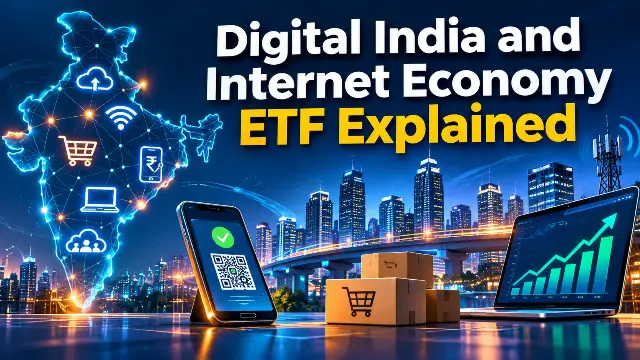
India’s digital economy is creating opportunities across online shopping, digital payments, financial technology, software, telecommunications, food delivery and internet-based services. As consumers increasingly use digital platforms for everyday activities, companies operating in these businesses are becoming an important part of India’s evolving stock market.
Investors looking to participate in this transformation can consider thematic exchange-traded funds (ETFs) focused on India’s digital and internet economy. These funds provide exposure to multiple businesses through a single investment, without requiring investors to identify individual winners. However, Digital India and Internet Economy ETFs follow different indices, making it important to understand their underlying portfolios before investing.
In simple words
A Digital India ETF invests in companies connected to the broader digital ecosystem, including IT services, telecom and online businesses. An Internet Economy ETF focuses more specifically on companies whose businesses depend on internet platforms, e-commerce and digital services. Both offer thematic exposure, but neither provides the diversification of a broad-market index fund.
What Is a Digital India and Internet Economy ETF?
A Digital India ETF is a thematic equity fund that tracks an index representing companies benefiting from India’s digital transformation. Its investments can include IT service providers, software companies, telecom operators, digital financial services and online businesses.
In India, the Tata Nifty India Digital ETF tracks the Nifty India Digital Index. This index selects companies representing the broader digital theme, offering exposure to established technology businesses alongside newer digital platforms.
An Internet Economy ETF takes a narrower approach. It tracks companies that conduct a significant part of their business through online platforms. The Mirae Asset Nifty India Internet ETF and Groww Nifty India Internet ETF track the Nifty India Internet Index.
How Do These ETFs Work?
Both types of ETFs follow passive investment strategies. Instead of selecting stocks based on a fund manager’s personal market outlook, they replicate a designated stock market index.
Also Read: Liquid ETF Explained: How Liquid ETFs Work in India, Returns, Risks and Who Should Buy Them
When investors purchase ETF units through a demat and trading account, they gain indirect exposure to the underlying portfolio. The ETF’s market price changes throughout trading hours based on demand, supply and the value of its holdings.
The underlying indices periodically review their constituents and weightings. This allows the portfolios to reflect changes in the digital economy, although index adjustments can also create additional trading costs.

Digital India vs Internet Economy ETF: Key Differences
| Particulars | Digital India ETF | Internet Economy ETF |
|---|---|---|
| Benchmark | Nifty India Digital | Nifty India Internet |
| Main exposure | Broader digital ecosystem | Internet-based businesses |
| Technology | Strong exposure | Selective exposure |
| Telecom | Included | Limited |
| E-commerce | Included | Major exposure |
| Fintech | Included | Major exposure |
The distinction matters because a digital ETF can benefit from established IT and telecom businesses, while an internet-focused ETF depends more heavily on online consumer platforms and digital financial services.
Major Holdings and Companies to Watch
The portfolios change as indices are rebalanced, but investors can understand their investment themes through representative constituents.
Also Read: Liquid ETF Explained: How Liquid ETFs Work in India, Returns, Risks and Who Should Buy Them
| Digital India ETF | Internet Economy ETF |
|---|---|
| HCL Technologies | Eternal |
| TCS | PB Fintech |
| Infosys | One 97 Communications |
| Bharti Airtel | Info Edge |
| Tech Mahindra | FSN E-Commerce Ventures |
| Persistent Systems | Swiggy |
The Digital India basket combines traditional technology companies with telecom and emerging digital businesses. The Internet Economy basket has greater exposure to online retail, food delivery, fintech, digital marketplaces and internet-driven consumer services.
Investors should check the latest monthly portfolio disclosures before purchasing because individual stock weights can change considerably.
Why Are Investors Interested in These ETFs?
India’s growing internet penetration, digital payments infrastructure, online consumption and increasing adoption of technology create a long-term opportunity for businesses operating in these segments.
These ETFs offer three potential advantages:
- Convenience: One investment provides exposure to several companies within a specific theme.
- Emerging business exposure: Investors can participate in the growth of online platforms and digital services.
- Transparent portfolios: Index-based investing makes the underlying stock selection and weightings easier to understand.
However, growth in the digital economy does not automatically translate into higher stock market returns. Valuations, profitability, competition and execution remain important.
Risks of Investing in Digital and Internet ETFs
Sector concentration: These ETFs focus on a specific investment theme. A slowdown in technology spending, online consumption or digital business activity can affect several holdings simultaneously.
Valuation risk: Popular internet businesses can command expensive valuations based on future growth expectations. If earnings fail to meet expectations, their share prices may decline sharply.
Business model risk: Some internet companies operate in highly competitive markets where customer acquisition costs, discounting and operating expenses can affect profitability.
Also Read: Railway and Capital Goods ETF Explained: How It Works, Holdings, Risks and Who Should Buy It
Volatility: Thematic ETFs can experience larger price swings than diversified equity funds, particularly when smaller and emerging businesses form a meaningful part of their portfolios.
Tracking and liquidity risk: ETF returns can differ from their benchmark because of expenses and tracking error. Low trading volumes or wider bid-ask spreads can also affect execution prices.
Who Should Invest in These ETFs?
These ETFs may suit investors who have a long investment horizon, understand sector-specific risks and want additional exposure to India’s digital transformation.
The broader Digital India ETF may appeal to investors seeking a combination of established technology, telecom and digital businesses. Internet Economy ETFs may suit investors specifically interested in online platforms, e-commerce and fintech.
Also Read: Bharat 22 ETF Explained: How It Works, Holdings, Risks and Who Should Buy It
They are generally less suitable for conservative investors, people with short-term financial goals or investors who already have substantial exposure to technology and internet-related stocks.
A diversified Nifty 50 or Nifty 500 index fund can serve as a core portfolio holding, while thematic ETFs can play a smaller supplementary role. Investors should also compare expense ratios, tracking errors, trading volumes and portfolio concentration before choosing a fund.
Key Takeaways
- Digital India and Internet Economy ETFs provide exposure to India’s expanding digital ecosystem.
- Digital India ETFs cover a broader mix of IT, telecom and digital businesses.
- Internet Economy ETFs focus more on online platforms, fintech and e-commerce.
- Both carry very high equity market and sector concentration risks.
- These funds are better considered as supplementary long-term investments rather than replacements for diversified equity funds.
- Review holdings, valuations, liquidity and expenses before investing.
Financial Disclaimer: This article is for educational purposes only and should not be considered investment advice. Thematic ETFs carry market, sector concentration and liquidity risks. Investors should assess their financial goals, risk tolerance and investment horizon before making investment decisions. Past performance does not guarantee future returns.
Also Read: CPSE ETF Explained: How India’s PSU Enterprise ETF Works, Holdings, Risks and Who Should Buy It



Keep learning with OneTrader
Explore structured lessons and practical guides to build your market knowledge.

Need a laugh after all that money talk?
Paisa LOL: India's funniest finance page, with memes, comics, jokes and long funny stories.
