
Explore Jindal Steel's manufacturing business, value-added products, Q2 FY27 results, sales volumes, expansion plans and key risks.
- Jindal Steel Limited, formerly known as Jindal Steel & Power, is part of the OP Jindal Group.
- Jindal Steel supplies products to customers across railways, infrastructure, construction, engineering and automotive industries.
- Demand from railways, infrastructure, construction and engineering customers provides the business with multiple end markets.
What Jindal Steel Does
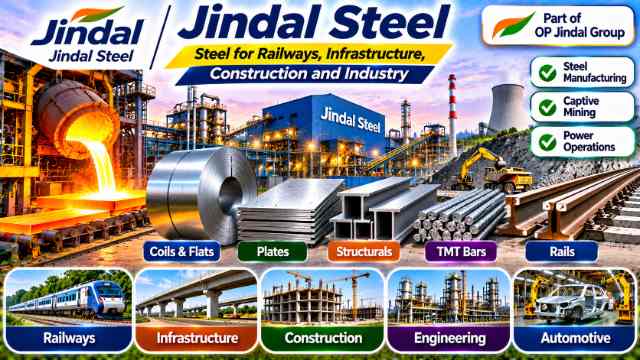
Jindal Steel Limited, formerly known as Jindal Steel & Power, is part of the OP Jindal Group. The company manufactures steel products for infrastructure, construction, engineering, railways and automotive applications.
Its product portfolio includes flat and long steel products such as rails, plates, structurals and TMT bars. The company operates large manufacturing plants at Angul in Odisha, Raigarh and Patratu. Its business also includes captive mining interests and power operations.
An important part of its product strategy is value-added steel. These products serve specific industrial and infrastructure requirements and carry higher margins than conventional steel products.
Customers and How Jindal Steel Makes Money
Jindal Steel supplies products to customers across railways, infrastructure, construction, engineering and automotive industries. Its products are used in projects and applications that require different forms and specifications of steel.
Also Read: Vedanta: How Commodity Prices, Higher Volumes and Debt Reduction Drive Its Business
The company earns revenue by manufacturing and selling flat and long steel products. Its product mix influences profitability because value-added products carry higher margins. Changes in the share of different products sold can therefore affect average selling prices and overall earnings.
Captive mining interests and power operations are also part of its business structure, alongside its steel manufacturing activities.

Growth Drivers
Demand from railways, infrastructure, construction and engineering customers provides the business with multiple end markets. The company’s product range, including rails, plates and structurals, connects it to different industrial and infrastructure requirements.
The contribution from value-added products is another important growth driver. A higher share of these products can support average selling prices and profitability because they carry better margins.
Production and sales volumes will also influence future performance. Management’s maintained FY27 sales guidance provides an important reference point for assessing whether the company can sustain its sales momentum.
The company’s expansion projects and manufacturing operations at Angul, Raigarh and Patratu will remain relevant to its future growth and execution strategy.
Competition and Risks
Steel prices are cyclical, making revenue and profitability sensitive to changes in market conditions. A decline in steel prices can affect realisations even when production and sales volumes remain strong.
Imports of low-cost steel create competitive pressure in the domestic market. This can influence selling prices and make it harder for producers to maintain margins.
Also Read: Siemens Energy India: How Power Transmission, Generation and Project Backlogs Drive Its Business
Coking coal and other input costs are additional risks. Higher raw material costs can reduce profitability if selling prices do not adjust sufficiently.
Expansion projects also carry execution risks, while leverage remains an important consideration. The company’s ability to manage debt while funding its growth plans will influence its financial position.
What Investors Should Watch
Investors should monitor steel production and sales volumes against management’s FY27 guidance. The relationship between production and sales will help assess the company’s ability to maintain its operating momentum.
Product mix deserves close attention, particularly the contribution from higher-margin value-added products. Changes in the share of flat products and TMT sales can influence average selling prices and profitability.
Also Read: Shree Cement: How Premium Products, Sales Growth and Cost Management Drive Its Business
Steel prices, import competition and coking coal costs will remain important external factors. Investors should also track expansion project execution and progress on deleveraging, especially given the company’s existing debt position.
Conclusion
Jindal Steel operates across steel manufacturing, captive mining interests and power, supplying products to infrastructure, railway, construction, engineering and automotive customers. Its broad product portfolio and focus on value-added steel are important parts of its business model.
Financial Disclaimer: This article is for educational and informational purposes only. It is not investment advice or a recommendation to buy or sell Jindal Steel shares. Investors should conduct independent research before making financial decisions.



Keep learning with OneTrader
Explore structured lessons and practical guides to build your market knowledge.

Need a laugh after all that money talk?
Paisa LOL: India's funniest finance page, with memes, comics, jokes and long funny stories.
