
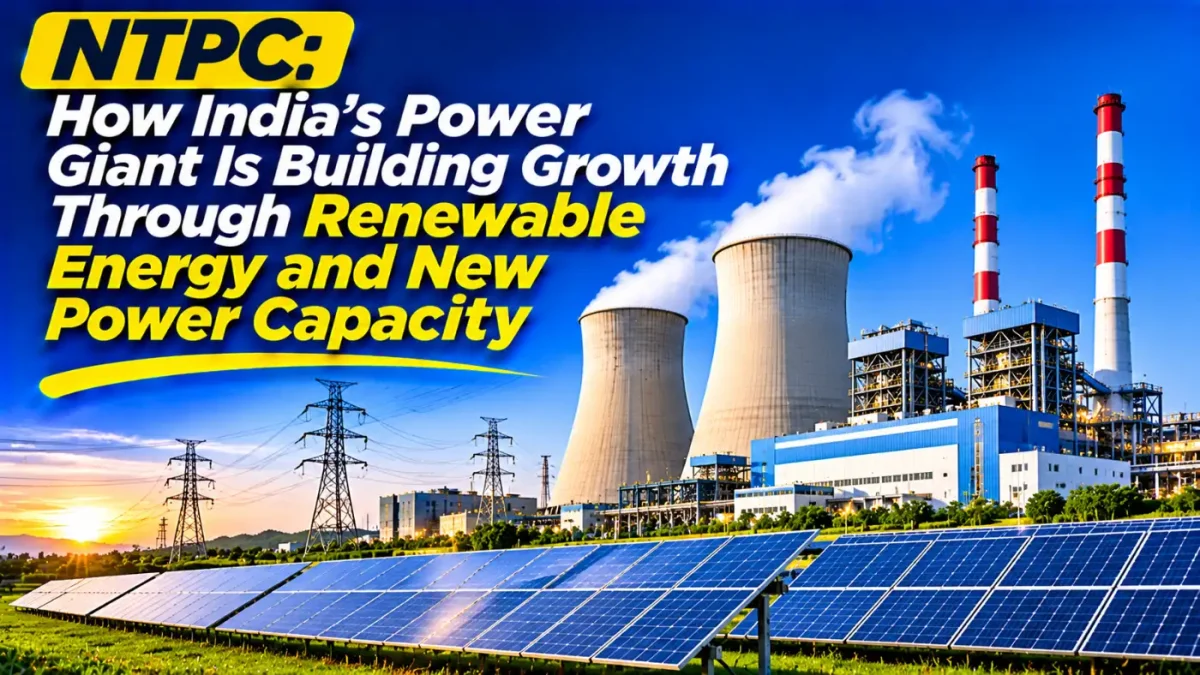
NTPC is India’s largest power generation company, supplying electricity to distribution companies, state utilities and large institutional customers.
- NTPC develops, owns and operates power generation stations.
- NTPC’s main customers are state electricity distribution companies, power utilities and government-linked electricity buyers.
- India’s rising electricity demand is the main long-term growth driver.
NTPC is India’s largest power generation company, supplying electricity to distribution companies, state utilities and large institutional customers. Its business has traditionally been built around coal-based thermal power, but it is expanding into solar, wind, hydro, pumped storage and other clean-energy projects.
The company occupies an important position in India’s electricity system, where demand is rising alongside industrial growth, urbanisation and wider electrification. NTPC’s long-term opportunity lies in adding generation capacity while gradually diversifying its energy mix. The challenge is to balance large capital requirements, fuel availability, regulation and the transition to lower-carbon power.
What NTPC Does
NTPC develops, owns and operates power generation stations. Thermal power remains its largest business, with coal-fired plants supplying a substantial share of its electricity. It also operates gas-based stations and has exposure to hydroelectric generation through group companies.
Renewable energy is becoming a larger part of its strategy. Through NTPC Green Energy and other group entities, the company is developing solar and wind projects, while exploring green hydrogen, energy storage and related clean-energy opportunities. Pumped storage projects are particularly important because they can help balance electricity supply when solar and wind generation fluctuate.
Also Read: Apollo Hospitals: How India’s Healthcare Giant Is Building Growth
NTPC is also involved in coal mining, power trading, consultancy and other energy-related activities. Its wider group includes subsidiaries and joint ventures operating across generation, mining, renewable energy and power infrastructure.
Customers and How NTPC Makes Money
NTPC’s main customers are state electricity distribution companies, power utilities and government-linked electricity buyers. It also supplies power to commercial and industrial customers through eligible arrangements and participates in electricity trading.
The company earns revenue primarily by selling electricity generated at its power stations. Under regulated arrangements, tariffs generally include components linked to capacity availability and the electricity actually generated and supplied. This provides a framework for recovering eligible costs and earning regulated returns, subject to performance and regulatory rules.

Coal-based plants require fuel procurement, transportation and continuous maintenance. Fuel costs are an important part of the power supply economics and are reflected in the applicable tariff mechanisms. Renewable projects earn revenue through long-term power purchase agreements and other contracted arrangements, with returns influenced by project costs, generation levels and tariff terms.
Also Read: Trent: How Westside and Zudio Are Driving Growth
NTPC also earns income from mining, power trading, consultancy and its investments in subsidiaries and joint ventures. These businesses broaden its revenue base, although electricity generation remains the core activity.
Growth Drivers
India’s rising electricity demand is the main long-term growth driver. Industrial activity, data centres, transport electrification, urban development and household consumption are increasing the need for reliable power. NTPC’s existing generation fleet gives it an established position in meeting this demand.
Renewable energy expansion offers a second growth avenue. Solar and wind capacity can diversify the company’s generation portfolio and support India’s energy transition. NTPC Green Energy provides a dedicated platform for developing renewable projects, while group investments in storage and pumped hydro can help address the intermittency of renewable generation.
New thermal capacity may also remain necessary to support grid reliability while renewable generation expands. The company must manage this carefully, balancing the need for dependable electricity with emissions targets and the risk of long-lived assets becoming less competitive over time.
Green hydrogen, energy storage and other emerging technologies could create future opportunities. Their commercial contribution will depend on project costs, technology development, policy support and the availability of long-term customers.
Competition and Risks
NTPC competes with public and private power generators, including Adani Power, Tata Power, JSW Energy and NHPC. Renewable energy projects also face competition from independent power producers and developers that bid for long-term electricity contracts.
Fuel availability and cost are major risks for thermal generation. Coal supply disruptions, transportation constraints or changes in fuel prices can affect plant operations and costs. Although tariff frameworks provide mechanisms for eligible cost recovery, operational inefficiencies and regulatory delays can still affect financial performance.
Large capital expenditure creates funding and execution risks. New plants and renewable projects require significant investment, land, transmission access and timely approvals. Delays or cost overruns can reduce project returns and increase financing requirements.
Regulatory decisions, electricity demand patterns and changes in power procurement policies can influence revenue and returns. The energy transition also creates a strategic challenge: NTPC must expand cleaner generation while maintaining reliable power supply from its existing fleet.
What Investors Should Watch
Generation growth and plant load factor are important measures of operating performance. Investors should track electricity output, plant availability, fuel supply and the efficiency of thermal stations.
The pace and quality of capacity additions deserve close attention. Renewable projects should be assessed through commissioned capacity, power purchase agreements, project costs and actual generation rather than announced targets alone. Pumped storage and other energy storage projects will also be important as the share of intermittent renewable power increases.
Capital expenditure, debt and cash flow are central to evaluating NTPC’s financial position. Large investments can support future earnings, but returns depend on projects being completed on time and operating at expected levels. Investors should also distinguish standalone performance from consolidated earnings, as subsidiary contributions can materially affect group results.
NTPC has a strategically important role in India’s electricity system and a large pipeline of generation investments. Its established thermal fleet provides scale and operating experience, while renewable energy and storage offer opportunities to diversify. The long-term investment case will depend on disciplined capital allocation, reliable project execution and the ability to earn sustainable returns as India’s power mix changes.
Financial Disclaimer: This article is for educational and informational purposes only. It is not investment advice or a recommendation to buy or sell any security. Investors should review company disclosures, financial statements, risks and valuations and consult a qualified financial adviser before making investment decisions.






Keep learning with OneTrader
Explore structured lessons and practical guides to build your market knowledge.

Need a laugh after all that money talk?
Paisa LOL: India's funniest finance page, with memes, comics, jokes and long funny stories.
