
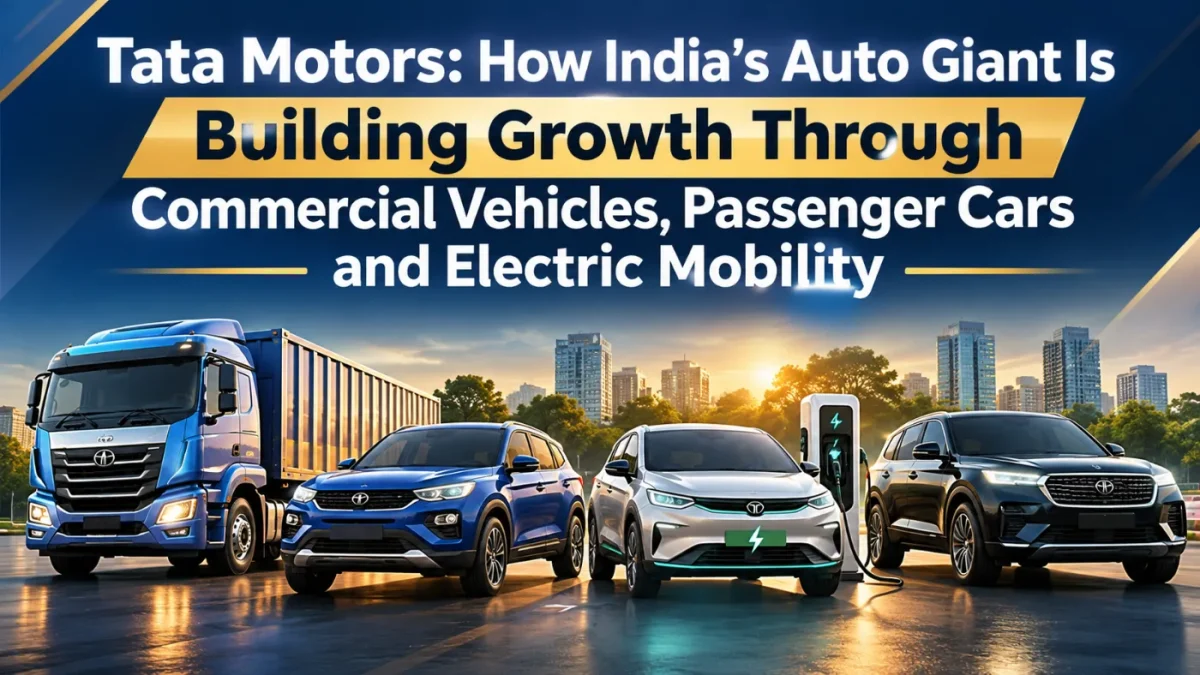
Tata Motors has undergone a major corporate restructuring, and its current listed structure is different from the earlier single-company setup.
- Commercial vehicles: India’s infrastructure spending, construction activity, freight movement and industrial expansion can support demand for trucks, tippers, buses and pickups.
- TMCV competes with Ashok Leyland, Mahindra, VE Commercial Vehicles and other domestic and international truck and bus manufacturers.
Tata Motors has undergone a major corporate restructuring, and its current listed structure is different from the earlier single-company setup. The former Tata Motors business was separated into two independently listed companies in October and November 2025. Investors now get distinct exposure to commercial vehicles on one side and passenger vehicles, electric vehicles and Jaguar Land Rover on the other.
This distinction is important when reading financial results, comparing valuations or researching the company. The two businesses have different customers, demand drivers, capital requirements and financial risks.
What Tata Motors Does
1. Tata Motors Limited: Commercial Vehicles
The current Tata Motors Limited, listed under the symbol TMCV, houses the commercial vehicle business. It manufactures and sells trucks, buses, pickups, small commercial vehicles, vans and related mobility solutions.
Also Read: Apollo Hospitals: How India’s Healthcare Giant Is Building Growth
Its portfolio includes heavy and medium trucks, the Tata Ace range, pickups, buses and electric commercial vehicles. It also provides vehicle servicing, spare parts, fleet solutions and connected-vehicle services. The company has a strong position in India’s commercial vehicle market and is expanding its international presence.
The proposed acquisition of Iveco’s commercial vehicle business is intended to increase its global scale and broaden its product and geographic reach. Its completion and integration are important developments to monitor.
2. Tata Motors Passenger Vehicles Limited: Passenger Cars, EVs and JLR
The separately listed Tata Motors Passenger Vehicles Limited, listed under the symbol TMPV, includes India’s passenger vehicle and electric vehicle business, together with Jaguar Land Rover (JLR).
Also Read: Trent: How Westside and Zudio Are Driving Growth
The domestic portfolio covers hatchbacks, sedans, SUVs and electric cars. Brands and models include Tata Nexon, Punch, Harrier, Safari, Tiago and the company’s electric vehicle range.
JLR operates the global luxury brands Jaguar and Land Rover. Its portfolio includes Range Rover, Defender and Discovery vehicles, alongside the transition towards electric and other lower-emission powertrains.
The passenger vehicle company also earns revenue from spare parts, accessories, servicing and related customer services.

Customers and How Tata Motors Makes Money
The commercial vehicle business serves fleet operators, logistics companies, transport contractors, construction firms, infrastructure companies, public transport agencies, small businesses and individual vehicle owners.
It earns revenue mainly through the sale of trucks, buses, pickups and other commercial vehicles. Spare parts, maintenance, financing arrangements and fleet-related services add to customer relationships and after-sales income. Sales volumes are influenced by freight activity, infrastructure investment, industrial production and fleet replacement demand.
The passenger vehicle business serves private car buyers, families, fleet customers and corporate buyers. It earns revenue through vehicle sales, accessories, spare parts, servicing and related services. Its domestic performance depends on new model launches, market share, product mix, financing availability and consumer demand.
JLR sells luxury vehicles to customers across major international markets. Its revenue depends on global luxury vehicle demand, model mix, pricing, wholesale and retail volumes, and foreign exchange movements. Higher-end Range Rover and Defender models are important to its premium positioning.
The two listed companies therefore have different earnings drivers. Commercial vehicles are closely linked to freight, infrastructure and business investment, while passenger vehicles and JLR depend more on consumer demand, model cycles, premiumisation and global automotive conditions.
Growth Drivers
Commercial vehicles: India’s infrastructure spending, construction activity, freight movement and industrial expansion can support demand for trucks, tippers, buses and pickups. Fleet replacement and demand for more fuel-efficient vehicles offer additional opportunities. The Iveco transaction, if completed and integrated successfully, could broaden TMCV’s international scale and market access.
Passenger vehicles and SUVs: Demand for SUVs, feature-rich cars and safer vehicles provides opportunities for the domestic business. New launches, product upgrades and a wider price range can help Tata Motors compete for market share.
Electric mobility: Tata Motors has an established presence in India’s electric passenger vehicle market. New models, charging infrastructure partnerships, battery technology and lower ownership costs can support wider adoption. Electric buses and commercial vehicles also offer opportunities as fleet operators and public agencies transition towards cleaner transport.
JLR and premium vehicles: Range Rover and Defender provide exposure to the global luxury SUV market. New model launches and electric vehicle development can support future sales, while premium product mix can help protect pricing power.
Competition and Risks
TMCV competes with Ashok Leyland, Mahindra, VE Commercial Vehicles and other domestic and international truck and bus manufacturers. Its demand is cyclical and sensitive to freight rates, fleet utilisation, financing costs and infrastructure activity.
TMPV competes with Maruti Suzuki, Mahindra & Mahindra, Hyundai, Kia, Toyota and other passenger vehicle manufacturers in India. JLR faces global luxury competition from BMW, Mercedes-Benz, Porsche and other premium brands.
Commodity prices, foreign exchange movements and supply-chain disruptions can affect both companies. Passenger vehicles also face intense price competition and the risk that new models fail to gain customer acceptance.
JLR is exposed to demand conditions in China, Europe, North America and the UK, along with tariffs and geopolitical developments. Its recovery in profitability and cash generation remains important to TMPV’s overall financial performance.
The transition to electric vehicles requires significant investment in batteries, platforms, software and manufacturing. Slower adoption, pricing pressure or changes in government incentives could affect expected returns. Both companies also need to manage capital expenditure and debt carefully.
What Investors Should Watch
Investors should first identify which listed company they are analysing. TMCV represents the commercial vehicle business, while TMPV represents domestic passenger vehicles, EVs and JLR. Their financial statements, earnings drivers and valuations should not be combined as though they were one listed security.
For TMCV, monitor commercial vehicle sales, domestic market share, export growth, EBITDA margin, free cash flow and the progress of the Iveco transaction. Freight demand, infrastructure activity and fleet replacement trends will help indicate the strength of its operating environment.
For TMPV, watch domestic passenger vehicle volumes, EV market share, product mix and margins. JLR’s wholesale volumes, order book, regional performance, profitability and cash generation are equally important because of its significant contribution to the group.
Across both companies, capital expenditure, debt, working capital and operating cash flow deserve attention. Revenue growth is encouraging, but sustainable returns depend on margins and cash generation.
Tata Motors’ restructuring has created two distinct listed automotive businesses. TMCV offers exposure to commercial transportation and infrastructure demand, while TMPV combines India’s passenger vehicle and EV market with JLR’s global luxury business. Both have significant growth opportunities, but investors need to assess their financial performance and risks separately.
Financial Disclaimer: This article is for educational and informational purposes only. It is not investment advice or a recommendation to buy or sell any security. Investors should verify the relevant listed entity and ticker, review company disclosures, financial statements, vehicle volumes, margins, debt, cash flow, business risks and valuations, and consult a qualified financial adviser before making investment decisions.








Keep learning with OneTrader
Explore structured lessons and practical guides to build your market knowledge.

Need a laugh after all that money talk?
Paisa LOL: India's funniest finance page, with memes, comics, jokes and long funny stories.
