
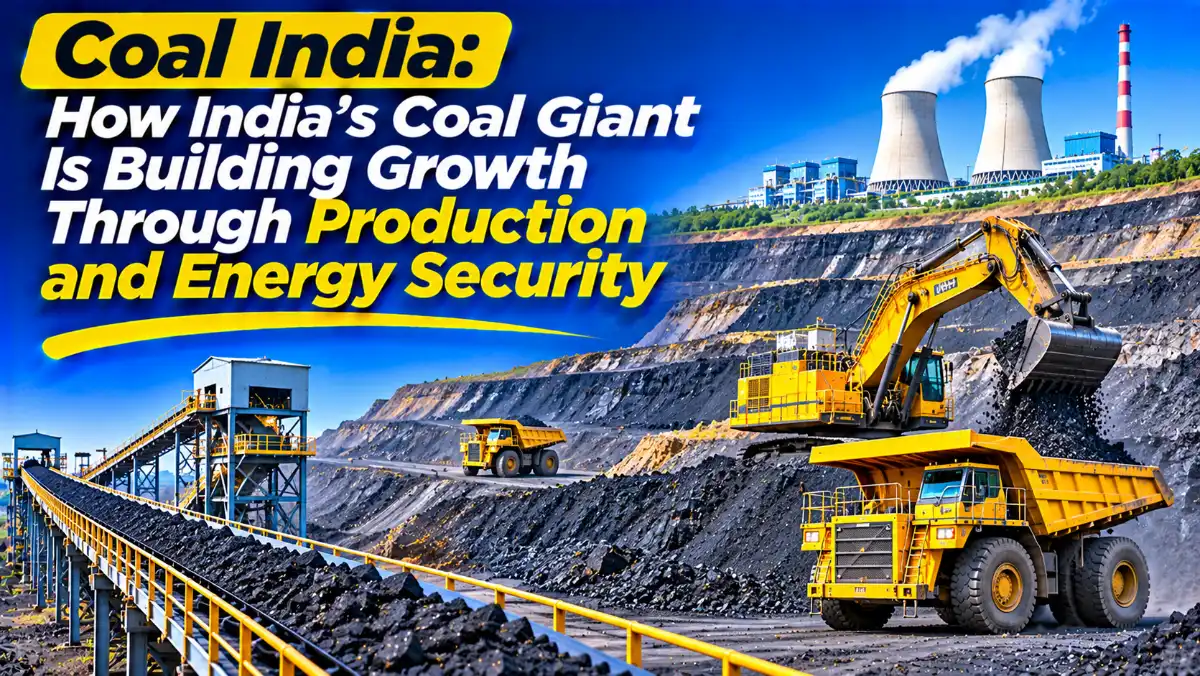
Coal India is the world’s largest government-owned coal producer and a critical supplier to India’s electricity and industrial sectors.
- Coal India explores, mines and supplies coal through its operating subsidiaries.
- Coal India’s largest customers are electricity generation companies, particularly state-owned and private thermal power producers.
- India’s electricity demand remains the main growth driver.
Coal India is the world’s largest government-owned coal producer and a critical supplier to India’s electricity and industrial sectors. Its subsidiaries operate mines across major coal-producing regions, supplying fuel to power plants, steel manufacturers, cement companies and other industries.
The company benefits from its dominant position in domestic coal production and the continuing importance of coal in India’s electricity mix. Its growth depends on increasing output, improving transportation and delivery, developing new mining capacity and controlling production costs. At the same time, the energy transition creates a long-term challenge for a business built around fossil fuels.
What Coal India Does
Coal India explores, mines and supplies coal through its operating subsidiaries. Its activities cover open-cast and underground mining, mine development, coal processing and transportation coordination. The company produces different grades of coal for power generation, steelmaking and industrial applications.
Power generation is its largest market. Coal India supplies a substantial share of the coal consumed by India’s thermal power stations. It also supplies coking coal and other grades to steel producers, cement manufacturers, aluminium companies, fertiliser plants and other industrial users.
Also Read: Apollo Hospitals: How India’s Healthcare Giant Is Building Growth
Its operations are spread across several subsidiaries, including Eastern Coalfields, Bharat Coking Coal, Central Coalfields, Western Coalfields, South Eastern Coalfields, Northern Coalfields and Mahanadi Coalfields. These businesses manage mining operations in different coalfields and regions.
Coal India is also exploring opportunities beyond conventional mining. These include coal gasification, solar energy, critical minerals and overseas investment opportunities. These initiatives are intended to diversify the business over time, although coal remains its main source of revenue and profit.
Customers and How Coal India Makes Money
Coal India’s largest customers are electricity generation companies, particularly state-owned and private thermal power producers. Other customers include steel plants, cement manufacturers, aluminium producers, sponge iron companies and industrial businesses that use coal as fuel or as an input in manufacturing.
The company earns revenue primarily by selling coal. Supplies are made through long-term fuel supply agreements, auction-based sales and other commercial arrangements. Prices vary according to coal grade, quality, delivery terms and the sales channel.

Also Read: Trent: How Westside and Zudio Are Driving Growth
Production and offtake are two important measures of the business. Production represents the coal mined, while offtake measures the quantity supplied to customers. Strong production is useful only when the company can transport and sell the coal efficiently. Rail availability, loading infrastructure and customer demand therefore influence revenue and inventory levels.
Coal India’s profitability depends on sales volumes, realisation per tonne, employee costs, mining expenses, transportation arrangements and government levies. Its large operating scale and access to extensive coal reserves provide an advantage, but labour and infrastructure requirements make the business capital- and operations-intensive.
Growth Drivers
India’s electricity demand remains the main growth driver. Coal continues to provide a large share of the country’s power generation, particularly when electricity demand rises or renewable output fluctuates. Coal India’s scale and supply network give it a central role in supporting thermal power stations.
Higher production and improved mine efficiency can support additional sales. New mines, mine expansions, mechanisation and better extraction methods can increase output while improving productivity. The company also needs to strengthen evacuation infrastructure so that mined coal reaches customers without building up at mine sites.
Coal gasification offers a longer-term opportunity. It can convert coal into syngas for use in chemicals, fertilisers and other industrial applications. Commercial projects could help create value beyond conventional coal sales, although technology, investment costs and project economics will determine their success.
Diversification into solar energy and critical minerals is another area to monitor. Coal India’s large land holdings and infrastructure could support selected renewable projects, while overseas investments may provide access to minerals required by new energy technologies. These activities are still developing and should not yet be treated as substitutes for its core coal business.
Competition and Risks
Coal India competes with other domestic coal producers, including Singareni Collieries Company, as well as private commercial mining operators such as Adani Enterprises and other companies developing coal blocks. Imported coal also competes with domestic supplies, particularly for certain grades and industrial applications.
Production and logistics are major operating risks. Mining conditions, land acquisition, environmental approvals, equipment availability and labour issues can delay projects. Rail capacity and transportation bottlenecks can restrict deliveries even when coal is available at mines.
Coal quality and pricing also matter. Customers may prefer imported coal or alternative fuels when domestic grades do not meet their technical requirements. Changes in government pricing policies, levies and supply arrangements can affect realisations and margins.
The long-term energy transition is a structural risk. Greater renewable generation, storage and cleaner industrial technologies could reduce coal’s share of the energy mix over time. Coal India must therefore balance the need to meet current energy demand with the risk of investing too heavily in assets that may face lower utilisation in the future.
What Investors Should Watch
Coal production and offtake should be tracked together. Rising offtake supported by sustainable production growth is more valuable than a temporary increase in sales achieved mainly by reducing existing inventories. Investors should also monitor inventory levels and the pace at which new mines become operational.
Realisation per tonne and EBITDA per tonne are important measures of pricing and cost performance. Changes in coal grades, auction sales, fuel supply agreements and operating expenses can influence profitability even when volumes remain strong.
Capital expenditure, mine development and rail evacuation capacity deserve attention. New projects must deliver additional saleable output on schedule and at reasonable cost. Investors should also assess the commercial progress of coal gasification and diversification projects without assuming that announced investments will immediately contribute to earnings.
Dividend payments are an important feature of Coal India’s shareholder returns, but they should be viewed alongside future investment needs and cash generation. The company’s ability to maintain production, supply reliability and financial discipline will determine how well it serves India’s energy market.
Financial Disclaimer: This article is for educational and informational purposes only. It is not investment advice or a recommendation to buy or sell any security. Investors should review company disclosures, financial statements, risks and valuations and consult a qualified financial adviser before making investment decisions.






Keep learning with OneTrader
Explore structured lessons and practical guides to build your market knowledge.

Need a laugh after all that money talk?
Paisa LOL: India's funniest finance page, with memes, comics, jokes and long funny stories.
