
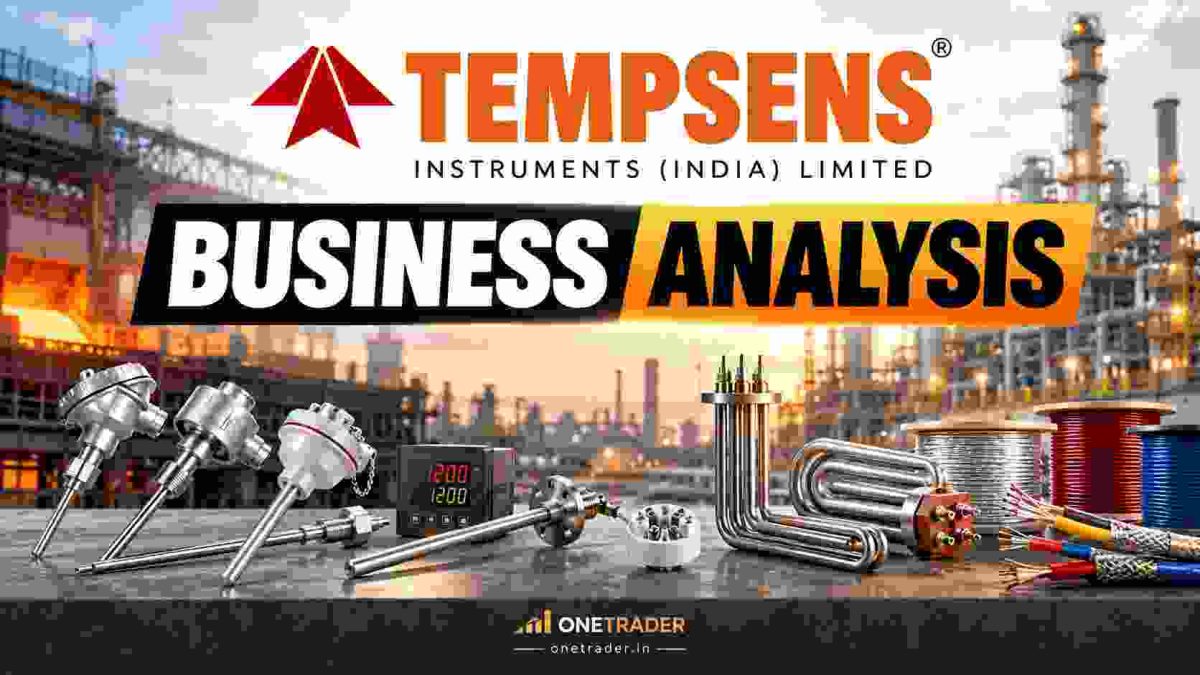
India’s industrial manufacturing sector is becoming increasingly sophisticated as companies invest in automation, energy efficiency, advanced materials, and precision engineering. Behind large manufacturing facilities are specialized components that ensure equipment operates safely and efficiently. Temperature sensors, industrial heaters, and high-performance cables are among these essential technologies. One Indian company operating across all three categories is Tempsens Instruments (India) Limited, a manufacturer of thermal engineering solutions with an expanding international presence.
Tempsens is different from conventional electrical equipment manufacturers because its products are designed for demanding industrial applications where temperature accuracy, reliability, and durability are critical. Its customers operate in industries such as steel, cement, power generation, oil and gas, pharmaceuticals, aerospace, and defence.
The company also entered India’s public equity market in August 2026, attracting attention to a specialized manufacturing business that operates beyond traditional consumer-facing industries.
How Tempsens Instruments Makes Money
Tempsens generates revenue by designing, manufacturing, and supplying industrial temperature measurement equipment, electrical heating systems, and specialized cables. Its products are purchased by industrial manufacturers, engineering companies, equipment suppliers, and businesses operating high-temperature processes.
For example, a steel manufacturer must continuously monitor furnace temperatures to maintain product quality and avoid equipment damage. Tempsens can supply thermocouples, temperature sensors, and related equipment that help measure and manage these conditions.
Similarly, pharmaceutical manufacturers require precise temperature control during production, while industrial plants may need customized heating elements and specialized cables capable of operating in harsh environments.
Unlike mass-market electrical products, many Tempsens solutions are engineered around customer specifications. This creates opportunities to compete through technical expertise, product reliability, customization, and application support rather than pricing alone.
Three Core Business Segments
Tempsens operates through three principal product categories: Temperature Sensing Solutions, Electrical Heating Solutions, and Specialized Cables.
Also Read: Delhivery Business Analysis: How India’s Technology-Driven Logistics Company Makes Money
Temperature Sensing Solutions include thermocouples, resistance temperature detectors, thermowells, infrared pyrometers, thermal imaging equipment, and calibration systems. These products help industrial operators monitor temperatures across different processes and environments.
Electrical Heating Solutions include industrial heaters and related thermal equipment used in manufacturing processes. These systems are relevant wherever controlled heating is required for production, testing, or processing.
Specialized Cables include thermocouple cables, mineral-insulated cables, and other engineered conductors designed for demanding industrial applications.
Together, these segments allow Tempsens to supply multiple products to customers operating temperature-intensive manufacturing facilities.
Also Read: VRL Logistics: Inside India’s Road Transport Giant and Its Expanding Logistics Business

Backward Integration: A Key Manufacturing Advantage
One of Tempsens’ distinguishing characteristics is its backward-integrated manufacturing infrastructure in Udaipur, Rajasthan. The company has developed capabilities covering several stages of production, including alloy melting, wire drawing, fabrication, assembly, and calibration.
This integration provides greater control over product specifications, manufacturing quality, and supply chain coordination. For industrial customers, consistency is particularly important because inaccurate temperature measurements can disrupt production, damage equipment, or compromise product quality.
Backward integration can also reduce dependence on external suppliers for certain critical inputs. However, these manufacturing capabilities require investment in specialized machinery, technical expertise, quality systems, and working capital.
Global Manufacturing and Export Opportunities
Tempsens has expanded beyond India through subsidiaries and joint ventures, establishing manufacturing operations in countries including Indonesia, the United Arab Emirates, and South Korea.
Also Read: ITC Farm-to-Food Business Model: Sourcing, Brands and Cash Flow
The company reported exports to more than 75 countries during the three financial years ending March 2025, demonstrating the international reach of its thermal engineering products.
Global operations provide opportunities to serve multinational industrial customers, access new markets, and support overseas equipment manufacturers. However, international expansion also introduces currency fluctuations, regulatory requirements, geopolitical risks, and competition from established global engineering companies.
Growth Opportunities in Industrial Automation and Manufacturing
Tempsens operates in industries where reliable temperature measurement and heating equipment are fundamental to production. Industrial automation, manufacturing modernization, and investments in energy efficiency can create additional demand for precision thermal engineering products.
The company’s products also have applications in aerospace, defence, pharmaceuticals, power generation, and advanced industrial manufacturing. These sectors often require specialized engineering solutions rather than standardized commodity components.
Also Read: ServiceNow: From IT Ticketing to the AI Agent Operating System for Enterprises
Another potential opportunity comes from replacing imported industrial equipment with domestically manufactured alternatives. Indian manufacturers capable of meeting demanding technical specifications may benefit from customers seeking localized supply chains and dependable after-sales support.
However, these opportunities should not be interpreted as guaranteed revenue growth. Customer qualification, product development, pricing, and successful commercial execution remain essential.
Financial Performance and Profitability
Tempsens has demonstrated revenue and earnings growth over recent financial years, supported by its diversified product portfolio and manufacturing operations.
For the quarter ended June 2026, the company reported consolidated revenue of approximately ₹119 crore, compared with ₹89 crore in the corresponding quarter of the previous year.
Also Read: Eternal: From Zomato to a Multi-Business Consumer Platform Built Around Blinkit
Consolidated operating profit was approximately ₹24 crore, with an operating margin near 20%. Net profit stood at approximately ₹16 crore.
These figures indicate year-on-year business expansion, although investors should evaluate whether growth is supported by operating cash flow, sustainable margins, and efficient working-capital management.
For a specialized manufacturing company, inventory requirements, customer receivables, research and development expenditure, and capital investment can significantly influence cash generation.
Competition, Valuation and Key Business Risks
Tempsens operates in a competitive global engineering market. International manufacturers possess established customer relationships, advanced research capabilities, and extensive technical resources.
Also Read: Policybazaar: From Insurance Comparison Website to India’s Digital Insurance Distribution Powerhouse
The company must continually invest in product development and maintain stringent quality standards to remain competitive. Raw material price fluctuations, particularly in metals and specialized alloys, can also affect manufacturing costs.
Customer concentration, industrial capital expenditure cycles, export-market uncertainty, and delayed customer payments are additional risks.
Following its stock market listing in August 2026, valuation has become another important consideration. A technically differentiated manufacturing business may attract investor interest, but strong growth expectations can also create valuation risk when earnings performance falls short.
For understanding Tempsens’ long-term business performance, the important indicators are revenue growth across its three segments, operating margins, export contribution, return on capital, cash-flow conversion, and the commercialization of new engineering products.
Also Read: Raymond: From Suits to High-Precision Engineering — The Transformation Is Just Beginning
Financial Disclaimer: This article is for educational and informational purposes only and does not constitute investment advice or a recommendation to buy, sell, or hold any security. Onetrader.in is not a SEBI-registered investment adviser or research analyst. Investors should conduct independent research and consult a qualified financial adviser before making investment decisions.





Keep learning with OneTrader
Explore structured lessons and practical guides to build your market knowledge.