
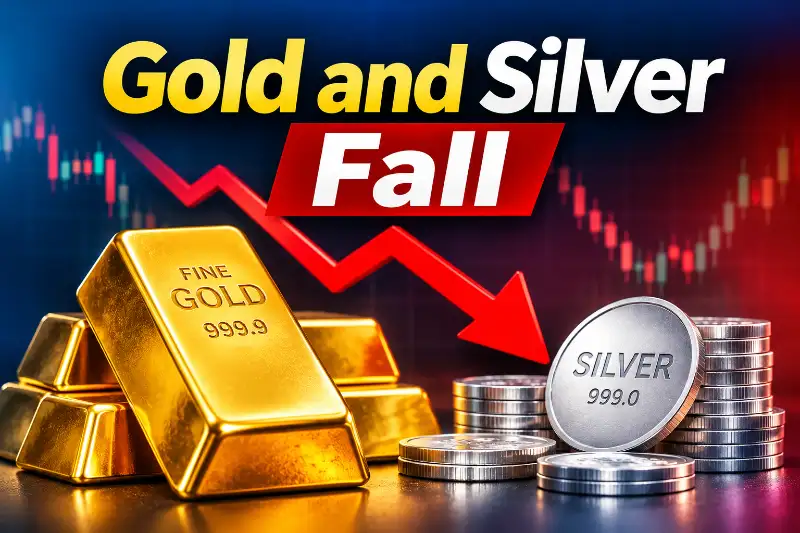
Gold and silver prices came under renewed selling pressure on Wednesday, November 25, as stronger US inflation data raised concerns that the Federal Reserve could keep interest rates higher for longer or even consider another rate increase. International precious metals weakened sharply during the evening session, with COMEX gold falling approximately 2.3% to around $3,480 per ounce and COMEX silver declining about 3.5% to nearly $39.35 per ounce.
The decline followed an already weak trading session in which a stronger US dollar and positive US consumer confidence data had increased expectations of tighter monetary policy. The latest US Personal Consumption Expenditures (PCE) inflation reading of 3.8% added to those concerns, encouraging investors to reduce exposure to precious metals. Gold and silver have now experienced substantial losses during November, with approximate monthly declines of 13% and 20%, respectively.
Why Did Gold and Silver Prices Fall on November 25?
The biggest trigger behind Wednesday’s decline was the latest US inflation reading. PCE inflation came in at 3.8%, raising concerns that price pressures could remain strong enough to prevent the Federal Reserve from easing monetary policy. Investors became more cautious about the possibility of interest rates staying elevated for longer or even increasing further.
Higher interest-rate expectations generally create an unfavourable environment for gold and silver because precious metals do not provide regular interest income. When investors expect interest rates to remain high, interest-bearing assets can become relatively more attractive. This can reduce investment demand for precious metals and encourage profit booking after previous price movements.
Also Read: Gold vs Silver After the Sharp Fall: What Long-Term Investors in India Should Understand
The US dollar also contributed to the pressure. Earlier in Wednesday’s session, stronger US consumer confidence and a firmer dollar had already weighed on bullion prices by increasing expectations of tighter monetary policy. As the inflation figures reinforced those expectations, selling pressure intensified in international gold and silver markets.
Profit booking added another layer of pressure. Investors who had previously benefited from movements in precious metals may have decided to reduce positions amid changing expectations about US monetary policy. The combination of inflation concerns, dollar strength and profit booking created a difficult environment for both metals.
International Gold and Silver Prices Slide Further
The international market witnessed a sharp difference between earlier trading levels and evening prices. Spot gold was near $3,551 per ounce earlier in the day, while spot silver traded around $40.80 per ounce. However, the subsequent inflation-related concerns intensified selling in COMEX futures, pushing both metals lower during the evening.
| Precious metal | Earlier spot level | Evening COMEX level | Decline |
|---|---|---|---|
| Gold | Around $3,551 | Around $3,480 | -2.3% |
| Silver | Around $40.80 | Around $39.35 | -3.5% |
These figures represent different market instruments and trading observations, rather than identical spot-to-futures closing comparisons. The important development was the stronger selling pressure that emerged after the US inflation announcement. Silver experienced a larger percentage decline than gold, reflecting its greater sensitivity to changes in market sentiment.
Also Read: Top 5 Gold ETFs in India: Costs, Size and How to Choose
MCX Gold and Silver Prices Under Pressure in India
Domestic precious metals also experienced selling pressure on Wednesday as international prices weakened and expectations surrounding US interest rates changed. MCX December gold futures had closed the previous session at ₹1,22,329 per 10 grams. The contract opened near ₹1,21,900, declined to an intraday low around ₹1,20,575 and was trading near ₹1,20,700, down approximately 1.3%.
MCX December silver futures traded near ₹1,41,500 per kilogram, declining approximately 2.7%. The sharper fall in silver compared with gold reflected the stronger volatility in the white metal during the session. Both contracts remained sensitive to movements in international bullion prices and changes in currency sentiment.
Reports indicate that gold has declined approximately 13% during November, while silver has fallen around 20%. These approximate monthly losses highlight the extent of the recent correction and the pressure created by changing expectations about US monetary policy.
Why Is Silver Falling Faster Than Gold?
Silver often experiences larger percentage movements than gold because its market behaviour is influenced by both investment sentiment and industrial demand expectations. Gold is primarily viewed as a precious-metal investment and store of value, while silver also attracts attention because of its industrial applications. This combination can make silver more sensitive when investors reassess economic conditions and financial-market expectations.
Silver can therefore experience sharper price swings when investors become concerned about interest rates, the dollar and broader economic sentiment. During periods of strong demand, this sensitivity can support larger advances. However, when sentiment deteriorates, the same characteristics can contribute to faster declines. Wednesday’s approximately 3.5% COMEX silver decline compared with gold’s 2.3% fall illustrates this difference.
For investors, the important distinction is that gold and silver should not automatically be treated as identical assets. Their prices can respond differently to the same economic developments, and silver’s greater volatility can make its short-term performance less predictable.
What the Fall Means for Indian Gold Buyers, Jewellery Demand and Investors
The international correction could influence domestic bullion prices through changes in global metal prices and currency movements. Indian jewellery buyers may view lower prices as an opportunity to reassess purchases, although actual retail prices also depend on domestic market conditions. The recent decline does not automatically mean that jewellery prices will fall by the same percentage as international futures.
Gold ETFs may also experience changes in their underlying value as international gold prices weaken. Investors tracking these products should understand that market movements in gold can affect their portfolio valuations. Silver-related investments may experience larger fluctuations because silver has demonstrated greater price sensitivity during the current correction.
Also Read: Gold Price Falls Near 14-Month Low: Fed Rate-Hike Fears and a Stronger Rupee Weigh on Gold

Sovereign Gold Bonds (SGBs) are also relevant for investors following gold prices because their value is linked to the underlying gold price. A decline in gold can influence the market valuation of these investments. However, investors should distinguish between short-term market price movements and the broader purpose of holding gold-linked investments.
Jewellery buyers, ETF investors and holders of gold-linked instruments should therefore avoid judging the market only by one day’s movement. The latest correction reflects changing expectations about inflation and interest rates, rather than a definitive signal about the long-term direction of precious metals.
What Should Investors Watch Next?
The next important trigger for precious metals will be the direction of US inflation and Federal Reserve policy expectations. If inflation concerns continue to strengthen, markets may maintain expectations of higher interest rates, potentially keeping pressure on gold and silver. Any change in the outlook for monetary policy could influence the dollar and international bullion demand.
Investors should also monitor whether the recent selling develops into a longer correction or whether prices stabilise after the sharp November decline. Gold and silver may respond differently as market sentiment changes, particularly because silver has experienced a larger approximate monthly fall.
Also Read: Commodity Futures on MCX Explained: Margin, Lot Size, Expiry and Settlement
For Indian buyers, movements in international prices and the rupee will remain important when assessing domestic bullion trends. Wednesday’s decline highlights how quickly precious-metal sentiment can change when economic data alters interest-rate expectations. The immediate focus remains on US inflation, the dollar and the Federal Reserve’s next policy signals.
Financial Disclaimer: This article is intended solely for educational and informational purposes. It does not constitute investment advice or a recommendation to buy, sell or hold gold, silver, ETFs, Sovereign Gold Bonds or any other financial instrument. Precious metals and related investments are subject to market risks and price volatility. Readers should conduct independent research or consult a qualified financial professional before making investment decisions.



Keep learning with OneTrader
Explore structured lessons and practical guides to build your market knowledge.
