
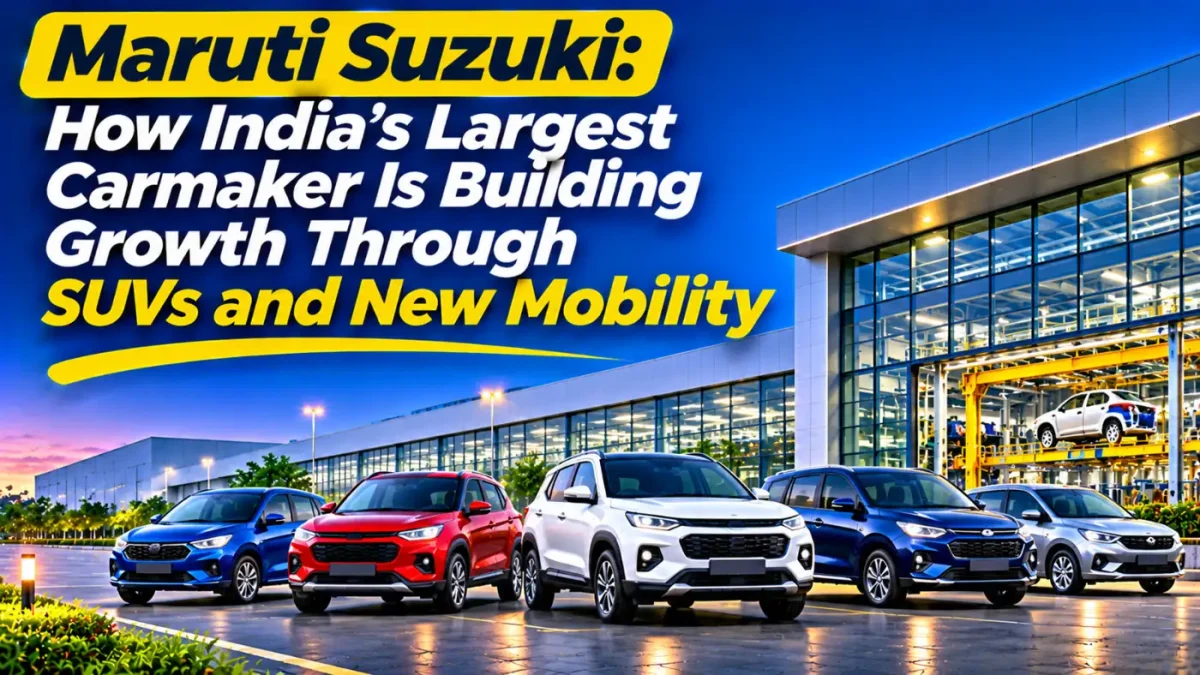
Mahindra & Mahindra (M&M) is one of India’s leading automobile and farm equipment manufacturers.
- M&M’s automotive business manufactures SUVs, utility vehicles, pickups, three-wheelers and commercial vehicles.
- M&M’s automotive customers include private vehicle buyers, families, fleet operators, small businesses and commercial transport users.
- SUV demand is a major growth opportunity.
Mahindra & Mahindra (M&M) is one of India’s leading automobile and farm equipment manufacturers. Its business is built around utility vehicles, SUVs, pickups, commercial vehicles and tractors, with additional exposure to financial services, technology and other businesses through the wider Mahindra Group.
The company has strengthened its position in SUVs while maintaining a leading presence in tractors and light commercial vehicles. Its next phase of growth depends on sustaining demand for its vehicle range, expanding electric mobility and responding to changing conditions in India’s agricultural market.
What Mahindra & Mahindra Does
M&M’s automotive business manufactures SUVs, utility vehicles, pickups, three-wheelers and commercial vehicles. Its portfolio includes the Scorpio-N, Thar, XUV700, XUV 3XO, Bolero, BE 6 and XEV 9e, along with the Bolero Maxx pickup range. The company has also entered electric SUVs as it prepares for a gradual shift towards battery-powered mobility.
The farm equipment business is another major part of the company. It manufactures tractors and agricultural machinery for farmers, contractors and rural businesses. Its Mahindra and Swaraj tractor brands serve customers across different farm sizes and applications. Tractor sales are closely linked to agricultural income, monsoon conditions, crop prices and rural credit availability.
Also Read: Apollo Hospitals: How India’s Healthcare Giant Is Building Growth
M&M also has exposure to financial services through Mahindra Finance, which provides vehicle, tractor, rural and other loans. The wider group includes technology, logistics, real estate, hospitality and other businesses, giving investors exposure to several industries beyond the core automotive and farm operations.
Customers and How Mahindra & Mahindra Makes Money
M&M’s automotive customers include private vehicle buyers, families, fleet operators, small businesses and commercial transport users. SUV sales generate revenue through vehicle deliveries, while pickups and light commercial vehicles serve businesses that need goods transportation and last-mile mobility.
The farm equipment business sells tractors and related machinery to farmers, agricultural contractors and rural customers. Revenue depends on tractor volumes, product mix, pricing and demand for replacement and additional equipment. The company’s rural distribution and service network supports sales as well as after-sales income from spare parts and servicing.

Mahindra Finance earns interest income by providing loans to customers purchasing vehicles, tractors and other assets. It also serves rural and small-business borrowers. Other group companies generate revenue through technology services, logistics, real estate and related activities.
Also Read: Trent: How Westside and Zudio Are Driving Growth
For the core manufacturing businesses, profitability depends on sales volumes, product mix, material costs, manufacturing efficiency and dealer inventory. Higher-value SUVs and electric vehicles can improve revenue per vehicle, but new platforms and technology also require investment in development, production and distribution.
Growth Drivers
SUV demand is a major growth opportunity. M&M has developed a strong product range across different price points, from compact SUVs to larger lifestyle and premium vehicles. New launches, product updates and improved production capacity can support sales, provided the company maintains quality and delivery timelines.
Electric mobility offers another opportunity. M&M is investing in dedicated electric vehicle platforms and expanding its electric SUV range. Its ability to build customer demand, control battery costs and develop a reliable charging and service ecosystem will influence the economics of this business.
The farm equipment business can benefit from improved rural incomes, favourable monsoons, agricultural mechanisation and replacement demand. Tractors remain important for farm productivity, while demand can also extend to construction and other rural applications.
Exports and international operations provide additional growth potential. M&M can use its SUV and tractor capabilities to serve selected overseas markets, although success depends on local demand, regulations, distribution and competition.
Competition and Risks
In passenger vehicles, M&M competes with Maruti Suzuki, Tata Motors, Hyundai, Kia and Toyota. The SUV market is particularly competitive, with frequent launches and strong pressure on pricing, features and technology. In tractors, it competes with TAFE, Escorts Kubota, Sonalika and other manufacturers.
Commodity prices are a key risk. Steel, aluminium, rubber, electronics and battery materials influence manufacturing costs. Higher input prices can reduce margins if vehicle prices cannot be adjusted without affecting demand.
The farm equipment business is exposed to monsoon conditions, crop prices, rural income and financing availability. A weak agricultural season can affect tractor demand even when the automotive business is performing well.
Electric vehicles bring additional execution risks. Battery technology, charging infrastructure, customer adoption and price competition can affect returns on new investments. The company must also manage product quality, software performance and service capabilities as vehicles become more technology-intensive.
What Investors Should Watch
SUV volumes, market share and product mix are central indicators for the automotive business. Investors should monitor whether new models are generating sustained demand and whether production capacity is keeping pace with bookings. Electric vehicle sales and their contribution to profitability will also become increasingly important.
In the farm equipment business, tractor volumes and market share should be assessed alongside monsoon conditions and rural demand. Investors should distinguish temporary seasonal weakness from a more sustained slowdown in agricultural purchasing.
Operating margins, commodity costs and working capital deserve close attention across both manufacturing businesses. The performance of Mahindra Finance and Tech Mahindra also matters because their results contribute to the group’s consolidated earnings.
M&M has established positions in SUVs, light commercial vehicles and tractors, supported by a diversified group of financial and technology businesses. Its recent results show strong automotive momentum, although the farm business remains more exposed to seasonal conditions. The long-term investment case depends on maintaining product competitiveness, executing its electric vehicle plans and converting growth into sustainable operating returns.
Financial Disclaimer: This article is for educational and informational purposes only. It is not investment advice or a recommendation to buy or sell any security. Investors should review company disclosures, financial statements, risks and valuations and consult a qualified financial adviser before making investment decisions.





Keep learning with OneTrader
Explore structured lessons and practical guides to build your market knowledge.

Need a laugh after all that money talk?
Paisa LOL: India's funniest finance page, with memes, comics, jokes and long funny stories.
