November 8, 2026
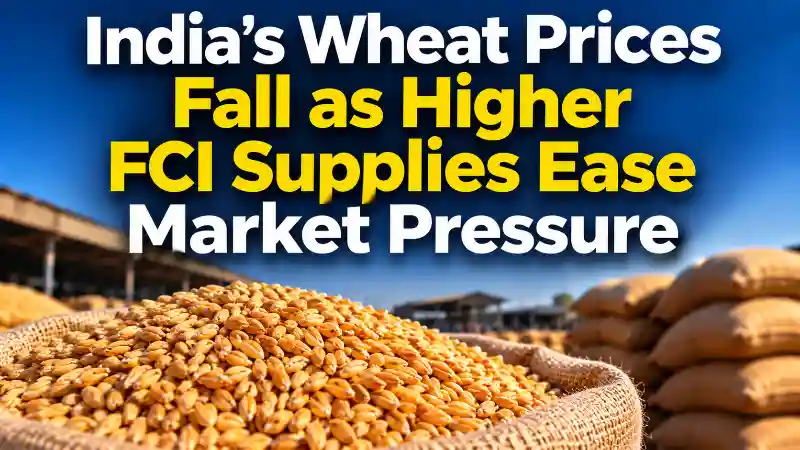
India’s wheat market is facing renewed downward pressure as increased supplies from the Food Corporation of India (FCI) weigh on wholesale prices. The correction comes at an important stage for the agricultural economy, with traders assessing government stock releases, domestic flour demand and the progress of the winter sowing season.
Wheat prices have weakened as additional grain availability reduces the urgency among flour mills and bulk buyers to secure supplies. The movement is particularly relevant because wheat remains one of India’s most important food commodities, influencing household expenditure, flour manufacturing and broader food inflation.
The latest market developments also highlight the significant role of government intervention in agricultural commodity pricing. Unlike internationally traded metals and energy products, India’s wheat market is closely connected to public procurement, buffer stocks, food security policies and domestic supply management.
Also Read: Indian Stock Market Week-Ahead Outlook: November 9–13, 2026
Although increased government supplies have softened market sentiment, the longer-term direction of wheat prices will depend on crop conditions, procurement requirements and the balance between domestic production and consumption.
Higher FCI Supplies Change the Wheat Market
The Food Corporation of India plays a central role in maintaining India’s food security system. It procures wheat from farmers under government procurement programmes, maintains buffer stocks and distributes grain through public welfare schemes.
When domestic market supplies become tight or prices rise sharply, the government can release additional wheat through open market sales. These releases allow eligible buyers, including flour mills and other market participants, to obtain grain from government inventories.
Increased availability can reduce competition for privately held wheat stocks and encourage traders to reassess their pricing expectations.
Also Read: CTC vs Take-Home Salary: Why Your Monthly Pay Is Lower Than You Expect
The latest correction reflects this relationship between public grain inventories and commercial market demand.
For flour mills, the availability of additional wheat can improve procurement flexibility. For wholesalers holding substantial inventories, however, lower market prices can reduce the value of existing stocks.
The effect varies across regions because transportation expenses, grain quality, local arrivals and milling demand influence individual wholesale markets.
Why Wheat Prices React to Government Stock Releases
Wheat is not priced solely according to production and consumption. Government procurement and distribution policies are major influences on the Indian market.
Also Read: Angel One’s Success Story: How Distribution Built One of India’s Largest Stockbrokers
During procurement seasons, public agencies purchase eligible wheat from farmers at the applicable minimum support price. These purchases help maintain public inventories while supporting the government’s food security requirements.
Later, when grain is released into commercial markets, additional supply can influence wholesale prices.

The relationship is particularly important during periods when privately held inventories are relatively tight or when flour mills face higher procurement costs.
Government sales can improve availability without waiting for the next harvest. However, their impact depends on the quantities offered, reserve prices, auction participation and the geographical distribution of stocks.
Also Read: Groww’s Success Formula: How a Simple Investing App Overtook India’s Established Stockbrokers
A temporary increase in supply may reduce immediate price pressure, but sustained market stability also depends on domestic production and future procurement needs.
Rabi Sowing Becomes the Next Important Factor
Attention is now shifting towards India’s rabi crop season, when wheat is cultivated across major producing states.
Wheat is generally sown during the cooler months and harvested in spring. Punjab, Haryana, Uttar Pradesh and Madhya Pradesh are among the country’s important producing regions.
Early sowing conditions can influence expectations about the next harvest, although final production depends on several factors throughout the growing season.
Soil moisture, irrigation availability, seed quality, fertiliser application and temperature patterns all affect crop development.
Unusually warm conditions during grain filling can reduce yields, while favourable winter temperatures and adequate moisture can support crop growth.
For agricultural commodity markets, the progress of sowing is therefore an important indicator of future supply rather than an immediate measure of the final harvest.
Wheat Prices Matter Beyond the Grain Market
Changes in wheat prices affect several parts of India’s food economy.
Flour mills purchase wheat to produce atta, maida and other flour products used by households, bakeries, restaurants and food manufacturers.
Higher wheat procurement costs can increase pressure on milling margins, particularly when manufacturers cannot immediately pass those increases to customers.
Lower grain prices may provide some relief, although retail prices also reflect processing, packaging, transportation and distribution expenses.
Wheat also matters for inflation because it is a widely consumed staple. Changes in grain and flour prices can influence household food expenditure, particularly among consumers who depend heavily on wheat-based products.
For policymakers, maintaining adequate supplies while protecting farmers’ interests remains an important balancing exercise.
Global Wheat Markets Add Another Layer of Influence
International wheat markets are influenced by production conditions in major exporting countries, currency movements, shipping costs and government trade policies.
Russia, the European Union, Australia, Canada and the United States are important participants in global wheat trade. Changes in harvest expectations or export availability from these regions can influence international prices.
India’s domestic wheat market operates within its own policy framework, including procurement, stock management and trade restrictions. Consequently, movements in international wheat futures do not always translate directly into Indian wholesale prices.
Also Read: US Natural Gas Prices Rise as Record LNG Export Demand Offsets Mild Weather and Rising Storage
Nevertheless, global developments remain relevant when assessing agricultural trade conditions and food security.
What Could Influence Wheat Prices Next?
The immediate direction of domestic wheat prices will depend on the pace of FCI stock releases, flour mill purchasing activity and the availability of grain in wholesale markets.
The developing rabi season will become increasingly important as sowing progresses and weather conditions begin shaping expectations for the next harvest.
Government procurement policy will also remain central to the market. The balance between maintaining adequate public stocks, supporting farmers and ensuring affordable food supplies influences how grain moves through India’s agricultural economy.
Also Read: Copper Prices Fall as AI Demand Concerns Clash With Tight Supply in China
The latest correction demonstrates that wheat prices respond not only to harvest volumes but also to the timing and distribution of existing supplies.
For India’s agricultural commodity sector, the interaction between government inventories, commercial demand and crop development will remain the principal influence on wheat market conditions in the months ahead.
Disclaimer: This article is for educational and informational purposes only and does not constitute investment or trading advice. Agricultural commodity prices are influenced by weather, government policy, supply conditions and market demand. Onetrader is not a SEBI-registered investment adviser or research analyst.
Also Read: Oil Prices Face Fresh Pressure as Strait of Hormuz Disruption Keeps Global Supply at Risk





Keep learning with OneTrader
Explore structured lessons and practical guides to build your market knowledge.

Need a laugh after all that money talk?
Paisa LOL: India's funniest finance page, with memes, comics, jokes and long funny stories.