November 8, 2026
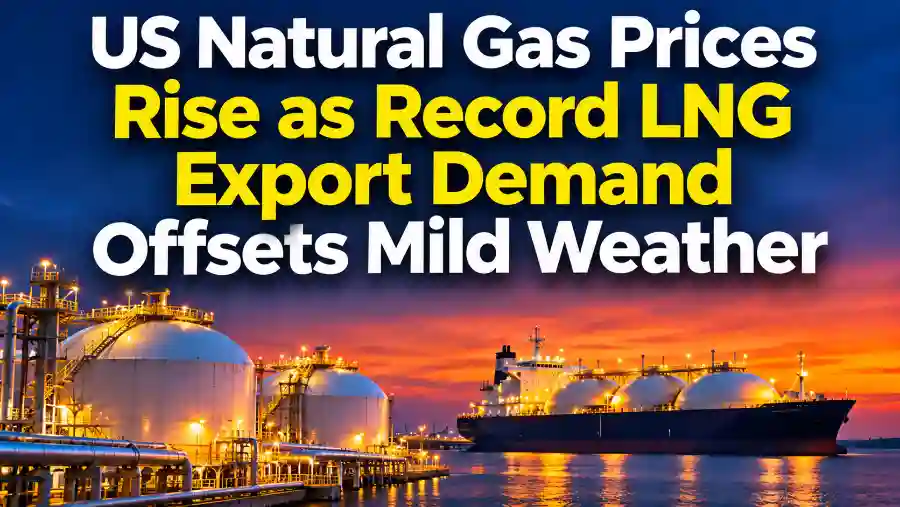
US natural gas prices strengthened towards the end of the week as growing demand from liquefied natural gas export facilities helped offset unusually mild weather and rising domestic storage inventories. The competing forces have created a complex outlook for the American gas market ahead of winter, with strong international demand supporting prices even as heating consumption remains subdued.
December natural gas futures on the New York Mercantile Exchange advanced on Friday, moving towards the psychologically important $3 per million British thermal units level. The recovery came as LNG feedgas demand approached record levels, reflecting the growing importance of American exports in the global energy market.
The latest movement is particularly significant because US natural gas prices are no longer driven primarily by domestic weather and storage conditions. Expanding LNG export infrastructure increasingly connects American gas production with demand in Europe and Asia.
Also Read: What Is Henry Hub Natural Gas? How It Affects MCX Prices in India
For Indian commodity market participants, the development matters because MCX natural gas futures are closely linked to the US Henry Hub benchmark, while international LNG prices influence the broader energy costs faced by Indian importers.
Natural Gas Futures Recover as LNG Demand Strengthens
US natural gas futures gained approximately 2% during Friday’s session as demand from LNG export facilities approached record levels. The increase followed modest changes in weather forecasts that suggested slightly stronger heating requirements later in November.
The December contract moved close to $3 per MMBtu, recovering despite expectations that mild weather would continue to limit immediate consumption.
| US natural gas market indicator | Latest reference |
|---|---|
| December NYMEX natural gas futures | Near $3.00/MMBtu |
| Friday futures movement | Approximately +2% |
| LNG feedgas demand | Near 21 billion cubic feet per day |
| US working gas storage | 3,801 billion cubic feet |
| Weekly storage injection | 77 billion cubic feet |
The strength in LNG feedgas demand is an important development for the American market. Feedgas refers to natural gas delivered through pipelines to LNG export terminals, where it is processed and cooled for shipment overseas.
As export facilities operate at higher utilisation rates, they consume more domestic gas, potentially reducing the amount available for storage or local consumption.
This creates an additional source of demand that can support prices even when American weather conditions remain relatively favourable.
Mild November Weather Keeps Storage Inventories Elevated
Weather remains one of the strongest influences on natural gas consumption in the United States.
During winter, colder temperatures increase demand for residential and commercial heating. When temperatures remain above seasonal averages, heating requirements generally decline, allowing more gas to remain in underground storage facilities.
The latest US Energy Information Administration inventory report showed another substantial injection into storage for the week ending October 30.

Working gas inventories increased to 3,801 billion cubic feet, placing stocks above their five-year seasonal average.
| US gas storage indicator | Volume |
|---|---|
| Total working gas in storage | 3,801 Bcf |
| Weekly inventory increase | 77 Bcf |
| Above five-year average | 54 Bcf |
| Below year-earlier level | 109 Bcf |
The figures show that domestic supplies are relatively comfortable compared with typical seasonal conditions, although inventories remain below the corresponding period last year.
Forecasts for continued mild weather could allow further injections before the market enters its regular winter withdrawal season.
A larger storage cushion would help absorb sudden increases in heating demand, but the impact depends on how quickly temperatures change and whether production remains sufficient to meet consumption.
LNG Exports Are Reshaping American Natural Gas Demand
The expansion of US LNG export capacity has fundamentally changed how the domestic natural gas market responds to international developments.
Historically, American gas prices were influenced mainly by domestic production, pipeline capacity, electricity demand and weather patterns. LNG exports have added a substantial international component.
European buyers increasingly rely on imported LNG to supplement pipeline supplies and maintain adequate winter inventories. Asian economies, including India, Japan, South Korea and China, also depend on LNG for industrial activity and electricity generation.
When international LNG prices rise, American exporters may have a stronger commercial incentive to operate their facilities at high capacity.
However, LNG exports are constrained by terminal capacity, shipping availability and contractual obligations. Higher international prices do not automatically translate into unlimited additional exports.
The growing relationship between domestic gas production and overseas demand nevertheless makes LNG terminal activity an increasingly important indicator for Henry Hub futures.
European Gas Storage Adds Pressure to Global LNG Markets
European natural gas markets are entering winter with inventories below typical seasonal levels.
Storage conditions are particularly important because European utilities and industrial consumers rely on accumulated reserves to manage higher heating demand during colder months.
| European gas storage | Latest reference |
|---|---|
| EU storage capacity filled | 73.4% |
| EU five-year seasonal average | 89.7% |
| Germany storage capacity filled | 60.0% |
| Germany five-year seasonal average | 88.9% |
Lower storage levels can increase demand for additional LNG cargoes, particularly when weather forecasts indicate colder conditions.
At the same time, international shipping disruptions and competition between European and Asian buyers can influence the availability and cost of LNG.
This interaction helps explain why American natural gas futures may strengthen even when domestic inventories are relatively comfortable.
What the Developments Mean for MCX Natural Gas
India’s MCX natural gas futures are influenced by the US benchmark and movements in the rupee-dollar exchange rate.
A stronger Henry Hub market can support Indian natural gas futures, although exchange-rate changes, contract expiry and local trading conditions can affect the relationship.
India’s physical LNG import market operates differently. LNG buyers may purchase gas under long-term agreements or through spot transactions linked to international benchmarks.
Consequently, higher American natural gas prices do not necessarily produce an identical increase in India’s LNG import costs.
For Indian industries, the broader concern is the combined effect of international LNG prices, currency movements and transportation expenses.
Winter Weather and LNG Exports Will Shape the Next Phase
The immediate direction of US natural gas prices will depend on whether stronger LNG export demand continues to offset mild weather and elevated storage inventories.
A sustained increase in heating consumption could accelerate withdrawals from storage, while continued warm conditions may allow inventories to remain comfortable for longer.
Production trends will also matter. Higher output can replenish available supplies, while disruptions to production or transportation infrastructure can tighten the market.
The latest recovery demonstrates how the American natural gas market is becoming increasingly connected to global energy trade. Domestic weather remains critical, but LNG exports, international demand and regional supply disruptions now play a much larger role in shaping price expectations.
Disclaimer: This article is for educational and informational purposes only and does not constitute investment or trading advice. Commodity futures involve substantial volatility, leverage and the risk of financial loss. Onetrader is not a SEBI-registered investment adviser or research analyst.

Keep learning with OneTrader
Explore structured lessons and practical guides to build your market knowledge.

Need a laugh after all that money talk?
Paisa LOL: India's funniest finance page, with memes, comics, jokes and long funny stories.