
Demat Account vs Trading Account – What Is the Difference?
If you are planning to enter the stock market, you will often hear two terms: Demat account and Trading account. Beginners sometimes think both are the same, but they perform different jobs. Understanding the difference is important because these two accounts work together whenever you buy or sell shares, ETFs and other securities.
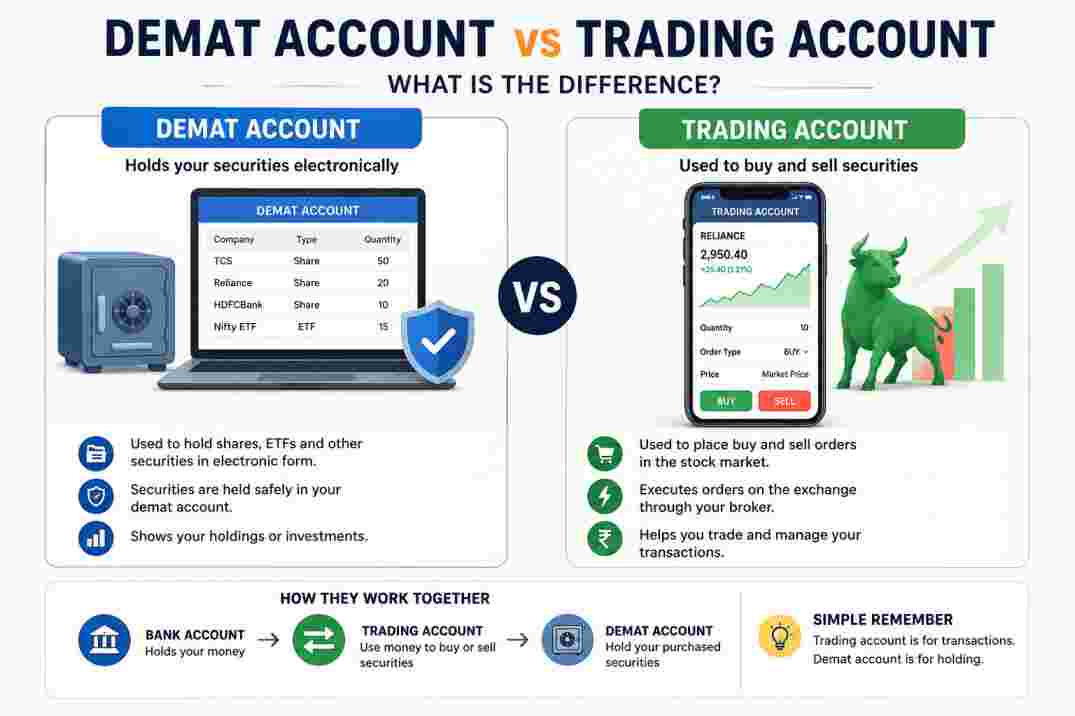
The easiest way to remember it is simple: a trading account is used to buy and sell securities, while a Demat account is used to hold your investments electronically. Most modern stockbrokers provide both accounts together, so you normally don’t have to manage them separately.
What Is a Demat Account?
A Demat account is an electronic account where your shares and other eligible securities are held in digital form. The word “Demat” comes from dematerialisation, which means converting physical securities into electronic form.
For example, if you buy 20 shares of a company as a long-term investment, those shares will eventually appear in your Demat holdings after the applicable settlement process. You can continue holding them for months or years without doing anything further.
Also Read: How to Calculate Your Stock Market Returns: Absolute Return vs CAGR vs XIRR
Think of your Demat account as a digital locker for your investments. Your shares, ETFs and other eligible securities are recorded there instead of being represented by physical certificates.
What Is a Trading Account?
A trading account is mainly used to place buy and sell orders in the stock market.
When you open your broker’s application and decide to purchase 10 shares, you use the trading platform to place the order. Once the transaction is executed and settled, the purchased shares are credited to your Demat account.
The same happens when you want to sell. You place the sell order through your trading account, and after the applicable settlement process, the securities are removed from your Demat holdings.
Also Read: Why Do Stock Markets Crash? The Real Reasons Behind Market Crashes
So, the simple difference is:
Trading account = buying and selling
Demat account = holding
How Do Bank, Trading and Demat Accounts Work Together?
A simple example makes this much easier to understand.
Also Read: How to Build a Diversified Investment Portfolio in India
Suppose you have ₹50,000 in your bank account and decide to invest ₹10,000 in shares. Your bank account is where your money is available. You use your trading account to place the order. Once the purchase is completed and settlement takes place, the shares are held in your Demat account.
So these three accounts have different roles.

Bank account: Holds your money.
Trading account: Helps you buy and sell securities.
Also Read: Market Order vs Limit Order: Key Differences Explained
Demat account: Holds your securities electronically.
This is why investors normally link their bank account with their Demat and trading account when completing the account-opening process.
Do You Need Both a Demat and Trading Account?
For normal stock-market investing, investors generally use both a Demat and trading account. Fortunately, most brokers offer them together as a combined account.
When you open a Demat and trading account with a broker, the broker generally handles the required KYC and account-opening process. Once your account is activated, you can use the broker’s platform to place orders and view your investments.
Also Read: How to Buy Your First Stock in India: A Beginner’s Step-by-Step Guide
For beginners, this combined setup makes the process much easier because everything can usually be accessed through one app or website.
Demat Account vs Trading Account
The main difference is their purpose.
A Demat account records and holds your securities, while a trading account facilitates transactions.
For example, suppose you purchase 50 shares and decide to hold them for five years. Your trading account was used when you purchased them, but the shares remain in your Demat account during those five years.
Also Read: Best Stock Market Apps in India: Features, Charges and How to Choose
When you eventually decide to sell them, you use the trading account again to place the sell order.
This is why the two accounts should not be confused even though they are commonly provided together.
What About ETFs?
The same concept applies to ETFs.
If you purchase an ETF through the stock exchange, the order is placed through your trading platform. Once the transaction is completed and settled, the ETF units are reflected in your Demat holdings.
Also Read: Best US Stock Trading Platforms for Indians: Fees, Features and How to Choose
For long-term investors who regularly buy ETFs, the Demat account therefore becomes the place where those investments are held.
Can You Have Multiple Demat Accounts?
Yes, investors can have multiple Demat accounts with different Depository Participants, subject to applicable rules.
However, having several accounts does not automatically improve your investment results. Multiple accounts can make it harder to track holdings, statements, charges and transactions.
For most beginners, one reliable Demat and trading account is usually easier to manage. A second account may make sense when there is a specific reason, such as using different platforms for different investment needs.
Also Read: How to Find Your Demat Account Number Online – DP ID, Client ID & BO ID
What Should You Check Before Opening One?
Before selecting a broker, don’t look only at advertisements offering a “free Demat account.” Check the broker’s applicable brokerage, annual maintenance charges, transaction-related fees, platform reliability, customer support and security features.
Also understand the products and services available through the broker and read the account-opening terms carefully.
Most importantly, protect your account credentials. Never share your OTP, trading password or other confidential information with another person. Be cautious about anyone promising guaranteed stock-market profits or asking you to transfer money to an unknown account.
Final Conclusion
A Demat account and a trading account are different, but they work together when you invest in the stock market. The trading account helps you execute buy and sell transactions, while the Demat account helps you hold your securities electronically.
Also Read: How to Transfer Shares From One Demat Account to Another – Complete Guide
For most beginners, both are provided together by the broker, so opening and managing them is relatively simple.
Before buying your first stock or ETF, however, take some time to understand how orders work, what charges apply and what risks you are taking.
Opening an account is easy. Learning how to use it wisely is the important part.
Disclaimer: This article is for educational and awareness purposes only. We are not SEBI registered. Nothing shared here is investment, trading or financial advice. Brokerage charges, account procedures and settlement processes can change. Please verify the latest information with your broker and official regulatory sources before investing.
Also Read: Demat Account Charges in India: AMC, Brokerage, DP Charges and Other Fees






Keep learning with OneTrader
Explore structured lessons and practical guides to build your market knowledge.