
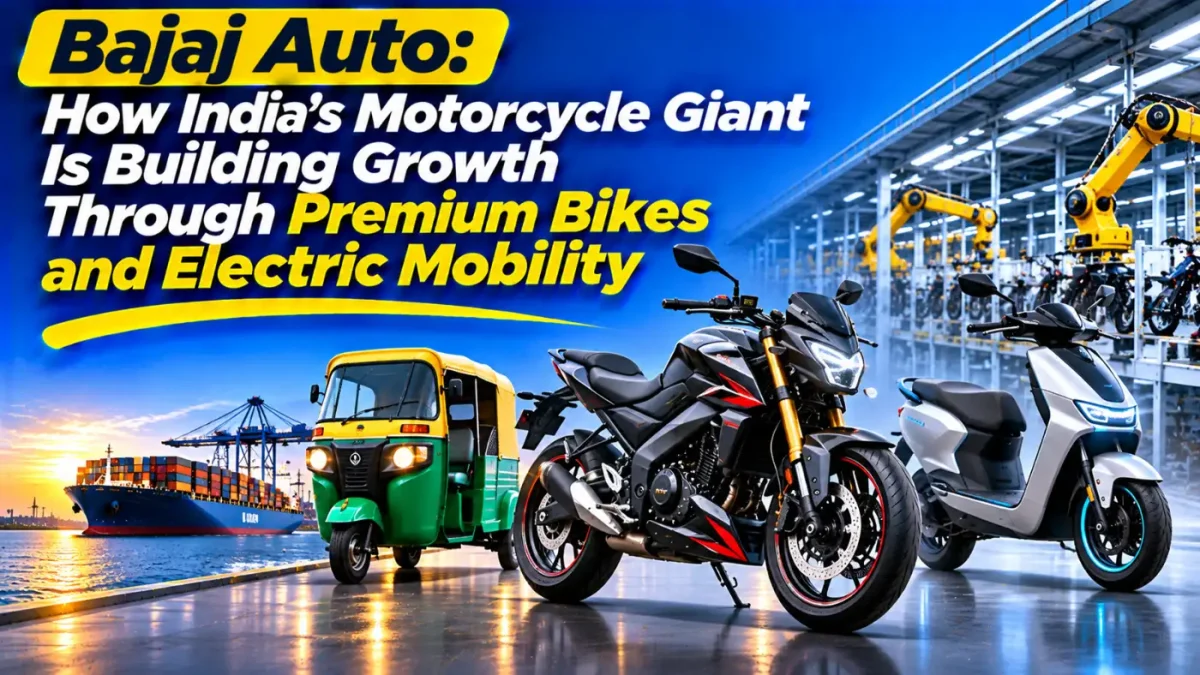
Bajaj Auto is one of India’s leading two-wheeler and three-wheeler manufacturers, with a strong presence in motorcycles, electric scooters and commercial mobility.
- Bajaj Auto manufactures motorcycles, scooters, electric two-wheelers and three-wheelers.
- Bajaj Auto serves individual motorcycle buyers, commuters, premium motorcycle enthusiasts, fleet operators, auto-rickshaw drivers, small businesses and international distributors.
- Premium motorcycles are a major opportunity.
Bajaj Auto is one of India’s leading two-wheeler and three-wheeler manufacturers, with a strong presence in motorcycles, electric scooters and commercial mobility. Its brands serve customers across domestic and international markets, while its partnerships and export network give it access to several emerging economies.
The company has built its position through motorcycles across multiple price segments, a strong export business and a focus on operating efficiency. Its next phase of growth depends on premium motorcycles, electric mobility, three-wheeler demand and its ability to defend market share in competitive domestic and international markets.
What Bajaj Auto Does
Bajaj Auto manufactures motorcycles, scooters, electric two-wheelers and three-wheelers. Its major motorcycle brands include Pulsar, Dominar, Avenger, Platina and CT. The company also sells premium motorcycles under the KTM and Triumph brands through its manufacturing and distribution arrangements.
Its electric mobility business operates under the Chetak brand. The company is expanding its electric scooter portfolio as more Indian customers consider electric vehicles for daily commuting. Bajaj Auto also manufactures electric three-wheelers and other commercial mobility products.
Also Read: Apollo Hospitals: How India’s Healthcare Giant Is Building Growth
Three-wheelers are an important part of its business. The portfolio includes passenger and cargo vehicles used for urban transport, last-mile connectivity and small-business deliveries. These vehicles serve both domestic and export markets.
Bajaj Auto has a significant international presence, exporting motorcycles and three-wheelers to markets across Africa, Latin America, Asia and other regions. Its manufacturing capabilities and established dealer relationships support this global business.
Customers and How Bajaj Auto Makes Money
Bajaj Auto serves individual motorcycle buyers, commuters, premium motorcycle enthusiasts, fleet operators, auto-rickshaw drivers, small businesses and international distributors.
The company earns most of its revenue by selling motorcycles and three-wheelers through dealerships and distributors. Its product mix ranges from affordable commuter motorcycles to premium performance models. Premium motorcycles can support higher average selling prices, while commuter models provide access to a wider customer base.
Also Read: Trent: How Westside and Zudio Are Driving Growth

Exports are another important source of revenue. Bajaj Auto supplies vehicles to overseas distributors and dealers, with demand influenced by local economic conditions, currency movements, import duties and regulatory requirements.
The company also earns revenue from spare parts, accessories and related services. Its partnerships with KTM and Triumph strengthen its presence in premium motorcycles and provide access to international product platforms.
Profitability depends on sales volumes, product mix, export realisations, raw material costs and manufacturing efficiency. A higher share of premium motorcycles and electric vehicles can improve revenue per unit, but the company must manage development, marketing and technology costs carefully.
Growth Drivers
Premium motorcycles are a major opportunity. The Pulsar range gives Bajaj Auto a strong position in the sports commuter segment, while Dominar, KTM and Triumph provide access to higher-priced motorcycles. New launches, product upgrades and wider distribution can improve its position in premium categories.
Exports remain a significant growth engine. Bajaj Auto has established distribution across emerging markets, particularly in Africa and Latin America. Demand for affordable motorcycles and three-wheelers, combined with a wider product range, can support international sales. However, export performance will depend on economic conditions, currency movements and political stability in individual markets.
Electric mobility is becoming increasingly important. Chetak has expanded its presence in electric scooters, while electric three-wheelers provide access to commercial and last-mile transport demand. Increasing production capacity, improving availability and managing battery costs will be important to sustaining this growth.
The KTM and Triumph partnerships strengthen Bajaj Auto’s premium motorcycle business. These relationships allow the company to participate in international product development and manufacturing while broadening its brand portfolio.
Competition and Risks
Bajaj Auto competes with Hero MotoCorp, TVS Motor, Honda Motorcycle and Scooter India, Royal Enfield and other manufacturers in the domestic two-wheeler market. In electric scooters, competition includes TVS, Ather Energy, Ola Electric and other emerging brands. Three-wheeler competition comes from established manufacturers and newer electric mobility companies.
Export concentration creates exposure to economic and political developments in overseas markets. Currency depreciation, import restrictions, higher duties or local instability can affect demand and profitability. Shipping disruptions can also delay deliveries.
Raw material costs are another risk. Steel, aluminium, rubber, electronics and battery components influence manufacturing expenses. If costs rise faster than vehicle prices, margins may come under pressure.
The electric vehicle market is evolving quickly. Battery technology, pricing, charging infrastructure and customer preferences can change competitive positions. Bajaj Auto must continue investing in products and capacity while ensuring that electric vehicle growth translates into sustainable profitability.
What Investors Should Watch
Domestic and export vehicle volumes should be monitored separately. Export growth has been an important earnings driver, while domestic performance will show whether Bajaj Auto is strengthening its position in motorcycles, scooters and three-wheelers.
Product mix and premium motorcycle sales are important for realisations and margins. Investors should track Pulsar performance, KTM and Triumph volumes, new launches and the company’s ability to gain share in higher-value segments.
Electric vehicle sales and profitability deserve particular attention. Chetak’s volumes, production capacity, dealer reach and contribution to domestic revenue can indicate whether the company is building a durable position in electric mobility.
Operating margins, free cash flow and surplus cash are also important. The company has demonstrated strong cash generation, but future investment requirements and shareholder distributions should be assessed alongside its operating performance.
Bajaj Auto has a broad vehicle portfolio, a strong export network and established positions in motorcycles and three-wheelers. Its electric mobility business and premium motorcycle partnerships add further growth opportunities. The key question is whether the company can sustain its recent momentum while protecting margins and building profitable positions in electric and premium vehicles.
Financial Disclaimer: This article is for educational and informational purposes only. It is not investment advice or a recommendation to buy or sell any security. Investors should review company disclosures, financial statements, risks and valuations and consult a qualified financial adviser before making investment decisions.






Keep learning with OneTrader
Explore structured lessons and practical guides to build your market knowledge.

Need a laugh after all that money talk?
Paisa LOL: India's funniest finance page, with memes, comics, jokes and long funny stories.
