
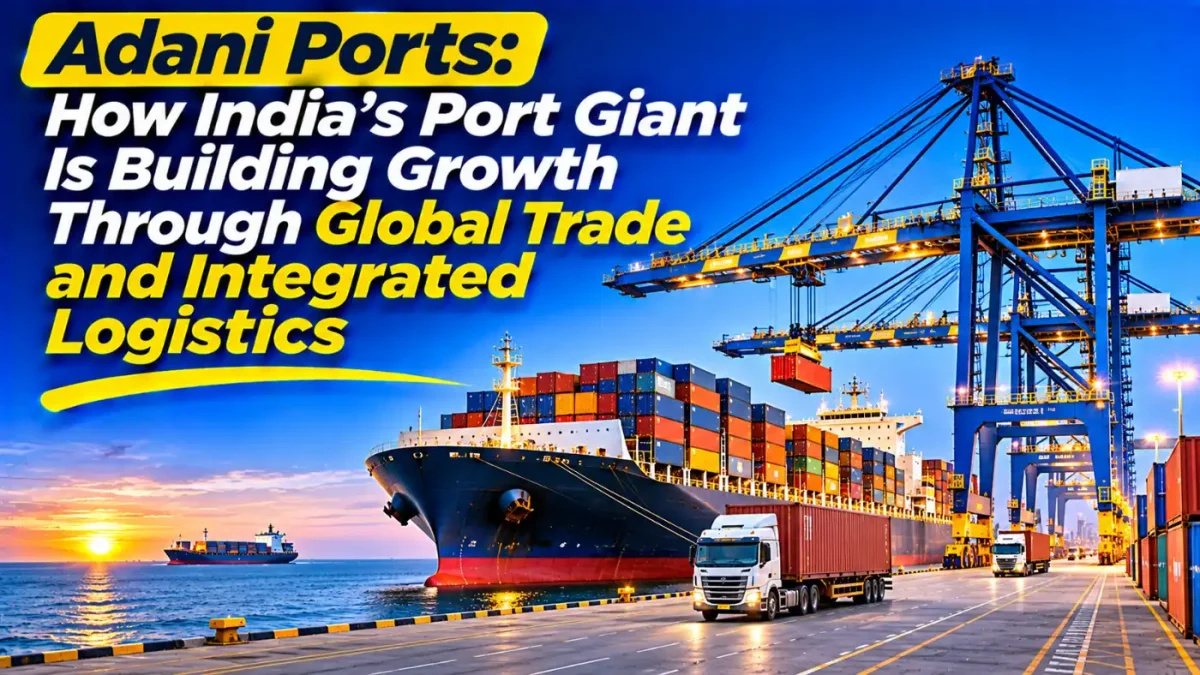
Adani Ports and Special Economic Zone (APSEZ) is India’s largest private port operator and an increasingly diversified transport and logistics company.
- Port operations: APSEZ operates major Indian ports and terminals, including Mundra, Hazira, Dhamra, Krishnapatnam, Kattupalli, Ennore and Vizhinjam.
- APSEZ serves shipping lines, exporters, importers, manufacturers, commodity traders, logistics companies and industrial customers.
- India’s international trade and infrastructure development provide the main long-term opportunity.
Adani Ports and Special Economic Zone (APSEZ) is India’s largest private port operator and an increasingly diversified transport and logistics company. Its business has expanded beyond cargo handling into international ports, container terminals, logistics parks, trucking and marine services.
The company connects Indian businesses with domestic and international markets through a network of ports and transport infrastructure. Its growth depends on rising trade volumes, port capacity expansion and the ability to move cargo efficiently from ships to customers across the supply chain.
What Adani Ports Does
Port operations: APSEZ operates major Indian ports and terminals, including Mundra, Hazira, Dhamra, Krishnapatnam, Kattupalli, Ennore and Vizhinjam. It handles containers, dry bulk, liquid cargo, crude oil, automobiles and other commodities. Mundra is its flagship port and a major gateway for India’s international trade.
International ports: The company has expanded beyond India through operations and investments in Australia, Sri Lanka, Israel and Tanzania. These assets give it access to important shipping routes and international cargo markets. The Colombo West International Terminal and NQXT in Australia are important parts of this expansion.
Also Read: Apollo Hospitals: How India’s Healthcare Giant Is Building Growth
Logistics: APSEZ operates an integrated logistics network that includes container train services, multimodal logistics parks, warehouses, trucking and freight services. This connects ports with industrial centres, inland markets and customer destinations.
Marine services: The company operates a fleet supporting harbour operations, offshore services, towing and other maritime activities. It is also expanding into subsea services, broadening its role in the maritime sector.
The Special Economic Zone business at Mundra supports industrial and commercial activity around the port, although the company’s larger growth strategy is increasingly focused on ports, logistics and marine operations.
Customers and How Adani Ports Makes Money
APSEZ serves shipping lines, exporters, importers, manufacturers, commodity traders, logistics companies and industrial customers. Its port customers include businesses handling containers, coal, crude oil, fertilisers, agricultural products, metals and other cargo.
Also Read: Trent: How Westside and Zudio Are Driving Growth

The company earns revenue through cargo handling, vessel-related services, storage, container handling, berth charges and other port services. Container terminals generate income from loading, unloading and moving containers, while bulk and liquid terminals serve customers transporting commodities and industrial materials.
Its logistics business earns revenue from freight movement, container trains, warehousing, trucking and integrated cargo services. Marine operations generate income through vessel services, offshore support and related maritime activities.
The integrated model is important because customers can use APSEZ for more than one stage of transportation. A shipment can arrive at a port, move through a logistics facility and reach its final destination using the company’s wider network. This can deepen customer relationships and create revenue opportunities beyond port charges alone.
Growth Drivers
India’s international trade and infrastructure development provide the main long-term opportunity. Higher container traffic, industrial production, energy imports and exports can increase demand for port capacity and logistics services. APSEZ’s network across India’s coastline gives it access to several important industrial and consumption markets.
International expansion offers another growth engine. Colombo provides access to major transshipment traffic in the Indian Ocean, while NQXT in Australia and operations in Tanzania and Israel extend the company’s geographic reach. The performance of these assets will determine whether international expansion can become a durable source of earnings.
The logistics business can increase revenue per customer by connecting port operations with inland transport, warehousing and delivery. More integrated services can improve customer retention and reduce dependence on individual port volumes.
Marine services also offer scope for expansion. A larger fleet, offshore support and subsea capabilities can broaden the company’s maritime offering. New capacity at Indian ports, including projects at Vizhinjam and Paradip, can support future cargo growth.
Competition and Risks
APSEZ competes with other port operators, including government-owned major ports, JSW Infrastructure and private terminal operators. Its logistics operations face competition from rail freight companies, container train operators, road transport providers and integrated logistics businesses.
Trade volumes are exposed to global economic conditions. A slowdown in manufacturing, weaker exports or disruptions to shipping routes can affect cargo handled at ports. Geopolitical tensions and changes in international trade patterns can also alter shipping schedules and operating costs.
Large infrastructure projects require substantial capital. Port expansion, international acquisitions, logistics facilities and fleet investment can increase debt and depreciation. Delays in construction, regulatory approvals or customer ramp-up can reduce expected returns.
International operations bring currency, political and regulatory risks. Port concessions and terminal agreements also depend on long-term operating rights and compliance with local rules. Competition from nearby ports can affect cargo volumes and pricing.
What Investors Should Watch
Cargo volumes and market share are key indicators of the core port business. Investors should track domestic cargo growth, container traffic and the contribution from major ports such as Mundra and Vizhinjam.
International port profitability deserves particular attention. Revenue growth is encouraging, but investors should assess whether overseas operations can sustain margins and generate cash after expansion spending.
The logistics and marine businesses should be evaluated through revenue growth, EBITDA contribution, utilisation and customer contracts. Their ability to complement port operations is central to APSEZ’s integrated transport strategy.
Capital expenditure, net debt to EBITDA and operating cash flow are important measures of financial discipline. Investors should compare new investment commitments with project progress and expected returns. The company’s raised FY27 guidance also provides a benchmark against which future quarterly performance can be assessed.
APSEZ has developed from a port operator into a broader transport and logistics platform with domestic scale and international ambitions. Strong cargo growth, higher international contributions and a relatively controlled leverage ratio support its expansion strategy. Long-term performance will depend on maintaining port competitiveness, integrating overseas assets and ensuring that major investments generate sustainable cash flows.
Financial Disclaimer: This article is for educational and informational purposes only. It is not investment advice or a recommendation to buy or sell any security. Investors should review company disclosures, financial statements, segment performance, debt, risks and valuations and consult a qualified financial adviser before making investment decisions.






Keep learning with OneTrader
Explore structured lessons and practical guides to build your market knowledge.

Need a laugh after all that money talk?
Paisa LOL: India's funniest finance page, with memes, comics, jokes and long funny stories.
