
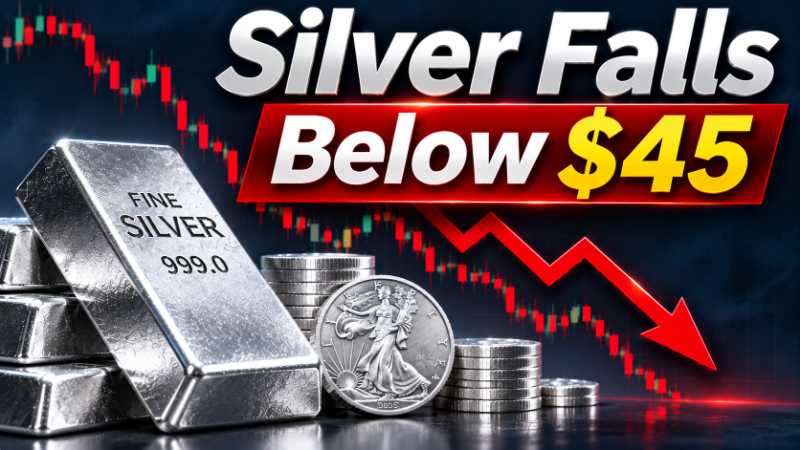
Silver is facing another wave of selling, with international spot prices remaining below $45 per ounce as pressure continued into early Friday trading. The metal fell approximately 5% on Wednesday, November 18, touching an intraday low of $44.64 before trading around $44.90. It subsequently closed around $44.47 on Thursday as hotter-than-expected US inflation strengthened expectations of another Federal Reserve interest rate increase in December.
The latest weakness has extended a dramatic reversal in silver’s fortunes. After climbing above $121 earlier this year, the metal has surrendered almost two-thirds of its peak value. The correction follows an extraordinary rally that included a 147% gain during 2025 and another 70% advance at the beginning of 2026, before speculative buying began to unwind towards the end of January.
For long-term investors, silver’s decline raises an important question: does the correction reflect a temporary reversal in investor positioning, or are the metal’s industrial demand characteristics creating additional challenges compared with gold?
Silver Falls Faster Than Gold as Its Industrial Exposure Becomes a Weakness
Silver has historically occupied a different position from gold in the precious metals market. Although both metals attract investment demand, silver also has extensive industrial applications, making its price sensitive to manufacturing activity and economic expectations.
Also Read: Gold-Silver Ratio Explained: How to Read It and Why Traders Watch It
This dual character is becoming particularly important during the current correction.
An FxPro analyst has highlighted that silver is underperforming gold because it functions as both a monetary and an industrial metal. When investors reduce exposure to precious metals, silver can face additional pressure if concerns about industrial consumption emerge at the same time.
The difference has been visible during November. Gold has declined more than 3%, while silver has fallen nearly 8%, putting the white metal on course for its worst monthly performance since September.
For investors, this distinction matters because silver does not always behave like a cheaper version of gold. Its industrial exposure can amplify movements in both directions, particularly when investment sentiment and manufacturing expectations weaken simultaneously.
Also Read: Why Silver Prices Have Fallen and What It Means for Long-Term Investors
The Speculative Rally Has Given Way to a Sharp Correction
Silver’s earlier advance attracted considerable attention from investors and traders. Strong momentum, expectations of industrial demand and growing participation in precious metals helped push prices to extraordinary levels.
However, the speed of that advance also increased the market’s vulnerability to a reversal.
Once prices began falling, speculative positions became increasingly difficult to maintain. Investors who entered during the rally faced a changing risk environment, while new buyers became more cautious about paying elevated prices.
The result has been a substantial correction from the peak.
Also Read: Commodity News Today: Silver Falls as US Inflation Revives Rate-Hike Fears
| Silver market reference | International spot price |
|---|---|
| Earlier peak | Above $121/oz |
| November 18 session low | $44.64/oz |
| November 18 session high | $47.74/oz |
| November 18 last trade | Around $44.90/oz |
| November 19 close | Around $44.47/oz |
The decline demonstrates how quickly sentiment can change in a commodity market after an extended speculative rally. It also highlights the risk of treating strong historical price appreciation as evidence that the same performance will continue.

Why Silver’s Industrial Demand Makes Its Outlook More Complicated
Industrial consumption is one of the defining characteristics of silver.
The metal is used in electrical and electronic applications, solar energy equipment and various manufacturing processes. This creates a demand base that differs from gold, which is primarily held for investment, jewellery and other uses.
The industrial component can support silver over longer periods, particularly when manufacturing activity and technology-related investment expand.
However, industrial exposure also introduces economic sensitivity. If manufacturers become cautious about expansion or demand expectations weaken, investors may reassess the amount of silver required by industry.
This is why silver can struggle even when its longer-term industrial applications remain relevant.
Investors should distinguish between the long-term importance of silver in industrial supply chains and the price that financial markets are willing to pay for it at a particular moment.
Physical Silver Supply Remains an Important Long-Term Consideration
Despite the steep correction, the physical supply situation offers another perspective on the silver market.
Also Read: Silver Price Outlook: Is Silver Going Up or Down From Here?
Analysis of inventories in London and New York indicates that vaults have not been filling up, suggesting there is no visible surplus of metal accumulating in these major trading centres.
This is an important distinction because falling prices do not necessarily mean that physical supply has become abundant.
The Silver Institute and Metals Focus project a silver market deficit of 35 million ounces. A deficit means that the total demand for silver exceeds newly available supply over the relevant period, requiring the difference to be met through existing inventories and other sources.
Such conditions can provide structural support to the market over longer periods, although they do not prevent sharp price declines.
Also Read: Silver ETF vs Physical Silver: Which Is Better for Long-Term Investment?
The physical market and financial trading markets can behave differently. Futures prices may fall rapidly because of changing investor expectations even when available physical supplies remain relatively constrained.
For long-term investors, the relationship between industrial consumption, mine supply, recycling and available inventories deserves attention alongside investment demand.
What the Silver Correction Means for Long-Term Investors
The latest decline is a reminder that silver carries a different risk profile from gold.
Investors considering silver as part of a long-term portfolio should recognise that its industrial demand exposure can create additional volatility. The metal can benefit from expanding manufacturing and technology applications, but it can also react negatively when economic expectations weaken.
Also Read: Why Silver Prices Are So Volatile in 2026: What Is Driving the Huge Swings?
Silver ETFs provide a convenient way to gain exposure without personally purchasing and storing physical bullion. Before selecting an ETF, investors should examine its expense ratio, tracking difference, assets under management and trading liquidity.
A disciplined investment approach can also help manage the uncertainty surrounding volatile commodities. Investors who prefer gradual accumulation can spread purchases across different market conditions rather than committing their entire allocation at one price.
However, systematic investing does not eliminate the possibility of losses. Silver remains a commodity whose value can fluctuate substantially, even when its long-term industrial applications remain attractive.
It is also important to avoid allowing a falling silver price to dominate the overall portfolio. Precious metals should be considered alongside other investments according to financial objectives, time horizon and tolerance for risk.
Also Read: Silver vs Gold: Which Is Better Now After the Rally and Crash? | Onetrader
What Investors Should Watch Next
The immediate focus will remain on the US dollar, Federal Reserve expectations and the strength of industrial demand.
For silver specifically, investors should also monitor developments in physical inventories and the balance between industrial consumption and available supply.
The distinction between investment demand and industrial demand will be particularly important. A recovery in investor interest may support prices, but the sustainability of any improvement will also depend on the metal’s underlying consumption requirements.
The latest correction has exposed the risks of silver’s earlier speculative rally, but it has not removed the metal’s industrial importance or the structural supply concerns highlighted by the physical market.
Also Read: Is Silver Overvalued or Still Undervalued After the Crash? | Onetrader Analysis
For long-term investors, understanding these competing forces is more useful than judging silver entirely by its recent decline. Silver remains a distinct asset with both precious-metal and industrial characteristics, and its place in a portfolio should reflect that combination.
Financial Disclaimer: This article is for educational and informational purposes only. It is not investment advice or a recommendation to buy or sell silver or any related product. Investors should conduct independent research before making financial decisions.


Keep learning with OneTrader
Explore structured lessons and practical guides to build your market knowledge.

Need a laugh after all that money talk?
Paisa LOL: India's funniest finance page, with memes, comics, jokes and long funny stories.
