

Wednesday, November 18, 2026 | Commodities & Energy
Gold has entered a significant correction, prompting Indian investors to reassess how they hold the metal. International spot gold is near $3,797 per ounce, its lowest in 14 months, while MCX gold is around ₹1,31,500 to ₹1,31,741 per 10 grams on Wednesday. A stronger US dollar and expectations of further Fed rate increases have weighed on prices.
For long-term investors, a falling price is also a chance to review costs, fund quality and allocation rather than focus on short-term moves. Gold ETFs give exposure to domestic gold prices without buying and storing physical gold, but choosing one takes more than looking at fund size. Expense ratio, tracking difference, AUM and liquidity all matter over a long holding period.
In Simple Words
Gold ETFs are units traded on the stock exchange that follow the price of gold. For long-term investors, a low expense ratio and close tracking matter more than chasing the highest past return. Traders should look more closely at liquidity and bid-ask spreads.
Top 5 Gold ETFs in India: Comparison
The selection is based on average AUM, not historical returns. Tracking difference is the gap between the ETF’s performance and its benchmark, and a smaller negative number means the fund stayed closer to its benchmark.
| Gold ETF | Average AUM | TER | 1-year tracking difference |
|---|---|---|---|
| Nippon India Gold BeES | ₹56,306 Cr | 0.81% | -1.15% |
| ICICI Prudential Gold ETF | ₹27,185 Cr | 0.49% | -0.80% |
| SBI Gold ETF | ₹25,899 Cr | 0.65% | -1.00% |
| HDFC Gold ETF | ₹23,492 Cr | 0.59% | -0.91% |
| Kotak Gold ETF | ₹14,346 Cr | 0.52% | -0.84% |
Average AUM is for July to September 2026, TER is for November 2026, and tracking difference is from disclosures dated October 1, 2026.
1. Nippon India ETF Gold BeES (GOLDBEES)
Gold BeES is the largest fund here, with average assets of ₹56,306 crore. Launched on March 8, 2007, it is the most established name in India’s gold ETF market.
Its biggest advantage is liquidity. NSE traded value reached ₹867.5 crore on November 18, far above the other four funds. The trade-off is cost: its 0.81% expense ratio is the highest of the five, with a one-year tracking difference of -1.15% and a three-year figure of -1.54%.
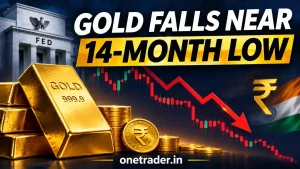
Also Read: Gold Price Falls Near 14-Month Low: Fed Rate-Hike Fears and a Stronger Rupee Weigh on Gold
| Key details | Value |
|---|---|
| Average AUM | ₹56,306 crore |
| Expense ratio | 0.81% |
| 1-year tracking difference | -1.15% |
| 3-year tracking difference | -1.54% |
| NAV (November 17) | ₹109.89 |
| NSE traded value (November 18) | ₹867.5 crore |
Who it suits: Investors who prioritise trading liquidity and want to transact larger quantities easily.
2. ICICI Prudential Gold ETF (GOLDIETF)
ICICI Prudential Gold ETF combines size with low cost. Average AUM is ₹27,185 crore, second-largest in this group.

Its 0.49% expense ratio is the lowest of the five, and its one-year tracking difference of -0.80% is the closest to zero here, with a three-year figure of -1.20%. A lower expense ratio reduces the recurring cost of holding gold over several years.
| Key details | Value |
|---|---|
| Average AUM | ₹27,185 crore |
| Expense ratio | 0.49% |
| 1-year tracking difference | -0.80% |
| 3-year tracking difference | -1.20% |
| NAV | ₹113.93 |
| NSE traded value | ₹147.3 crore |
Who it suits: Long-term investors looking for a low-cost ETF with substantial size and close benchmark tracking.
Also Read: Commodity Futures on MCX Explained: Margin, Lot Size, Expiry and Settlement
3. SBI Gold ETF (SBIGOLD)
SBI Gold ETF has average AUM of ₹25,899 crore, among the largest gold ETFs available to Indian investors. Its expense ratio is 0.65%, with one-year and three-year tracking differences of -1.00% and -1.40%.
NSE traded value of ₹139 crore shows meaningful trading activity, though investors should still check the bid-ask spread before placing orders.
| Key details | Value |
|---|---|
| Average AUM | ₹25,899 crore |
| Expense ratio | 0.65% |
| 1-year tracking difference | -1.00% |
| 3-year tracking difference | -1.40% |
| NAV | ₹113.39 |
| NSE traded value | ₹139 crore |
Who it suits: Investors who prefer a large fund and want an established alternative to the biggest ETF.
4. HDFC Gold ETF (HDFCGOLD)
HDFC Gold ETF has average assets of ₹23,492 crore and an expense ratio of 0.59%. Its one-year tracking difference is -0.91% and its three-year figure is -1.33%.
Also Read: Stock Market Today India: GIFT Nifty, Oil and Asian Cues Before the Open (October 13, 2026)
It offers substantial assets with competitive costs. NSE traded value was ₹87.9 crore on November 18, which investors should weigh alongside its cost and tracking record.
| Key details | Value |
|---|---|
| Average AUM | ₹23,492 crore |
| Expense ratio | 0.59% |
| 1-year tracking difference | -0.91% |
| 3-year tracking difference | -1.33% |
| NAV | ₹113.59 |
| NSE traded value | ₹87.9 crore |
Who it suits: Investors seeking a sizeable gold ETF with a competitive expense ratio and relatively close tracking.
5. Kotak Gold ETF (GOLD1)
Kotak Gold ETF has average AUM of ₹14,346 crore, the fifth-largest here, with a competitive 0.52% expense ratio. Its one-year tracking difference is -0.84%, and its ten-year figure is -1.01%.
The ten-year disclosure gives a longer-term view for those treating gold as a strategic allocation. Its NSE traded value of ₹42.9 crore on November 18 was the lowest of the five.
Also Read: Sensex Nifty Today: Rupee Rallies on RBI Measures as Indices Hold Flat
| Key details | Value |
|---|---|
| Average AUM | ₹14,346 crore |
| Expense ratio | 0.52% |
| 1-year tracking difference | -0.84% |
| 10-year tracking difference | -1.01% |
| NAV | ₹110.99 |
| NSE traded value | ₹42.9 crore |
Who it suits: Investors who value competitive costs and a longer tracking record.
How to Choose the Right Gold ETF
Expense ratio: This annual cost comes out of the fund’s NAV and slowly trims returns, so even a small gap matters over many years. ICICI Prudential has the lowest TER at 0.49%, followed by Kotak at 0.52%. Tata Gold ETF, Mirae Asset Gold ETF and Zerodha CASE Gold ETF are other low-cost options, with TERs of 0.35% to 0.39%.
Tracking difference: Look at one-year and longer-term figures, not just one period. A smaller negative difference means the ETF stayed closer to gold.
AUM: Size shows investor participation, but it does not guarantee lower costs or better tracking. A smaller ETF can still be a good choice if costs and tracking are competitive.
Also Read: Crude Oil Above $100: Why Indian Markets Face Pressure
Liquidity: Gold BeES has the highest traded value of the five, which helps frequent traders. Check the bid-ask spread too, since a narrow spread lowers entry and exit costs.
Demat account: Gold ETFs trade like shares, so you generally need a demat and trading account. There is no storage or purity worry as with physical gold.
Taxation of Gold ETFs
| Holding period | General tax treatment |
|---|---|
| Up to 12 months | Taxed at applicable income-tax slab rate |
| More than 12 months | 12.5% without indexation |
Check the rules applicable on the actual sale date and your own circumstances before selling units.
What Long-Term Gold Investors Should Watch Next
The US dollar, Fed rate expectations, bond yields and inflation expectations remain key influences on gold. For Indian investors the rupee-dollar rate adds another layer, since domestic gold prices reflect both.
Whichever ETF you consider, the checklist stays the same: expense ratio, tracking difference, fund size and liquidity. The cheapest ETF is not automatically best for everyone, and the largest is not necessarily the most cost-efficient.
Disclaimer: This article is for educational and informational purposes only and does not constitute investment or tax advice. Gold ETFs are subject to market risk and fluctuations in domestic and international gold prices. Investors should review scheme documents, costs, tracking differences and applicable taxation before investing. OneTrader is not a SEBI-registered investment adviser or research analyst.

Keep learning with OneTrader
Explore structured lessons and practical guides to build your market knowledge.

Need a laugh after all that money talk?
Paisa LOL: India's funniest finance page, with memes, comics, jokes and long funny stories.
