
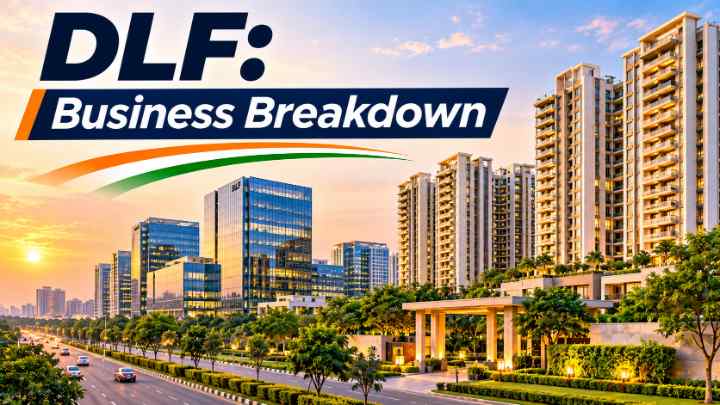
Understand DLF's residential sales, rental portfolio, Q2 FY27 results, project pipeline and key growth drivers and risks.
- DLF Limited is a major Indian real estate developer with businesses spanning residential development and commercial property.
- Residential customers include homebuyers purchasing properties for personal use and buyers seeking premium homes.
- DLF’s growth strategy depends on premium residential launches and the performance of its rental portfolio.
What DLF Does
DLF Limited is a major Indian real estate developer with businesses spanning residential development and commercial property. A Nifty Next 50 constituent, it gives investors exposure to home sales as well as income-generating office and retail assets.
Its residential business focuses on projects for homebuyers, with premium and luxury housing central to its sales strategy. Alongside this, DLF operates an annuity business built around completed commercial properties that generate rental income. Its annuity portfolio was about 50 million sq ft.
These activities have different revenue drivers: residential development depends on launches, bookings and project completion, while the rental business depends on leasing and operating completed properties. The residential business can be more sensitive to the timing of new supply, whereas the annuity portfolio is tied to the performance of assets already in operation. This makes the mix of development and rental activity an important part of DLF’s business profile. It also means the same market environment can affect the two businesses differently. The company therefore needs to manage both project development and the ongoing performance of completed commercial assets.
Customers and How DLF Makes Money
Residential customers include homebuyers purchasing properties for personal use and buyers seeking premium homes. DLF earns from unit sales, with launches and bookings shaping its future sales pipeline.
Reported revenue can differ from bookings because revenue is recognised as projects are completed. A booking may therefore contribute to revenue in a later period, while current revenue may reflect earlier sales. Investors should assess both measures rather than treating them as interchangeable.
The commercial business earns rental income from tenants occupying completed properties. Its performance depends on leasing and property operations, rather than the launch and completion cycle that drives residential development. This gives DLF two distinct business engines: residential sales and recurring rental activity.

Growth Drivers
DLF’s growth strategy depends on premium residential launches and the performance of its rental portfolio. FY26 sales bookings were Rs 20,143 crore, and management is comfortable with an annual sales trajectory of about Rs 20,000 crore.
Major FY26 launches included Privana North, valued at over Rs 11,000 crore, The Dahlias at about Rs 4,800 crore and Westpark Mumbai at over Rs 2,300 crore. These projects illustrate the scale of the company’s residential activity.
Competition and Risks
DLF competes with other property developers on location, project quality, pricing, execution and brand reputation. In premium housing, demand depends on the overall proposition and buyers’ confidence in delivery.
Launch delays and approval requirements can postpone sales opportunities, making quarterly bookings uneven. The FY27 pipeline is subject to approvals, and its planned value should not be treated as guaranteed sales.
The commercial business faces a different set of risks. Rental income depends on tenant demand, leasing conditions and the operating performance of completed properties.
What Investors Should Watch
Investors should track bookings alongside launches and project completion. The FY27 pipeline, required approvals and timing of new launches will indicate whether the company can sustain its stated sales trajectory.
The conversion of bookings into recognised revenue is equally important. Construction and completion schedules determine when sales appear in the income statement, so a single quarter’s revenue may not reflect current demand.
Cash generation and the net cash position provide additional context when profit is influenced by other income and joint venture contributions. Separately, the annuity business should be assessed through rental performance and leasing conditions.
The central questions are whether launches progress as planned, bookings convert into completed projects and the commercial portfolio continues to generate rental income. A balanced assessment should combine residential demand indicators with cash generation, completion progress and rental performance rather than relying on a single headline metric. Investors should also consider whether growth is being achieved with discipline across both development and leasing operations.
Conclusion
DLF combines residential development with a substantial commercial rental business, giving it exposure to both property sales and income-generating assets. Its premium housing launches and established annuity portfolio are central to the business model, but they operate on different timelines and should be evaluated separately.
For investors, the central question is how effectively DLF can convert launches into bookings, completed projects and recognised revenue while maintaining the performance of its rental portfolio. The residential and annuity businesses should be judged on their own operating drivers, then considered together to understand the overall business mix. Tracking those drivers offers a clearer view of the company’s growth than relying on any single headline financial measure.
Financial Disclaimer: This article is for educational and informational purposes only. It is not investment advice or a recommendation to buy or sell DLF Limited shares. Investors should conduct independent research before making financial decisions.






Keep learning with OneTrader
Explore structured lessons and practical guides to build your market knowledge.

Need a laugh after all that money talk?
Paisa LOL: India's funniest finance page, with memes, comics, jokes and long funny stories.
