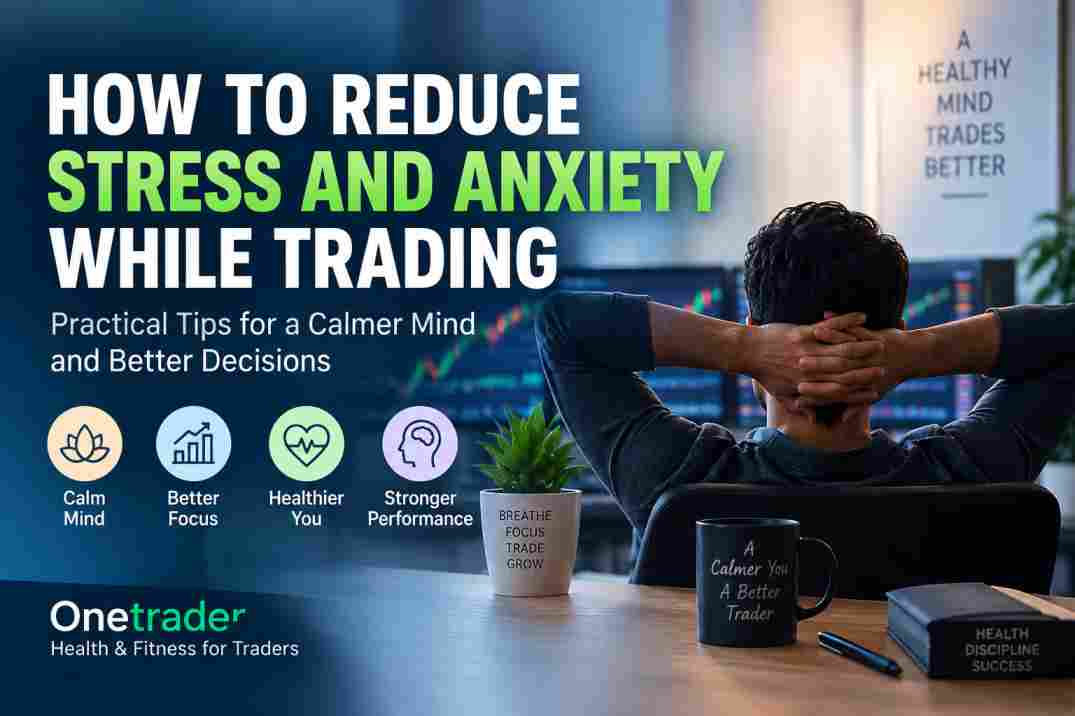
Trading can be mentally demanding even when a trader has a well-tested strategy. Markets are uncertain, prices move quickly, losses are unavoidable, and every decision involves financial consequences. For many traders, the biggest challenge is not finding an entry or understanding a chart but managing the stress and anxiety that appear before, during, and after a trade. When stress becomes excessive, it can affect concentration, patience, sleep, and decision-making, making an already difficult activity even harder.
The objective is not to eliminate stress completely. Some level of alertness is normal when money is at risk. The real goal is to prevent stress from controlling your behavior. A trader who can recognize anxiety, understand its triggers, and build routines around it is better positioned to follow a trading plan consistently.
Why Trading Creates So Much Stress
Trading combines several powerful psychological pressures. Unlike many traditional jobs, the outcome of a decision is uncertain and can be visible almost immediately through a changing profit and loss figure. A trader can spend hours analyzing a setup and still experience a losing trade. This uncertainty can create anxiety, particularly when a trader is risking money that they cannot comfortably afford to lose.
Another major source of stress is the constant availability of information. Financial news, social media, market alerts, price notifications, analyst opinions, and chat groups can create the feeling that something important is always happening. Traders may repeatedly check charts because they are afraid of missing an opportunity. Over time, this constant monitoring can create mental fatigue and encourage impulsive decisions.
Also Read: Meditation for Traders: Simple Techniques to Reduce Stress & Improve Focus
Financial expectations can make the problem even worse. When trading becomes responsible for paying bills or achieving a specific monthly income target, every trade can feel more important than it actually is. A normal losing trade can then become an emotional event rather than simply one outcome within a larger statistical process.
How Stress Can Affect Trading Decisions
High stress can make it difficult to think objectively. A trader may know exactly where a stop-loss should be placed before entering a position but move it when the trade begins losing. Another trader may exit a valid position too early because a small decline creates fear. After a loss, frustration may lead to revenge trading, where the trader takes another position primarily to recover the previous loss.
Stress can also contribute to overtrading. When traders feel that they need to make something happen, they may start accepting setups that do not meet their normal criteria. The problem is not necessarily a lack of knowledge. The trader may understand the rules perfectly but fail to follow them when emotionally activated.
This is why stress management should be treated as part of risk management. Protecting trading capital requires more than determining position size. It also requires protecting the mental state that allows the trader to execute the plan.
Also Read: Stress Management for Traders: How to Stay Calm and Trade Better
Start With Risk You Can Emotionally Handle
One of the most effective ways to reduce trading anxiety is to examine the amount of money being placed at risk. If a normal stop-loss produces an emotional reaction that makes you want to interfere with the trade, the position may be too large for your current risk tolerance.
A smaller position can make it easier to accept normal market fluctuations. The purpose is not to guarantee profitable trades but to make individual losses psychologically manageable. Traders should establish their risk limits before entering a position rather than deciding them after the market begins moving.
A useful principle is that your trading size should allow you to experience a losing trade without feeling compelled to immediately win the money back. When risk is manageable, discipline becomes considerably easier.
Build a Pre-Trading Routine
A consistent pre-market routine can reduce unnecessary anxiety by replacing random reactions with preparation. Instead of immediately opening multiple charts and checking social media, begin by reviewing the broader market environment, your watchlist, and the conditions required for your setups.
Also Read: The Psychology of Calm — How to Stay Cool During Market Volatility
A few minutes of slow breathing or quiet preparation can also help create a transition between everyday activities and trading. The objective is not to achieve perfect calm. It is to begin the session with enough mental clarity to distinguish between a genuine trading opportunity and an emotional impulse.
Your trading plan should also be visible before the session begins. Entry conditions, position sizing, stop-loss rules, maximum trades, and circumstances under which you will stop trading should be decided in advance.
Take Breaks From the Screen
Watching every price movement is not the same as being productive. Continuous chart monitoring can increase tension, particularly for traders who react to every small movement.
Planned breaks can help reduce mental fatigue. During a break, step away from the trading screen rather than replacing it with another financial-information feed. A short walk, stretching, drinking water, or simply looking away from the screen can provide a useful mental reset.
Also Read: Why Traders Need Mental Fitness More Than Physical Fitness
For traders who spend many hours at a desk, movement is particularly important because physical inactivity can compound the feeling of fatigue and discomfort. A healthier trading routine should therefore include regular movement throughout the day.
Learn to Handle Losing Trades
A losing trade should not automatically become a stressful event. Losses are a normal component of any strategy based on probabilities. The important question is whether the loss occurred according to the rules of the system.
If a trade followed the plan and reached the predetermined stop-loss, the appropriate response is different from a loss caused by breaking your own rules. Separating these two situations helps prevent unnecessary emotional reactions.
After a significant emotional loss, taking a short break before considering another trade can be useful. The purpose is to prevent the desire to recover money immediately from becoming the reason for the next decision.
Also Read: Are Wireless Headphones 150 Times More Harmful Than Wired? Real Science Behind Radiation
Sleep and Exercise Matter More Than Traders Think
Stress management does not end when the market closes. Sleep, physical activity, nutrition, and recovery all influence the ability to concentrate and regulate emotions.
Regular exercise does not need to mean intense gym sessions. Walking, strength training, stretching, cycling, or another activity that you can perform consistently can help create a healthier separation from the trading screen. Similarly, maintaining a consistent sleep schedule gives the brain time to recover from the decision-making demands of the day.
A trader who spends the entire evening reviewing charts and worrying about the next session may never mentally leave the market. Creating a clear boundary between trading hours and personal time is therefore an important part of long-term performance.
Build a Trading Environment That Reduces Anxiety
Your environment can either increase or decrease stress. Multiple unnecessary monitors, constant notifications, financial television running in the background, and dozens of open tabs can create information overload.
Also Read: Don’t Be Like Sandy: Why Traders Must Invest in Health Like Capital
A cleaner workspace with only the information required for your strategy can make decision-making easier. Notifications should be limited to genuinely important events rather than every market movement.
The same principle applies to social media. During periods of extreme volatility, dozens of opinions can appear within minutes. Consuming every prediction can make a trader question a perfectly valid plan. Information should support your process, not replace it.
Conclusion
Trading stress cannot be completely removed because uncertainty is part of the market. However, traders can control how much stress they create through their risk, routines, environment, screen habits, and reactions to losses.
The strongest approach is not trying to become completely emotionless. It is building a process that allows you to make sensible decisions even when emotions are present. Manage your risk, prepare before trading, take regular breaks, protect your sleep, exercise consistently, and create rules that prevent emotional decisions from becoming expensive mistakes.
Also Read: 🧘 How to Balance Work and Health in Modern Life
Trading is a long-term performance activity. Protecting your mental and physical health is therefore not separate from becoming a better trader. It is part of the process.
Stay Tuned
This is part of the Health & Fitness for Traders series by Onetrader. In the next article, we’ll look at another important performance factor: How to Improve Focus and Concentration While Trading.
Stay tuned for more practical health, fitness, focus, and lifestyle strategies designed specifically for traders.
Health & Wellness Disclaimer: This article is for general informational and educational purposes only and is not intended to provide medical, psychological, or professional health advice. If you are experiencing persistent stress, anxiety, sleep problems, or other health concerns, consult a qualified healthcare professional. Individual results may vary.
Also Read: Food for Stock Market Traders: Boost Focus, Calm Mind, and Energy