
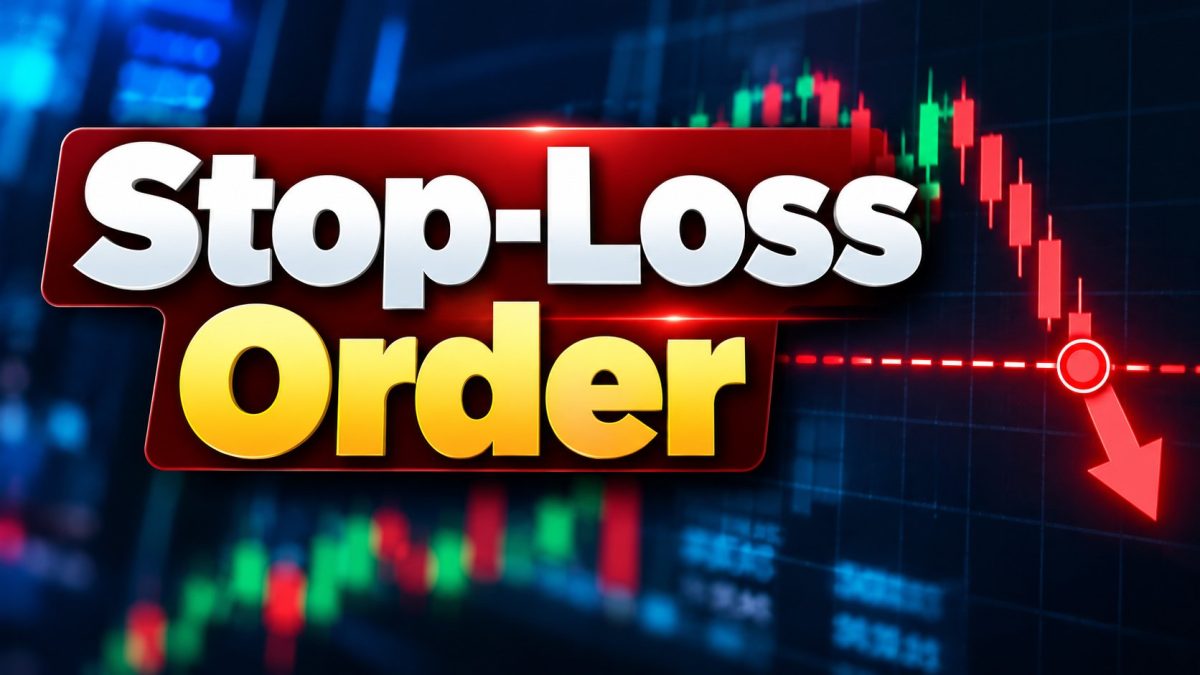
Stock market prices can change rapidly, sometimes within seconds. For investors and traders, managing the risk of unexpected price movements is an important part of participating in the market. One commonly used tool for this purpose is a stop-loss order, which allows traders to set a predefined price level at which an order is triggered.
A stop-loss order can help traders manage potential losses without continuously monitoring every price movement. However, it does not guarantee that a position will be closed at the exact price selected. Understanding how stop-loss orders work, their different types and their limitations is essential before using them.
What Is a Stop-Loss Order?
A stop-loss order is an instruction that becomes active when a security reaches a specified trigger price. It is commonly used to initiate an exit from an existing trading position when the market moves against the trader.
For example, suppose an investor purchases 100 shares of a company at ₹500 each. The total investment is ₹50,000. If the investor sets a sell stop-loss trigger at ₹480, the order becomes active when the applicable market-price condition reaches that level.
Also Read: What Is Margin Trading Facility (MTF) in the Stock Market? How It Works, Charges and Risks
The purpose is to establish an exit condition in advance rather than making a decision only after the stock has declined. However, the final execution depends on the order type, available liquidity and prevailing market conditions.
How Does a Stop-Loss Order Work?
A stop-loss order generally remains inactive until its trigger condition is satisfied. Once triggered, it is released into the market as either a market order or a limit order, depending on the selected stop-loss type and the exchange or broker’s supported facilities.
Consider a stock purchased at ₹1,000. A trader places a stop-loss trigger at ₹950. If the stock declines and reaches the relevant trigger condition, the stop-loss order becomes active.
If the triggered order is a market order, it attempts execution at available market prices. If it is a limit order, execution is subject to the specified limit price. Therefore, reaching the trigger price does not necessarily mean that the trade will execute at that exact price.
Also Read: Option Buying vs Option Selling: Key Differences, Risks and Examples
Types of Stop-Loss Orders
There are two commonly discussed stop-loss mechanisms: Stop-Loss Market (SL-M) and Stop-Loss Limit (SL).
A stop-loss market order becomes a market order after its trigger condition is met. It prioritizes execution at available prices, but the actual price can differ from the trigger price. Availability of SL-M orders depends on the exchange segment, instrument and applicable rules.
A stop-loss limit order requires both a trigger price and a limit price. Once triggered, the order enters the market as a limit order. This provides a defined execution-price boundary but creates the possibility that the order may remain unexecuted.
For example, a trader holding shares at ₹500 might place a sell stop-loss limit order with a trigger price of ₹480 and a limit price of ₹478. Once triggered, the order can execute at ₹478 or higher if suitable buyers are available.

Also Read: Options Trading for Beginners in India: Complete Guide to Calls, Puts, Premiums and Risks
Stop-Loss Market vs Stop-Loss Limit
| Feature | Stop-Loss Market | Stop-Loss Limit |
|---|---|---|
| Trigger price | Required | Required |
| Limit price | Not required | Required |
| Order after triggering | Market order | Limit order |
| Exact execution price | Not guaranteed | Restricted by limit |
| Execution risk | Price slippage | Order may not execute |
| Availability | Depends on exchange rules | Depends on exchange rules |
Neither mechanism eliminates trading risk. A stop-loss market order can execute at an unfavorable price, while a stop-loss limit order can remain pending during a sharp market decline.
How Is Stop-Loss Calculated?
A simple way to understand stop-loss calculations is through the difference between the purchase price and the selected exit level.
Suppose an investor purchases 100 shares at ₹800 and selects a stop-loss trigger at ₹760. The difference is ₹40 per share, representing 5% of the purchase price.
If all 100 shares are sold at exactly ₹760, the gross loss would be ₹4,000, excluding brokerage and other applicable charges. However, this amount is only an illustration. The actual loss may be greater or smaller because the execution price is not necessarily equal to the trigger price.
Also Read: Support and Resistance Trading Strategy: A Complete Beginner’s Guide
A stop-loss percentage should not be treated as a guaranteed maximum loss.
What Happens During a Market Gap?
A market gap occurs when a stock opens significantly above or below its previous trading price, often following company announcements, economic developments or overnight market movements.
Suppose a stock closes at ₹500 and a trader has placed a sell stop-loss trigger at ₹480. If the stock opens the next session at ₹450, the trigger condition may be met, but the order cannot be assumed to execute at ₹480.
A triggered market order may execute near available market prices, while a stop-loss limit order may remain unexecuted if buyers are unavailable at the specified limit.
Also Read: Intraday vs Delivery Trading: What Is the Difference?
This is one of the most important limitations investors should understand when using stop-loss orders.
Can Stop-Loss Orders Be Used for Intraday and Delivery Trading?
Stop-loss orders can be relevant to both intraday trading and delivery-based investing, subject to the facilities offered by the broker.
Intraday traders may use stop-loss orders to define exit conditions during the trading session. Delivery investors may use supported conditional-order facilities to manage holdings over longer periods.
However, ordinary day orders generally expire at the end of the trading session. Longer-duration facilities, such as Good Till Triggered (GTT) orders, are broker-specific and may operate differently from exchange-native stop-loss orders.
Also Read: How to Sell Shares in India
Investors should verify validity periods, trigger rules and order availability before relying on these features.
Does a Stop-Loss Guarantee Protection?
A stop-loss order is a risk-management mechanism, not a guarantee against losses. Its effectiveness depends on market liquidity, volatility, order execution and the type of stop-loss selected.
Sharp price movements, trading halts, price bands and insufficient counterparties can prevent execution at the expected price. Traders should also understand that stop-loss orders cannot prevent every unexpected market outcome.
For beginners, the important lesson is to distinguish between setting a trigger price and receiving an actual execution price.
Also Read: What Are Futures and Options?
Final Takeaway
A stop-loss order allows investors and traders to establish a predefined condition for initiating a trade when market prices move to a specified level. It can support disciplined risk management, but its limitations must be understood.
The key difference is that a stop-loss market order prioritizes execution after triggering, while a stop-loss limit order provides price control without guaranteeing execution. Understanding these mechanics can help investors make more informed decisions about order placement and trading risk.
Financial Disclaimer: This article is for educational and informational purposes only and does not constitute investment, trading or financial advice. Stop-loss orders do not guarantee execution or limit losses to a predetermined amount. Exchange rules, broker facilities and market conditions may change. Onetrader is not a SEBI-registered investment adviser. Investors should conduct independent research and consult a qualified financial professional before making investment decisions.
Also Read: How FII and DII Flows Impact the Stock Market – onetrader





Keep learning with OneTrader
Explore structured lessons and practical guides to build your market knowledge.