
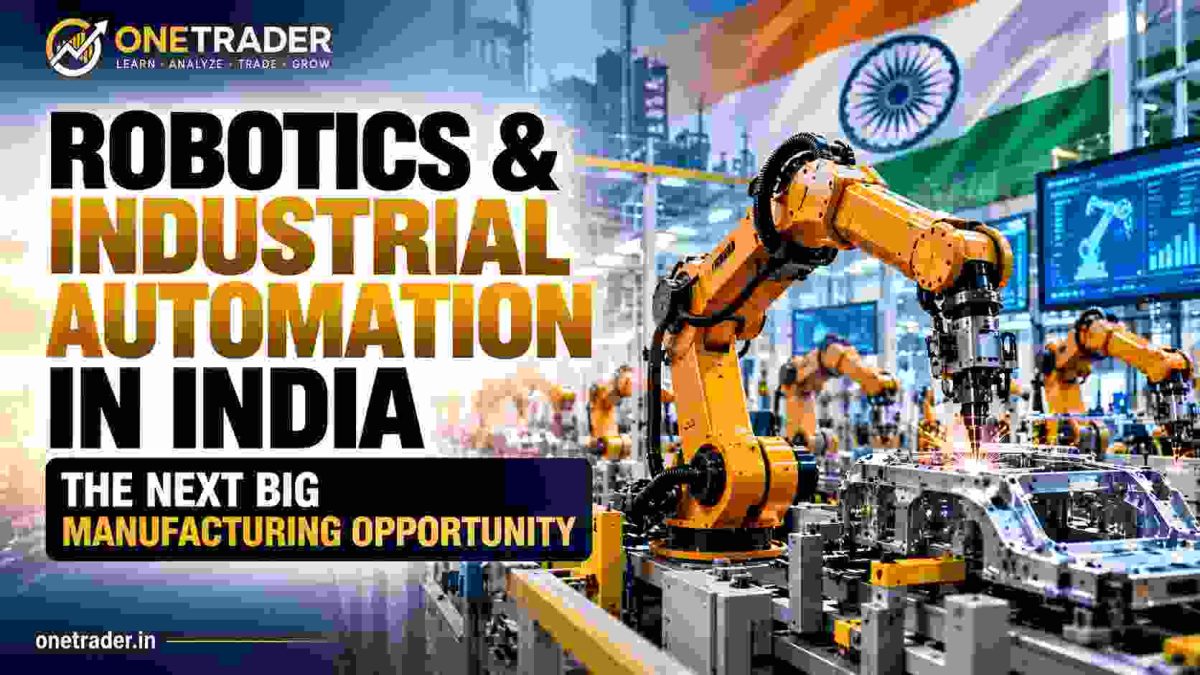
Industrial Automation: India’s Manufacturing Industry Is Entering the Automation Era
India’s manufacturing sector is gradually moving toward a new industrial model in which robots, intelligent machines, sensors and software work together to improve productivity. As factories expand and global companies diversify their supply chains, industrial automation is becoming an increasingly important part of India’s manufacturing competitiveness. The opportunity extends beyond installing robotic arms on assembly lines. It includes machine vision, precision engineering, motion control, industrial software, sensors, electrical systems and advanced manufacturing equipment.
For India, robotics and automation represent an opportunity to improve manufacturing efficiency while developing a domestic ecosystem of technology suppliers. Industries such as automobiles, electronics, pharmaceuticals, food processing, metals and logistics are adopting automation to improve consistency, reduce waste and handle increasingly complex production processes.
What Is Industrial Automation and Why Does It Matter?
Industrial automation refers to the use of machines, control systems and software to perform manufacturing activities with reduced dependence on continuous manual intervention. Robotics is one part of this larger industry. An industrial robot may weld automotive components, move heavy materials, assemble electronic products or perform repetitive operations requiring high precision.
Automation also includes programmable logic controllers, industrial sensors, servo motors, drives, machine vision systems and supervisory software. These technologies allow factories to monitor equipment, detect defects and maintain consistent production quality. Their economic value comes from improving output, reducing downtime and making production more predictable.
Also Read: Data Centre Infrastructure in India: Growth Opportunities
Automation does not necessarily eliminate human involvement. It often changes the type of work required, increasing demand for technicians, programmers, maintenance engineers and specialists capable of managing automated systems.
Why India Could Become an Important Automation Market
India has several structural factors supporting automation demand. The country is expanding electronics production, automobile manufacturing, renewable energy equipment, defence manufacturing and pharmaceutical production. These industries increasingly require precise manufacturing processes and reliable quality standards, particularly when supplying international customers.
Industrial automation can also help manufacturers respond to labour shortages in specialised operations, rising quality expectations and the need for greater production efficiency. For companies competing in global supply chains, consistency and traceability can become as important as labour costs.
Small and medium-sized manufacturers may adopt automation more gradually because initial equipment costs can be significant. However, modular systems, robotics integration services and more affordable control technologies could make automation accessible to a wider range of factories.
Also Read: Defence & Aerospace Manufacturing: India’s Next Major Industrial Growth Story
Industrial Robots Are Becoming More Important
Industrial robots are already widely used in automotive manufacturing, where they perform welding, painting, material handling and assembly operations. Their applications are expanding into electronics, packaging, metal fabrication and other manufacturing industries.

According to the International Federation of Robotics, India installed approximately 9,100 industrial robots in 2024, placing it among the world’s ten largest markets for annual installations. The automotive industry remained an important source of demand, while adoption across other manufacturing segments demonstrated the broadening role of robotics.
These figures illustrate the industry’s growing adoption, although annual installations can fluctuate depending on capital expenditure cycles and manufacturing investment.
The Rise of Smart Factories and Industry 4.0
The next stage of industrial automation involves connecting machines, sensors and software into integrated production systems. Often described as Industry 4.0, this approach allows manufacturers to collect operational data, monitor equipment performance and identify production problems before they cause major disruptions.
Also Read: Semiconductor & Electronics Manufacturing: India’s Next Big Industrial Opportunity
Artificial intelligence and machine vision are also expanding automation capabilities. Cameras and intelligent software can inspect components, identify defects and support quality control. Predictive maintenance systems can analyse equipment performance to help manufacturers schedule repairs more efficiently. These technologies can be especially valuable in electronics, automotive components, pharmaceuticals and precision manufacturing.
Where Indian Companies Could Benefit
The robotics ecosystem offers opportunities across several business models. Companies such as ABB India, Siemens India, Honeywell Automation India and Schneider Electric Infrastructure participate in different areas of industrial electrification, controls and automation. Other businesses provide specialised robotics integration, factory software, precision components and manufacturing equipment.
However, these companies are not pure robotics businesses. Their revenue comes from multiple industrial segments, and automation exposure varies significantly. Investors should examine segment-level performance, customer industries, order execution and the actual contribution of robotics-related products before evaluating individual companies.
Challenges Facing the Automation Industry
Industrial automation requires substantial upfront investment, technical expertise and ongoing maintenance. Smaller manufacturers may struggle to justify automation unless production volumes and efficiency improvements support the investment.
Also Read: India’s Power & Renewable Energy Sector: Growth, Demand, Future Scope and Key Stocks
India also depends on international suppliers for several advanced robotics components, including precision motion-control equipment and specialised electronics. Developing stronger domestic capabilities in these technologies will be important for creating a competitive manufacturing ecosystem.
Automation companies can also experience cyclical demand because manufacturers may postpone equipment purchases during periods of weak industrial activity. Technology obsolescence, competition and customer concentration create additional risks.
India’s Robotics Opportunity Through 2030
India’s industrial automation opportunity is closely connected to the expansion of domestic manufacturing. As automotive, electronics, defence, pharmaceutical and engineering companies invest in more advanced production facilities, demand for robotics and intelligent manufacturing systems could increase.
The International Federation of Robotics reported that India’s annual industrial robot installations rose to approximately 10,500 units in 2025, an increase of 15%, while the country retained sixth position globally. This provides further evidence of growing adoption, although India remains considerably smaller than the largest robotics markets.
Also Read: AI and Power Demand: Could Utilities Become the Next AI Winners?
For investors, the opportunity extends beyond robot manufacturers to sensors, motion control, electrical equipment, factory software, system integration and precision engineering. The companies best positioned to benefit will be those that can deliver measurable productivity improvements, reliable technology and sustainable profitability as Indian manufacturing becomes increasingly automated.
Disclaimer: This article is for educational and informational purposes only. It does not constitute investment advice or a buy/sell recommendation. Onetrader is not a SEBI-registered investment adviser. Readers should conduct independent research and consult a qualified financial professional before making investment decisions.





Keep learning with OneTrader
Explore structured lessons and practical guides to build your market knowledge.