No Trading Day on August 12, 2026: Why Indian Traders Are Saying “No Trade”
An Onetrader Market Awareness Article
August 12, 2026, is becoming an unusual date for India’s trading community. The Indian stock market is not officially closed on August 12. NSE and BSE are expected to operate normally. Instead, a section of retail traders is calling for a voluntary “No Trading Day” as a protest against rising trading costs, regulatory changes and the newly introduced Closing Auction Session for stocks in the Futures and Options segment.
The idea is simple. Traders are saying that they will voluntarily stay away from trading for one day to make their concerns visible. It is not a market holiday and it is not a government-declared shutdown. It is essentially a message from a section of the trading community: “We participate in the market, but our concerns also deserve to be heard.”
Why Are Traders Unhappy?
The frustration has been building over several changes in India’s derivatives market. One of the latest changes is the introduction of the Closing Auction Session, under which eligible F&O stocks use an auction mechanism to determine their closing prices instead of the earlier 30-minute volume-weighted average price method. The objective is to improve price discovery and make the closing mechanism more transparent.
For long-term investors, this change may not make a huge difference. But for active traders, arbitrageurs and strategies that depend heavily on closing prices, any change in the closing mechanism can be important.
Also Read: Content Creator Bill in India – Impact on Education, Future & Risks
At the same time, trading costs have also become a major concern. From April 1, 2026, Securities Transaction Tax on futures increased from 0.02% to 0.05%, while the STT on option premiums increased from 0.10% to 0.15%.
One transaction may not look expensive. But for someone making hundreds of transactions, small costs can become a significant part of the final result.
The Real Problem: Trading More Doesn’t Mean Earning More
This is perhaps the most important lesson for retail traders.
A trader can make several profitable trades and still discover that the final profit is much smaller after transaction costs, taxes and other charges.
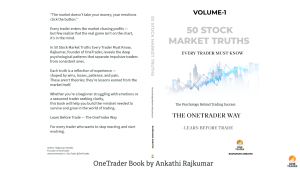
Also Read: 50 Stock Market Truths Every Trader Must Know – OneTrader by Rajkumar
This is why the debate around August 12 is bigger than just one new rule.
It raises a fundamental question:
Are retail traders trading too much in an environment where frequent trading is becoming increasingly expensive?
Perhaps the answer for some traders is not to fight every regulation, but to become more selective.
Also Read: Are We Still Thinking — Or Just Consuming? | OneTrader Thought Series
Instead of taking ten average trades, take two high-quality setups. Instead of trading every market movement, wait for your strategy. Instead of believing that you must make money every day, understand that sometimes the best trade is no trade.
Can the August 12 Boycott Change Anything?
A one-day boycott is unlikely to force an immediate change in market regulations. India’s market includes retail traders, mutual funds, foreign investors, proprietary trading firms, institutions and algorithmic traders. The market can continue functioning even if a section of retail traders stays away.
However, the campaign can still create awareness.
If enough participants voluntarily stay away, it can generate discussion among traders, brokers, exchanges, regulators and the wider financial community.
Also Read: From Books to Reels – How We Lost a Generation | Onetrader Thought Series
The real impact may therefore be symbolic rather than mechanical.
There Is Another Side Too
It is also important to understand why regulators are introducing these changes.
India has seen enormous growth in retail participation in derivatives, while regulators have repeatedly expressed concerns about retail investors taking excessive risks in F&O.
The government has also justified the higher STT on derivatives as part of a broader effort to address the scale of derivatives activity.
Also Read: Why You Should Buy Term Insurance Before Anything Else (2025 Guide)
So the debate should not become simply:
Traders versus regulators.
The better question is:
How can India create a market that protects retail investors without making participation unnecessarily difficult?
Also Read: QR Payments – The Funny Truth About How Our Salaries Vanish in Seconds
That balance is extremely important for the future of India’s financial markets.
What Should Traders Do?
If you support the August 12 campaign, staying away from trading is your personal choice. But don’t make investment decisions purely because of social media trends.
Don’t sell long-term investments because someone says there is a boycott. Don’t take unnecessary positions to participate in the discussion. And don’t confuse a protest with a trading strategy.
Instead, use the day as an opportunity to review your own trading.
Also Read: 90s Kids’ Best Pen – The Legendary Cello Gripper That Wrote Our Childhood
Calculate how much you actually paid in brokerage, STT and other charges. Look at your winning and losing trades. Check whether you are overtrading. Most importantly, ask yourself:
“Am I trading because I have a genuine edge, or simply because I cannot stay away from the market?”
August 12 Is More Than a No-Trading Day
The real significance of August 12 may not be whether the market moves up or down.
It is about the relationship between India’s rapidly growing retail investor community and the rules governing its markets.
Also Read: Why Banks Are Strict With Common People and Easy With the Rich | Onetrader View
India needs strong markets. Traders need fair markets. Regulators need responsible participation. And investors need protection from excessive risk.
All three can exist together.
August 12 should therefore not be seen simply as “Don’t trade.”
It can also be seen as:
“Stop. Think. Review. Trade only when there is a reason.”
Because the strongest trader is not the person who trades every day.
The strongest trader is the one who knows when not to trade.
Onetrader Thought
“Sometimes staying out of the market is also a position.”