
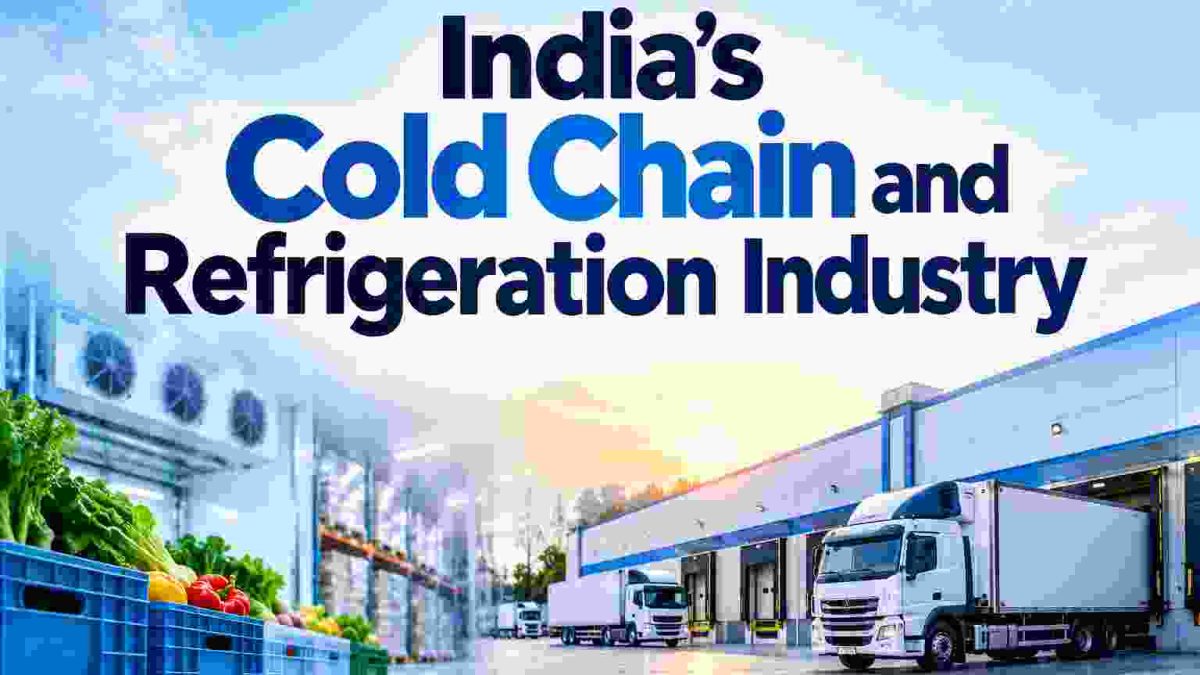
India’s economic development is creating opportunities in industries that rarely receive the same attention as banking, information technology, automobiles or renewable energy. One such industry is cold chain and refrigeration infrastructure, which plays an essential role in preserving food, transporting medicines, supporting agricultural businesses and maintaining the quality of temperature-sensitive products.
As India’s food processing, organised retail, pharmaceutical manufacturing and logistics industries develop, the importance of reliable temperature-controlled infrastructure is becoming increasingly clear. Cold storage warehouses, refrigerated vehicles, industrial cooling equipment and intelligent monitoring systems are gradually becoming important components of modern supply chains.
For investors studying emerging industrial themes, the cold chain industry offers an interesting combination of agriculture, manufacturing, logistics, engineering and technology. However, understanding the differences between cold storage operators, refrigeration equipment manufacturers and logistics companies is essential before evaluating individual businesses.
Understanding India’s Cold Chain and Refrigeration Industry
A cold chain is a coordinated system designed to maintain products within suitable temperature conditions throughout storage, handling, transportation and distribution. Unlike ordinary warehousing, where goods may remain at ambient temperatures, cold chain infrastructure must maintain controlled environments to protect product quality, safety and shelf life.
Also Read: AI Agents: The Future of How We Use Computers and the Internet
For example, freshly harvested fruits may require pre-cooling before transportation, dairy products may need continuous refrigeration, frozen foods require controlled freezing conditions, and certain pharmaceutical products must remain within validated temperature ranges.
The infrastructure supporting these activities includes cold storage warehouses, pre-cooling facilities, refrigerated trucks, blast freezers, temperature-controlled distribution centres and specialised monitoring equipment.
A successful cold chain depends on more than installing refrigeration machinery. It requires reliable electricity, suitable insulation, efficient transport routes, trained operators and monitoring systems capable of identifying temperature deviations before products are damaged.
This makes cold chain infrastructure a specialised industry where operational efficiency and reliability can matter as much as physical storage capacity.
Also Read: Why India’s Middle Class Is the Next Big Growth Engine
Why India’s Cold Chain Industry Has Long-Term Growth Potential
India produces a wide range of agricultural and food products, including fruits, vegetables, dairy products, meat, fish and processed foods. Many of these products are perishable, making efficient handling and preservation important for producers, distributors and consumers.
Traditional agricultural supply chains often involve multiple stages between farms and final markets. When temperature management is inadequate, products can lose freshness, suffer quality deterioration or become unsuitable for sale.
Improving storage and transportation infrastructure can help reduce avoidable losses while enabling farmers and food businesses to reach markets farther from their production locations.
The growth of organised food retail, supermarkets, quick-commerce services and online grocery distribution creates additional demand for dependable storage and transportation networks. Businesses selling chilled or frozen products need predictable inventory conditions and reliable delivery systems.
Also Read: Robotics & Industrial Automation in India: The Next Big Manufacturing Opportunity
However, rising demand does not automatically translate into profitable cold storage investments. Facilities must achieve sufficient utilisation, maintain competitive operating costs and serve customers willing to pay for temperature-controlled services.
Food Processing and Agricultural Logistics as Major Demand Drivers
Food processing is an important source of potential demand for cold chain infrastructure. Companies manufacturing frozen vegetables, ready-to-cook meals, dairy products, seafood and packaged foods frequently depend on controlled-temperature storage at different stages of production and distribution.
As consumers seek greater convenience and wider product choices, processed food manufacturers may require more sophisticated logistics networks capable of handling different products under different storage conditions.
A single distribution centre might need separate areas for frozen foods, chilled dairy products and products requiring controlled ambient conditions. These requirements increase the importance of multi-temperature facilities rather than warehouses designed around only one commodity.
Also Read: Data Centre Infrastructure in India: Growth Opportunities
Agricultural logistics presents another opportunity. Farmers and producer organisations may benefit from packhouses, pre-cooling facilities and better transport connections that help maintain produce quality after harvesting.
Nevertheless, cold storage cannot eliminate every form of agricultural wastage. Packaging quality, harvesting practices, road infrastructure, market access and demand forecasting also influence the final outcome. Cold chain infrastructure is most effective when integrated into a broader supply chain rather than developed as isolated storage capacity.
Pharmaceutical and Healthcare Cold Chain Opportunities
India’s pharmaceutical and healthcare industries create another important market for specialised temperature-controlled logistics.
Certain vaccines, biological medicines, diagnostic materials and pharmaceutical products require controlled conditions throughout their distribution journey. Temperature deviations can affect product quality, making monitoring and documentation particularly important.
Also Read: Defence & Aerospace Manufacturing: India’s Next Major Industrial Growth Story
Unlike ordinary refrigerated food distribution, pharmaceutical cold chains may require validated equipment, documented operating procedures, calibrated monitoring devices and carefully managed handling practices.
These requirements create opportunities for companies offering specialised pharmaceutical warehouses, refrigerated transportation, temperature monitoring and logistics management services.
The pharmaceutical cold chain also illustrates why reliability can become a competitive advantage. Customers may value compliance, consistency and traceability alongside transportation costs.
However, pharmaceutical cold chain logistics is not interchangeable with every other refrigeration business. Companies must possess appropriate infrastructure, operating capabilities and customer relationships to participate effectively in this specialised segment.
Also Read: Semiconductor & Electronics Manufacturing: India’s Next Big Industrial Opportunity
Refrigerated Transport and the Future of Temperature-Controlled Logistics
Cold storage warehouses represent only one part of the industry. Refrigerated transportation is equally important because products can suffer quality deterioration while moving between farms, processing facilities, warehouses, distribution centres and retail outlets.
Refrigerated trucks, commonly called reefer vehicles, are equipped with systems designed to maintain suitable cargo temperatures during transportation.
Demand for such vehicles can arise from dairy distribution, frozen food manufacturers, pharmaceutical logistics, seafood exporters and other businesses handling temperature-sensitive goods.
The development of regional distribution networks could increase the importance of refrigerated transport services connecting production centres with major consumption markets.
Also Read: India’s Power & Renewable Energy Sector: Growth, Demand, Future Scope and Key Stocks
Technology may also improve transport efficiency. Fleet tracking, route planning, temperature sensors and remote alerts can help operators identify delays or equipment failures.
Still, refrigerated transportation involves substantial operational challenges. Fuel expenses, maintenance, empty return journeys, vehicle utilisation and refrigeration system reliability can significantly influence profitability.
A logistics operator expanding its fleet without securing sufficient customer demand may experience rising costs before meaningful revenue growth appears.
Industrial Refrigeration and Cooling Equipment Manufacturers
The cold chain industry also creates business opportunities for manufacturers of refrigeration systems, compressors, heat exchangers, insulated panels, cooling equipment and industrial control systems.
Also Read: AI and Power Demand: Could Utilities Become the Next AI Winners?

Cold storage operators need machinery capable of maintaining required temperatures efficiently, often under demanding operating conditions.
Equipment manufacturers can benefit when customers establish new facilities, modernise existing warehouses or replace older refrigeration systems with more energy-efficient alternatives.
Industrial refrigeration differs from household air conditioning. Large commercial installations may require customised engineering, specialised components, installation services and long-term maintenance support.
This creates opportunities not only for equipment sales but also for servicing, repairs, upgrades and operational optimisation.
Also Read: AI and Data Centres: Stocks That Could Benefit From the Infrastructure Boom
Energy efficiency is particularly important because refrigeration equipment may operate continuously or for extended periods. Even relatively modest improvements in electricity consumption can affect operating costs over a facility’s useful life.
For investors, equipment suppliers and cold storage operators should therefore be evaluated differently. Manufacturers may earn revenue through equipment orders and services, while warehouse operators depend more heavily on capacity utilisation, storage tariffs and logistics contracts.
Government Infrastructure Support and Industry Development
India’s government has recognised the importance of improving food preservation and agricultural supply chains through programmes supporting integrated cold chain and food processing infrastructure.
The Ministry of Food Processing Industries administers the Integrated Cold Chain and Value Addition Infrastructure component under the Pradhan Mantri Kisan Sampada Yojana framework. The programme addresses infrastructure such as pre-cooling, sorting, grading, storage, freezing and refrigerated distribution, subject to applicable scheme provisions.
Also Read: AI Adoption Is Spreading: Which Industries Could Benefit Most?
According to the ministry’s published consolidated project list, 408 cold chain projects had been approved under the relevant scheme as of March 31, 2026. This is a cumulative approval figure, not a count of newly completed or operational facilities during 2026.
Government-supported infrastructure can encourage private investment and help develop supply chains in areas where commercial facilities remain limited.
However, policy support should not be confused with guaranteed profitability. The financial outcome of a project still depends on execution quality, location, customer demand, electricity costs and ongoing operational performance.
Investors should also distinguish between approved projects, projects under construction and fully operational facilities when interpreting industry development figures.
Also Read: Indian Defence Stocks in 2026: Growth Opportunity or Valuation Risk?
Key Listed Companies Connected to India’s Cold Chain Industry
India’s cold chain investment theme includes businesses with different levels of exposure. Some provide temperature-controlled logistics directly, while others manufacture refrigeration equipment or participate through diversified logistics operations.
Snowman Logistics
Snowman Logistics is one of the more direct listed businesses associated with temperature-controlled warehousing and distribution in India. Its services include refrigerated storage, transportation and related logistics solutions for customers handling temperature-sensitive products.
The company provides a way to study the operating economics of cold chain infrastructure, particularly warehouse utilisation, capacity expansion, customer relationships and transport efficiency.
Investors evaluating Snowman Logistics should examine operating margins, debt, cash flow, capacity utilisation and the economics of new warehouse investments rather than focusing only on the overall growth potential of cold storage demand.
Also Read: Top 5 Water Management Stocks in India: Financials, Growth & Future Potential
Blue Star
Blue Star operates in air conditioning and commercial refrigeration, making it relevant to the broader refrigeration equipment ecosystem.
Its commercial refrigeration offerings provide exposure to businesses requiring cooling and temperature-controlled equipment, although the company also serves other markets and should not be treated as a pure cold chain infrastructure business.
Important areas to study include commercial refrigeration demand, product competitiveness, service capabilities, margins and the contribution of different business segments.
Voltas
Voltas is another diversified engineering and cooling company with exposure to commercial refrigeration and related solutions.
Also Read: Renewable Energy & Clean Tech Stocks in India: Complete List
Its business extends beyond cold chain applications, including room air conditioning and engineering projects. Consequently, the company’s overall financial performance may be influenced more strongly by other divisions than by cold storage infrastructure demand alone.
Investors should evaluate segment-level performance, project execution, working capital requirements and the relative importance of refrigeration-related activities.
Gateway Distriparks
Gateway Distriparks has exposure to the cold chain theme through its relationship with Snowman Logistics, which identifies Gateway Distriparks as its parent company.
However, Gateway Distriparks operates a broader logistics business, and its financial performance should not be interpreted as a direct reflection of cold chain industry growth.
Also Read: Is India’s Real Estate Boom Back? What Investors Need to Know
The company’s overall logistics operations, capital allocation, ownership structure and consolidated financial disclosures require separate evaluation.
These companies represent different business models rather than interchangeable investment alternatives. Their cold chain exposure, revenue sources, profitability drivers and financial risks can vary substantially.
Technology, Automation and Energy Efficiency
The next stage of cold chain development may depend increasingly on technology rather than simply building more refrigerated warehouses.
Modern facilities can use automated temperature monitoring, remote equipment diagnostics, inventory management software and sensor-based alerts to improve operational control.
Also Read: Water: The Hidden Infrastructure of the Future
Digital monitoring systems can help identify equipment malfunctions, temperature fluctuations and inefficient operating patterns before they develop into larger problems.
Automation may also improve warehouse handling, especially in facilities managing large quantities of packaged frozen or chilled products.
Energy management is another important area. Refrigeration systems consume electricity, and operators must balance cooling performance with energy costs.
Improved insulation, efficient compressors, better facility design and appropriate renewable energy integration may help reduce operating expenses in suitable applications.
Also Read: Infrastructure Investment Trusts (InvITs) in India – Complete Beginner Guide | Onetrader
However, technology investments require financial discipline. Automation and energy-efficiency upgrades should be assessed according to their implementation costs, reliability and expected operating benefits rather than assumed to be profitable simply because they are technologically advanced.
Major Risks in India’s Cold Chain and Refrigeration Industry
Despite its long-term relevance, cold chain infrastructure is not a risk-free growth opportunity.
One major challenge is capital intensity. Developing temperature-controlled warehouses requires spending on land, construction, insulation, refrigeration equipment, electrical systems and backup power infrastructure.
Electricity costs can materially affect operating profitability, particularly where facilities require continuous cooling.
Also Read: Top Space-Tech Stocks in India – A Hidden Multibagger Opportunity (2025-2045)
Warehouse location is another critical factor. A facility built far from agricultural production centres, processing businesses or major distribution routes may struggle to attract sufficient customers.
Seasonality can create additional complications. Agricultural products may arrive in concentrated harvesting periods, while customer demand and storage requirements can vary throughout the year.
Equipment manufacturers face different risks, including competitive pricing, raw material costs, product development expenses and fluctuations in customer capital expenditure.
Logistics companies must manage vehicle utilisation, maintenance expenses, transportation delays and service quality.
Also Read: Green Energy & EV Ecosystem – The Future of Power (2025–2035)
Investors should also be careful about valuations. An industry may experience sustained demand growth while individual companies deliver disappointing shareholder returns if profits fail to grow in line with expectations.
What Investors Should Study Before Evaluating Cold Chain Stocks
Understanding the business model is the first step in evaluating a cold chain-related company.
For warehouse operators, investors can study installed capacity, utilisation rates, customer concentration, operating margins and the capital required for expansion. A company with high storage capacity but consistently weak utilisation may struggle to generate attractive returns.
For refrigeration equipment manufacturers, relevant indicators include order growth, product mix, service revenue, competitive positioning and segment profitability.
Also Read: Drone & Anti-Drone – The Futuristic Industry (2025 – 2035)
For refrigerated logistics providers, fleet utilisation, customer retention, route efficiency and operating cash flow may offer useful insights into business quality.
Financial discipline is equally important across the industry. Debt levels, interest expenses, working capital, return on capital and free cash flow can help distinguish sustainable expansion from growth funded by increasingly expensive borrowing.
Finally, investors should assess whether cold chain demand is a meaningful contributor to a company’s financial results. A diversified company may participate in an attractive industry without deriving enough revenue from that activity to significantly influence its overall earnings.
Future Outlook: Can Cold Chain Become a Major Infrastructure Theme?
India’s cold chain and refrigeration industry has several potential long-term demand drivers, including food processing, pharmaceutical distribution, organised retail, refrigerated transportation and improvements in agricultural logistics.
Also Read: AI & Cloud – The Complete Future Playbook
The development of integrated supply chains could gradually increase demand for multi-temperature warehouses, specialised vehicles, industrial refrigeration equipment and digital monitoring services.
There may also be opportunities to modernise existing infrastructure, improve energy efficiency and build more reliable connections between production regions and consumption centres.
Nevertheless, the pace of industry development will depend on customer demand, project economics, financing conditions, infrastructure quality and execution.
Cold chain infrastructure is best understood as an essential enabling industry rather than a sector where rapid growth is guaranteed for every participant.
Also Read: AMD vs NVIDIA: The AI War That Will Define the Next Decade
Conclusion
India’s cold chain and refrigeration industry represents an important intersection of agriculture, food processing, pharmaceuticals, logistics, engineering and technology.
As supply chains become more sophisticated, businesses increasingly require dependable temperature-controlled infrastructure to preserve product quality, support distribution and improve operational efficiency.
Companies such as Snowman Logistics, Blue Star, Voltas and Gateway Distriparks provide different ways to study the industry’s listed-company ecosystem. However, their business models and degrees of exposure vary, making individual financial analysis essential.
For long-term market observers, the most important question is not simply whether India’s cold chain industry will expand. It is which businesses can translate industry demand into sustainable revenue, healthy cash flow, efficient capital allocation and durable profitability.
Also Read: Top 5 Sectors to Watch in 2025: Future Investment & Business Opportunities
Educational and Financial Disclaimer
This article is published by Onetrader for general educational and informational purposes only. It does not constitute investment advice, stock recommendations or an invitation to buy, sell or hold any security. Company references are provided solely to explain business models and industry exposure. Stock market investments involve financial risk, and readers should independently evaluate company disclosures, financial statements, valuations and their personal circumstances before making investment decisions. Onetrader is not registered with SEBI as an investment adviser or research analyst.
Also Read: Future of AMCs in India: Growth, Scope & Best AMC Stocks








Keep learning with OneTrader
Explore structured lessons and practical guides to build your market knowledge.