

OneTrader | Swing Trading Strategies
Introduction
Swing trading does not always require selecting individual stocks. Another approach is to identify sectors showing strong market momentum and participate in their movement through Exchange Traded Funds (ETFs).
The Indian stock market offers ETFs tracking several sectoral indices, including Banking, PSU Banking, Information Technology, Automobiles, Pharmaceuticals, FMCG, Metals, Healthcare and Realty. Instead of analysing individual companies within these industries, traders can use sector ETFs to gain exposure to a basket of stocks through a single exchange-traded instrument.
This approach can be particularly useful when market leadership shifts between sectors. For example, banking stocks may outperform during one phase, while IT, automobile or pharmaceutical companies may lead during another.
Also Read: Pullback Trading Strategy: How to Trade Trend Retracements Using Price Action
A systematic sector-wise ETF swing trading strategy can help traders identify these opportunities, plan entries, manage downside risk and build positions gradually.
In this guide, we will explore a practical framework using a 5% upside target, a 5% initial downside limit and a three-stage buying strategy. We will also examine how to identify strong sectors, select suitable ETFs and manage trading capital without blindly averaging losing positions.
1. Why use sector ETFs for swing trading?
Selecting the right stock is one of the biggest challenges in swing trading. Even when an industry performs well, individual companies within that industry may deliver different results.
For example, when the banking sector moves higher, some banking stocks may outperform while others remain weak. A Banking ETF provides exposure to multiple companies represented in its underlying index rather than depending entirely on one stock.
Also Read: Strategy #2: Trend Line Trading Strategy – How to Identify Trends, Entries and Breakouts
Sector ETFs offer three important advantages.
Diversification within a sector: An ETF provides exposure to a group of companies rather than a single company. This reduces the impact of company-specific developments, although sector-wide risks remain.
Simplified stock selection: Traders can focus on identifying strong industries instead of analysing hundreds of individual stocks.
Sector rotation opportunities: Money frequently moves between different industries depending on economic conditions, interest rates, earnings expectations and market sentiment. Tracking sector ETFs can help traders identify these changes.
Also Read: Liquidity Sweep Trading Strategy: How to Identify Stop-Loss Hunts and False Breakouts
However, sector ETFs are not suitable for every market condition. They can experience significant declines when their underlying sectors weaken. Their liquidity, tracking difference and trading costs also need to be considered.
2. Sector-wise ETFs available in India
The first step is to prepare a watchlist covering different industries. The following examples provide a starting point for Indian ETF traders.
| Sector | ETF examples |
|---|---|
| Banking | Mirae Asset Nifty Bank ETF, Nippon India ETF Nifty Bank BeES |
| PSU Banking | DSP Nifty PSU Bank ETF, Nippon India ETF Nifty PSU Bank BeES |
| IT | Mirae Asset Nifty IT ETF, Nippon India ETF Nifty IT |
| Automobile | Nippon India Nifty Auto ETF, ICICI Prudential Nifty Auto ETF |
| Pharma | Nippon India Nifty Pharma ETF |
| FMCG | ICICI Prudential Nifty FMCG ETF |
| Metal | ICICI Prudential Nifty Metal ETF, Mirae Asset Nifty Metal ETF |
| Realty | Motilal Oswal Nifty Realty ETF |
| Healthcare | ICICI Prudential Nifty Healthcare ETF |
| Energy | ICICI Prudential Nifty Oil & Gas ETF |
These products track different underlying indices and may have different trading volumes, expenses and tracking characteristics. The availability of an ETF does not automatically make it suitable for swing trading. Verify the latest listing and trading details before placing an order. NSE India+2
One important point is that Banking and PSU Banking ETFs have overlapping sector exposure. Similarly, IT and broader technology-oriented ETFs may hold some of the same companies. Traders should understand this overlap before taking multiple positions.
Also Read: Breakout Trading Strategy: How to Identify Real & False Breakouts
3. How to identify the strongest sector before buying
Having a watchlist is not enough. The most important decision is identifying which sectors are currently showing strength.
A practical approach is to compare the performance of sector ETFs over different time periods and shortlist those displaying positive momentum.
Price above the 50-day moving average
The first condition is that the ETF should ideally trade above its 50-day moving average. This helps identify sectors showing positive medium-term price momentum.
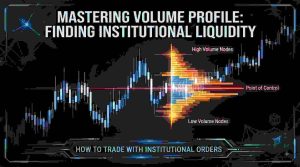
Also Read: Volume Profile Trading Strategy for Better Trading
A rising 50-day moving average provides additional confirmation that the trend is improving.
Higher highs and higher lows
The second condition is market structure. A sector ETF forming higher swing highs and higher swing lows generally indicates that buyers are maintaining control.
Traders can use daily charts to identify these formations and avoid entering sectors that remain in a persistent downtrend.
Relative strength against Nifty 50
The third condition is relative strength.
Compare the percentage performance of the sector ETF against Nifty 50 over the same period. If an IT ETF rises 6% while Nifty 50 gains only 2%, the IT sector has demonstrated stronger relative performance during that period.
This does not guarantee future outperformance, but it helps identify where market leadership is developing.
Volume and breakout confirmation
The fourth condition is trading volume. A breakout above an important resistance level accompanied by stronger trading activity can provide additional confirmation.
However, ETF trading volumes can vary significantly. Traders should also examine bid-ask spreads and the liquidity of the underlying market.
The objective is to shortlist two or three strong sectors rather than attempting to trade every available ETF.

4. The 5% upside target and 5% downside strategy
Once a suitable ETF is identified, the next step is planning the trade.
For a simple example, assume a Banking ETF is trading at ₹100 and provides a valid technical entry.
The proposed trading plan would look like this:
| Trading parameter | Price |
|---|---|
| Entry price | ₹100 |
| Upside target | ₹105 |
| Initial stop loss | ₹95 |
| Potential gain | ₹5 |
| Potential loss | ₹5 |
This creates a 1:1 reward-to-risk ratio before brokerage, taxes, spread and slippage.
The advantage of a fixed percentage framework is simplicity. Traders can quickly calculate potential profit and loss before entering a position.
However, a fixed 5% stop loss should not be applied mechanically to every ETF. Banking, IT, Pharma and Metal ETFs have different volatility characteristics.
For a relatively low-volatility ETF, a 5% stop may be unnecessarily wide. For a highly volatile ETF, it may be too narrow and trigger before the underlying trend changes.
A better approach is to use technical support levels and Average True Range (ATR) to evaluate whether the proposed stop-loss distance is appropriate.
The 5% target should also be treated as a planned exit objective rather than an expected or guaranteed return.
5. Three-stage bulk buying strategy: 40%-30%-30%
One of the most important aspects of this strategy is position building.
Instead of purchasing the entire quantity at one price, traders can divide their planned position into three stages.
Assume a trader has allocated ₹30,000 for one ETF position.
The capital can be divided as follows:
| Buying stage | Allocation | Investment |
|---|---|---|
| First entry | 40% | ₹12,000 |
| Second entry | 30% | ₹9,000 |
| Third entry | 30% | ₹9,000 |
| Total | 100% | ₹30,000 |
First entry: Initial position
The first 40% is deployed when the ETF provides a valid technical entry.
This could be a breakout above resistance, a bullish reversal near support or a confirmed pullback within an established uptrend.
The objective is to establish an initial position without committing the entire planned capital immediately.
Second entry: Support retest
The next 30% is deployed when the ETF revisits an important support zone and shows signs of buying interest.
For example, after breaking above resistance, an ETF may return to test the breakout area. If the price stabilises and buyers return, this can provide another entry opportunity.
A decline alone is not a buying signal. The trader should wait for confirmation that the support zone is holding.
Third entry: Trend confirmation
The final 30% can be deployed when the ETF resumes its upward movement and confirms the bullish structure.
A breakout above the previous swing high or a strong bullish continuation pattern can provide confirmation.
This approach allows traders to build positions progressively rather than investing all their capital at one price.
It is important to understand that this is not automatic averaging down. The second and third purchases require fresh technical confirmation. If the original setup fails, traders should stop adding and follow their predefined exit plan.
6. How to manage the combined position and stop loss
When multiple purchases are made at different prices, the average purchase price changes.
Consider the following illustrative example:
| Purchase | Units | Price | Investment |
|---|---|---|---|
| First entry | 120 | ₹100 | ₹12,000 |
| Second entry | 90 | ₹100 | ₹9,000 |
| Third entry | 90 | ₹100 | ₹9,000 |
| Total | 300 | ₹100 average | ₹30,000 |
The average purchase price is ₹100 because all three entries were executed at the same illustrative price.
In an actual trade, purchases may happen at different prices, so the average cost will change.
The stop loss must be calculated for the entire combined position. Traders should not treat each purchase as an independent trade when the overall exposure belongs to one strategy.
If the combined position reaches its invalidation level, the trader should exit according to the plan rather than continuing to add capital.
7. Capital allocation and risk management
A trading strategy can identify good opportunities and still lose money if position sizing is poorly managed.
Suppose the trading account has ₹1,00,000 and the trader decides to risk a maximum of 1% of capital on one trade.
The maximum planned loss is ₹1,000.
If the initial stop-loss distance is 5%, the approximate position value would be ₹20,000.
| Parameter | Amount |
|---|---|
| Trading capital | ₹1,00,000 |
| Maximum risk per trade | 1% |
| Maximum planned loss | ₹1,000 |
| Stop-loss distance | 5% |
| Approximate position size | ₹20,000 |
This is a simplified calculation before transaction costs and slippage.
If the trader takes three different ETF positions, the combined portfolio risk must also be considered.
For example, buying Banking, PSU Banking and Financial Services ETFs simultaneously can create concentrated exposure to the financial sector.
Similarly, multiple ETFs tracking similar indices may provide less diversification than their names suggest.
A disciplined trader should consider the combined risk of all open positions instead of evaluating each trade independently.
8. When should traders avoid averaging?
Averaging can become dangerous when traders use it to avoid accepting a loss.
Consider a situation where an IT ETF falls below its 50-day moving average, breaks an important support zone and continues forming lower highs.
Buying additional units simply because the ETF has become cheaper may increase the size of a losing position.
There are several situations where traders should avoid additional purchases:
- The ETF breaks its important support level.
- The underlying sector continues to underperform Nifty 50.
- The ETF forms lower highs and lower lows.
- Selling pressure increases during a breakdown.
- The original technical setup becomes invalid.
- The ETF has poor liquidity or unusually wide bid-ask spreads.
Averaging should be based on a valid trading setup, not on the desire to reduce the displayed average purchase price.
Preserving capital is more important than recovering every losing trade.
9. A practical weekly ETF trading routine
Traders can simplify the strategy by following a consistent weekly process.
At the beginning of each week, review the major sector ETFs and compare their performance against Nifty 50.
Shortlist sectors that are showing relative strength and have a positive price structure.
Next, examine their daily charts and identify important support, resistance and breakout levels.
Once a suitable setup develops, calculate the entry price, stop loss, target and position size before placing an order.
If the ETF provides a valid opportunity, initiate the first position and wait for confirmation before deploying additional capital.
At the end of the week, review open positions, update technical levels and check whether the original trading setup remains valid.
This process helps traders avoid random entries and unnecessary transactions.
10. Important limitations of sector ETF swing trading
Although sector ETFs simplify market participation, they have limitations that traders should understand.
Some ETFs have lower trading volumes than their underlying indices might suggest. This can lead to wider spreads and execution difficulties.
An ETF’s market price can also differ slightly from its indicative net asset value. Tracking difference and fund expenses can influence returns over time.
Sector concentration is another important risk. A sharp decline in one industry can affect every ETF tracking that sector.
Furthermore, sector rotation is not always predictable. A sector that has performed well over the previous month may underperform during the next month.
Traders should therefore avoid treating recent performance as a guarantee of future returns.
Conclusion
Sector-wise ETF swing trading offers an alternative approach for traders who prefer analysing industries rather than selecting individual stocks.
By tracking Banking, IT, Auto, Pharma, FMCG, Metal, Realty and other sector ETFs, traders can identify market leadership and look for opportunities based on price action and relative strength.
A 5% target and 5% initial stop-loss framework can provide a simple starting point for trade planning. The 40%-30%-30% buying model can help traders build positions gradually, provided every additional purchase is supported by a valid technical setup.
However, the real strength of this strategy comes from disciplined execution, sensible position sizing and predefined exits.
No ETF guarantees a 5% return, and averaging does not eliminate the possibility of losses.
The objective is not to trade every sector or buy every market decline. It is to identify a few strong opportunities, manage risk and follow a repeatable trading process.
Disclaimer: This article is for educational and informational purposes only. It does not constitute investment advice or a recommendation to buy or sell any ETF or security. ETFs are subject to market risk, tracking differences and liquidity risks. Investors should conduct their own research and consult a SEBI-registered investment adviser before making investment decisions.




Keep learning with OneTrader
Explore structured lessons and practical guides to build your market knowledge.

Need a laugh after all that money talk?
Paisa LOL: India's funniest finance page, with memes, comics, jokes and long funny stories.
