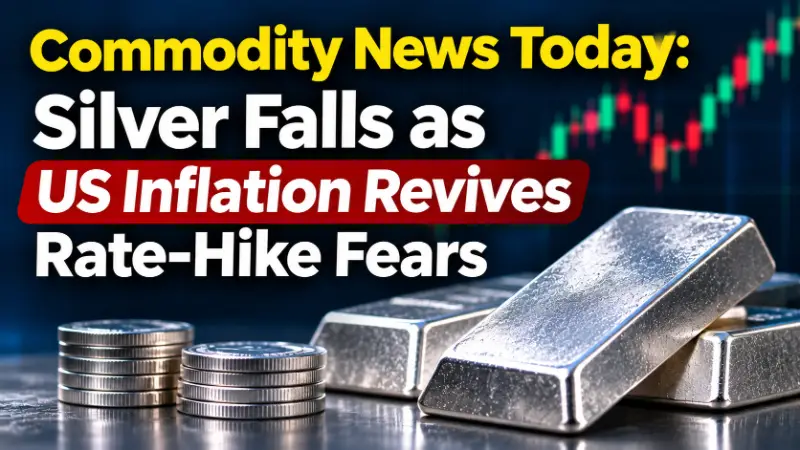
Silver came under renewed selling pressure on Wednesday, November 11, as stronger-than-expected US inflation data pushed bond yields higher and strengthened expectations that the Federal Reserve could tighten monetary policy further. The decline has interrupted the recovery that followed last week’s sharp sell-off, putting traders back on alert for further price swings.
International silver was trading near $53.11 per troy ounce in the latest November 11 quotation, down around $0.20. In India, December silver futures on the Multi Commodity Exchange fell below ₹1.83 lakh per kilogram during early trading, reflecting the renewed weakness in precious metals.
The immediate concern is that inflation remains stubborn enough to keep interest rates elevated. That creates a difficult environment for silver, which does not pay interest and also depends on demand from industrial users.
Silver Price Today: Latest Market Numbers
The latest readings show losses in both international spot trading and Indian futures.
Also Read: Commodity News Today: Gold Prices Slip as Hot US Inflation Raises Rate Hike Concerns
| Market indicator | Latest reading |
|---|---|
| International spot silver | $53.11 per ounce (approximately ₹4,700) |
| Change in international spot silver | -$0.20 per ounce |
| MCX silver futures, December contract | ₹1,82,558 per kg |
| MCX futures change | -₹4,569, or -2.44% |
| MCX opening price | ₹1,86,213 per kg |
| MCX early trading range | ₹1,82,259 to ₹1,86,324 per kg |
International spot prices and MCX futures represent different markets. The rupee equivalent for spot silver is an approximate currency conversion before Indian import duties, taxes, premiums and other costs. MCX prices reflect the domestic futures contract and its own market conditions.
Hot US Inflation Data Changes the Market Mood
The most important new development for silver is the latest US inflation reading. The report has increased concern that price pressures may not be cooling quickly enough to allow the Federal Reserve to ease monetary policy.
Markets have responded by reassessing the possibility of another rate increase in December. Expectations of tighter policy have pushed Treasury yields higher, while the dollar has strengthened.
This combination matters for precious metals. Higher yields make interest-bearing investments more attractive relative to silver, while a stronger dollar raises the cost of buying dollar-priced commodities for investors using other currencies.

The impact has been visible across the metals market, with gold also retreating after its recent recovery. Silver has faced additional pressure because its industrial-demand outlook is tied to manufacturing activity and investment in technology infrastructure.
Oil Prices and Easing Geopolitical Risks Add to the Pressure
Crude oil has slipped below $90 a barrel as hopes of progress in US-Iran diplomacy have reduced some of the risk premium in energy markets. Lower oil prices can ease inflation concerns over time, but the immediate reaction has been more complicated for precious metals.
The prospect of reduced geopolitical tension has weakened demand for safe-haven assets. At the same time, markets are concerned that resilient inflation could keep interest rates higher for longer.
Silver is caught between these competing forces. Less geopolitical risk can reduce defensive buying, while higher bond yields can make holding the metal less attractive.
Industrial Demand Remains an Important Question
Silver is not driven by investment flows alone. Manufacturers use it in electronics, electrical equipment, solar technology and other industrial applications, making expectations for global economic activity an important part of its price outlook.
Recent market analysis has also highlighted concerns about spending on artificial intelligence infrastructure. If technology companies slow investment in data centres and related equipment, expectations for future industrial silver consumption could weaken.
There is a counterpoint. Silver remains an important industrial material, and a temporary decline in investment expectations does not automatically mean that physical consumption will contract. Traders are watching whether economic data and business spending plans support or undermine the demand outlook.
Inventory movements are another factor. A recent assessment of exchange stocks showed that Chinese silver inventories had rebuilt substantially from their earlier lows. Greater availability in exchange warehouses can reduce concerns about immediate supply tightness, although inventories alone do not determine the direction of prices.
Also Read: India’s Wheat Prices Fall as Higher FCI Supplies Ease Market Pressure
What to Watch Next in the Silver Market
The next few US economic releases could influence silver’s direction by changing expectations for interest rates and the dollar.
| Upcoming development | Why it matters for silver |
|---|---|
| US October Producer Price Index, November 13 | Persistent wholesale inflation could support expectations of tighter monetary policy |
| US existing-home sales, November 12 | Provides another indication of the strength of the domestic economy |
| US Treasury yields and dollar movements | Higher yields and a stronger dollar can weigh on precious metals |
| Global technology investment | Changes expectations for industrial silver consumption |
| Chinese silver inventory and demand trends | Helps traders assess physical availability and industrial demand |
The inflation outlook remains particularly important. If price pressures continue to surprise on the upside, silver could face further selling as traders adjust their expectations for the Federal Reserve. If inflation shows convincing signs of easing, lower yields and a weaker dollar could provide some relief.
What Does This Mean for Silver Traders and Investors?
The latest decline shows that silver’s recovery remains vulnerable to changes in the economic outlook. A few stronger sessions are not enough to establish a lasting upward trend when interest-rate expectations are moving against the metal.
For short-term traders, the focus is likely to remain on the dollar, Treasury yields and reactions to upcoming economic releases. Sharp intraday movements can occur when these factors change, so chasing a fall or assuming an immediate rebound carries risk.
Also Read: Copper Prices Fall as AI Demand Concerns Clash With Tight Supply in China
Longer-term investors have a different set of considerations. Industrial use and the cost of bringing new silver supply to market remain relevant, but these factors may take time to influence prices. In the near term, financial conditions can dominate trading even when the longer-term supply picture appears supportive.
Indian buyers should also distinguish between international silver and domestic prices. Exchange rates, import costs, local premiums and futures contract movements can cause Indian quotations to behave differently from spot silver in US dollars.
For now, the market is focused on whether US inflation will keep the Federal Reserve on a tighter path. Until there is greater clarity, silver is likely to remain sensitive to economic data and shifts in investor sentiment.
Financial Disclaimer: This article is for educational and informational purposes only and does not constitute investment advice or a recommendation to buy or sell silver, futures, ETFs or other financial products. Commodity prices can fluctuate sharply, and all investments carry risk. Readers should conduct independent research and consult a qualified financial professional before making investment decisions. Onetrader is not a SEBI-registered investment adviser.
Also Read: Oil Prices Face Fresh Pressure as Strait of Hormuz Disruption Keeps Global Supply at Risk




Keep learning with OneTrader
Explore structured lessons and practical guides to build your market knowledge.

Need a laugh after all that money talk?
Paisa LOL: India's funniest finance page, with memes, comics, jokes and long funny stories.