
What You’ll Learn
By the end of this article, you’ll understand:
- What crude oil is
- How crude oil is formed
- Why it is called “Black Gold”
- Why crude oil is so valuable
- Where crude oil comes from
- What crude oil is made of
- Why every country depends on oil
- Interesting facts about crude oil
Let’s begin from the very basics.
Introduction
Imagine waking up tomorrow morning and discovering that crude oil no longer exists.
At first, you might think only cars and motorcycles would stop running. But the reality is far more serious.
Also Read: Mortgage rates 2026 guide for US homebuyers
Flights would be grounded.
Ships would stop moving.
Factories would slow down.
Food prices would increase.
Also Read: AI Investing in 2026: Why Investors Are Looking Beyond AI Companies
Medicines would become expensive.
Plastic products would disappear.
Even the smartphone you’re reading this on contains materials produced using crude oil.
Crude oil is much more than fuel. It is one of the most important natural resources on Earth and is deeply connected to nearly every aspect of modern life.
Also Read: US Tech Stocks in 2026: Should Indian Investors Invest After the Recent Correction?
This is why economists often call crude oil the lifeblood of the global economy.
What is Crude Oil?
Crude oil is a naturally occurring liquid found deep beneath the Earth’s surface.
It is made from the remains of tiny plants, algae, and marine organisms that lived in ancient oceans millions of years ago.
Over an incredibly long period, these remains were buried under layers of mud, sand, and rock. As pressure and temperature increased, they gradually transformed into crude oil.
Also Read: Marvell Technology Stock: AI Data Center Growth Outlook
The word “crude” means unrefined or untreated.
This means crude oil cannot be used directly in cars, airplanes, or factories. It must first be processed in an oil refinery to produce useful products such as:
- Petrol (Gasoline)
- Diesel
- Aviation fuel
- LPG
- Kerosene
- Lubricants
- Bitumen
- Petrochemicals
Think of crude oil as raw wheat. Wheat isn’t eaten directly from the field—it must be milled into flour before it becomes bread. In the same way, crude oil must be refined before it becomes the fuels and materials we use every day.
Why is it Called “Black Gold”?
Crude oil is often called Black Gold, and there are two reasons for this nickname.
Also Read: Top 5 US AI Data Center Stocks to Watch in 2026
1. Its Appearance
Fresh crude oil is usually dark brown or black, although some varieties can appear lighter depending on their composition.
2. Its Value
Just as gold has represented wealth for thousands of years, crude oil has become one of the world’s most valuable commodities.
Countries with large oil reserves often gain significant economic and geopolitical influence because the entire world depends on oil for transportation, manufacturing, energy, and countless industrial products.
This combination of dark color and immense value gave rise to the term Black Gold.
Also Read: Nasdaq-100 Explained: What It Is, How It Works and How to Invest Through ETFs
What is Crude Oil Made Of?
Crude oil is not a single chemical.
Instead, it is a complex mixture of thousands of different hydrocarbons.
Hydrocarbons are molecules made from only two elements:
- Carbon (C)
- Hydrogen (H)
Different combinations of carbon and hydrogen create different types of fuels and petroleum products.
Also Read: “History of Crude Oil: From Ancient Civilizations to the Modern Oil Industry (2026)
Crude oil may also contain small amounts of:
- Sulfur
- Nitrogen
- Oxygen
- Metals
- Salts
- Water
The exact composition varies depending on where the oil was formed, which is why not all crude oil is the same.
Where Does Crude Oil Come From?
Crude oil is found in underground rock formations called reservoirs.
These reservoirs are often located:
Also Read: Is Microsoft Stock a Buy? MSFT Enterprise AI Analysis
- Deep beneath deserts
- Under forests
- Beneath agricultural land
- Offshore under the ocean floor
- Thousands of meters below the Earth’s surface
Oil companies use advanced geological surveys and seismic imaging to locate these hidden reservoirs before drilling.
Contrary to popular belief, crude oil does not exist in giant underground lakes. Instead, it fills tiny pores and spaces within certain types of rock, much like water trapped inside a sponge.
How Old is Crude Oil?
Most of the crude oil we use today was formed between 10 million and 300 million years ago.
Some oil deposits are even older.
Also Read: SK Hynix: The Silicon Engine Powering the Global AI Infrastructure Wave
This means the fuel powering a modern car may have begun its journey long before dinosaurs disappeared from Earth.
Because oil takes millions of years to form, it is considered a non-renewable resource. Once consumed, it cannot be replaced on a human timescale.
Why is Crude Oil So Important?
Crude oil plays a central role in the modern economy.
It powers transportation, supports manufacturing, enables agriculture, and provides raw materials for countless products.
Also Read: How Is Crude Oil Formed? The 300-Million-Year Process Explained
Without crude oil, everyday life would change dramatically.
Oil is used to produce:
- Petrol
- Diesel
- Jet fuel
- LPG
- Plastics
- Fertilizers
- Medicines
- Paints
- Cosmetics
- Synthetic clothing
- Tires
- Packaging materials
- Asphalt for roads
- Industrial chemicals
Nearly every major industry depends on crude oil either directly or indirectly.
Why is Crude Oil Considered a Strategic Resource?
Countries maintain strategic oil reserves because energy security is essential for national security.
Also Read: The End of GPU Lock-In: Why Multi-Vendor AI Infrastructure Is Now Mandatory
If oil supplies are disrupted due to war, natural disasters, or geopolitical conflicts, transportation, industry, and military operations can all be affected.
For this reason, governments closely monitor oil markets and often store emergency reserves to protect against supply shocks.
Is Crude Oil Renewable?
No.
Crude oil is a non-renewable fossil fuel.
Also Read: What is an S&P 500 ETF? – Smartest Way to Invest in America
Unlike solar or wind energy, crude oil cannot be replenished within a human lifetime.
The formation process requires millions of years of geological changes, making oil a finite resource.
This is one reason why many countries are investing in renewable energy sources while continuing to rely on oil during the transition.
Did You Know?
- Crude oil is traded globally in barrels, with one barrel equal to 90 U.S. gallons (about 159 liters).
- The oil industry supports millions of jobs worldwide.
- More than 100 million barrels of oil are consumed globally each day.
- The aviation industry relies heavily on refined crude oil products for jet fuel.
- Many everyday items—from toothbrushes to medical equipment—contain materials derived from petroleum.
Key Takeaways
- Crude oil is a naturally occurring fossil fuel formed from ancient marine organisms.
- It is called Black Gold because of its dark color and immense economic value.
- Crude oil must be refined before it becomes useful products like petrol, diesel, and jet fuel.
- It is a mixture of hydrocarbons along with small amounts of other elements.
- Oil powers transportation, manufacturing, agriculture, healthcare, and countless consumer products.
- Because it takes millions of years to form, crude oil is a non-renewable resource.
Frequently Asked Questions (FAQ)
What is crude oil in simple words?
Crude oil is a naturally occurring liquid fossil fuel found underground that is refined into fuels and many everyday products.
Also Read: Global Markets Analysis: Are Stocks Overvalued After the AI Rally?
Why is crude oil called Black Gold?
It is called Black Gold because it is usually dark in color and has enormous economic value, much like gold.
Can crude oil be used directly?
No. It must first be refined into products such as petrol, diesel, aviation fuel, LPG, and lubricants.
Is crude oil renewable?
No. It takes millions of years to form, making it a non-renewable natural resource.
Why is crude oil important?
Crude oil powers transportation, supports industries, helps produce plastics and medicines, and is essential to the global economy.
Also Read: Safe Haven Assets During Wars: Gold, Oil & Defense Stocks Explained | Onetrader Guide
Conclusion
Crude oil is far more than just fuel—it is one of the foundations of modern civilization. From the vehicles we drive and the roads we travel on to the medicines we use and the products we rely on every day, crude oil touches almost every part of our lives.
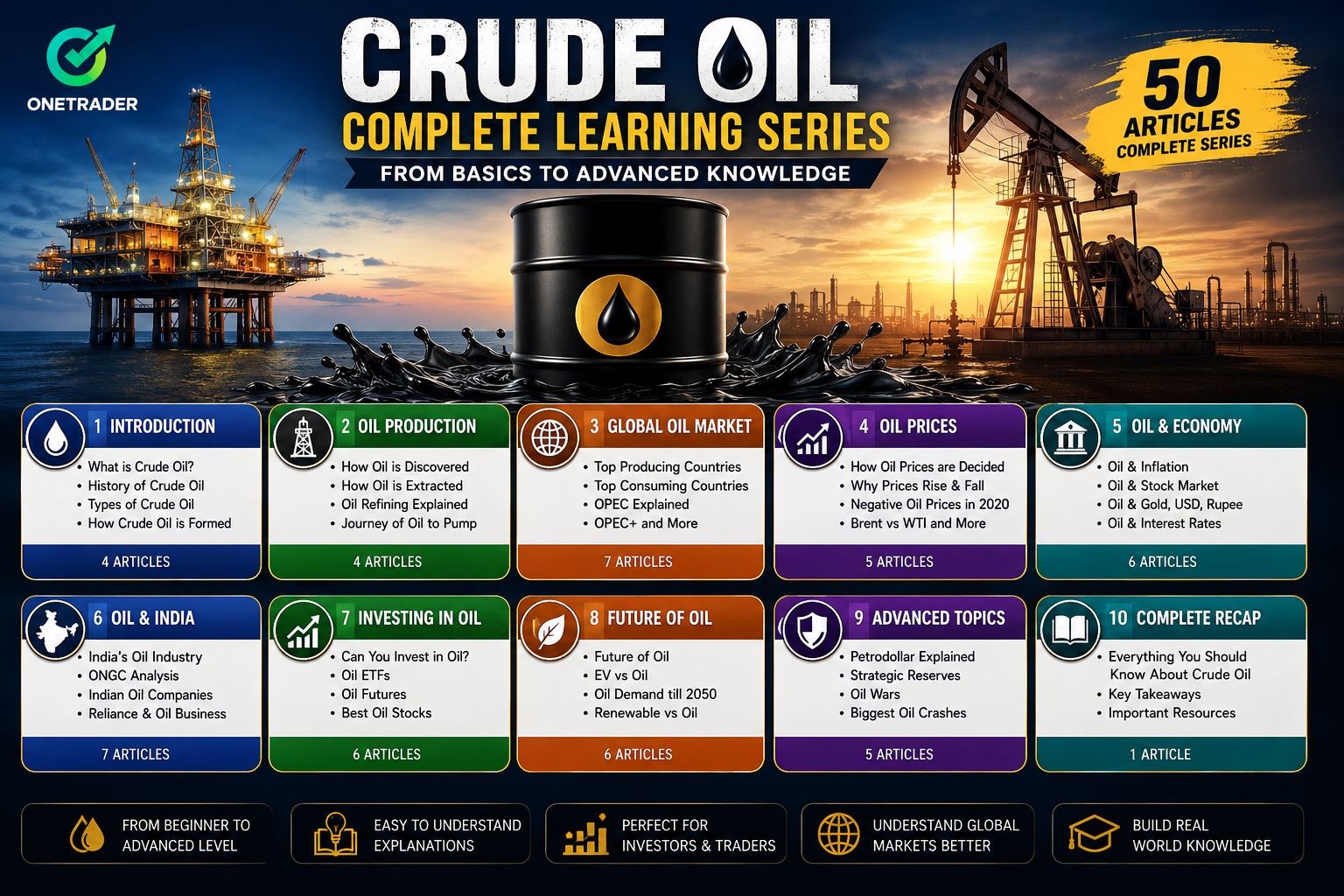
Understanding what crude oil is and why it matters is the first step toward understanding the global economy, energy markets, inflation, and even stock market movements. In the next article, we’ll explore how crude oil is formed over millions of years, taking a deep dive into the fascinating geological processes that create this invaluable natural resource.