
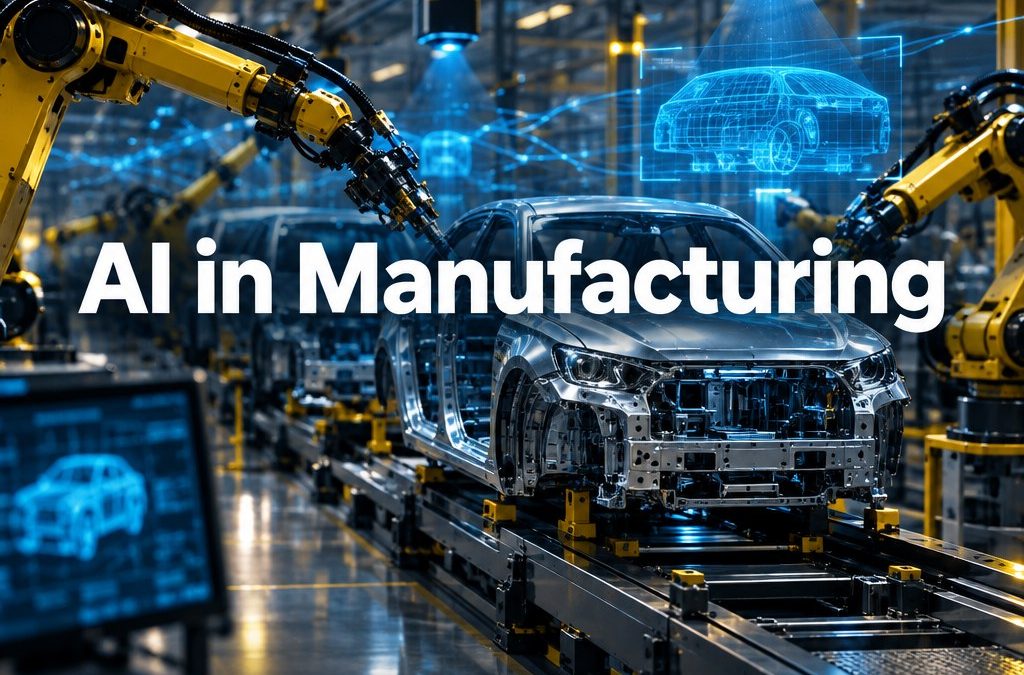
Artificial intelligence is moving beyond data centres and software into one of the world’s largest industries: manufacturing. From automobile factories and electronics production to industrial machinery and logistics, businesses are exploring AI-powered systems to improve productivity, reduce equipment downtime and strengthen operational efficiency.
For decades, manufacturing automation focused on machines performing repetitive tasks. AI is expanding those capabilities by helping equipment analyse information, identify defects and adapt to changing production conditions. For investors, the question is which suppliers can translate this transition into sustainable revenue and profits.
How AI Is Transforming Manufacturing
Traditional factory automation follows predefined instructions. AI adds the ability to analyse operational data, recognise defects, forecast maintenance needs and support more adaptive production. Predictive-maintenance systems can use vibration, temperature and machine-performance data to identify signs of equipment failure before an unexpected shutdown. This can help factories reduce downtime and extend the useful life of expensive machinery.
Computer vision offers another practical application. Cameras combined with intelligent software can inspect products, recognise defects and guide automated equipment. For manufacturers, the business case depends on measurable improvements in quality, output, waste reduction and operating costs—not simply adopting a fashionable technology.
Also Read: AI Wearables: Are Smartphones Moving Toward a Post-Phone Future?
Industrial Automation Companies Could Benefit
Established industrial automation companies already supply the controls, machinery and software used in modern factories. That provides a natural starting point for adding AI capabilities. US-based Rockwell Automation offers industrial control systems and manufacturing software that can help customers connect production equipment with analytics and operational decision-making.
Germany’s Siemens combines factory automation, industrial software and digital-twin technologies. Its expanded 2026 collaboration with NVIDIA highlights the industry’s interest in combining simulation, computing and industrial expertise. Investors should nevertheless separate existing automation revenue from genuinely incremental AI-related sales.
Robotics and Intelligent Machines
Industrial robots are already widely used for welding, assembly, packaging and material handling. AI can improve machine vision, motion planning and the ability to handle variation in factory environments. Japan’s FANUC and industrial automation businesses such as ABB illustrate the types of established suppliers participating in this transition.
Adoption will depend on economics. A manufacturer needs to justify the purchase, installation and maintenance of robotics through improved productivity, consistent quality or reduced operating costs. Smaller factories may adopt intelligent systems more slowly than large manufacturers with substantial capital budgets.

Also Read: Apple’s First Foldable iPhone: How the iPhone Duo Could Change the Smartphone Market
Sensors and Machine Vision
AI systems need accurate information about the physical world. That creates opportunities for industrial cameras, sensors and inspection software. US-listed Cognex supplies machine-vision technology for inspection and factory automation, including AI-enabled products designed to process complex visual information closer to the production line.
This is a less obvious part of the AI investment ecosystem: a supplier can benefit from intelligent manufacturing without developing a general-purpose AI model. The key measure is whether new capabilities lead to stronger orders, better margins and repeat customer spending.
Digital Twins and Industrial Software
A digital twin is a virtual representation of a machine, product or production process. Manufacturers can use simulations to test factory layouts, evaluate operating changes and detect potential problems before modifying physical equipment. Combining digital twins with AI could make production planning and optimisation more responsive.
Industrial software providers may benefit through licensing, subscriptions and integration services. However, deployment often requires connecting older equipment, cleaning operational data and training staff. These implementation costs can delay the financial benefits customers expect.
Also Read: Why Is the iPhone 18 Launch Delayed? The Real Reason Behind Apple’s New Strategy
What Investors Should Watch
Manufacturing remains cyclical. When industrial demand weakens, companies may delay equipment purchases even if the long-term automation opportunity remains attractive. Investors should assess order backlogs, software and service revenue, operating margins, cash flow, customer concentration and exposure to different manufacturing industries.
Valuation matters as much as technological potential. A business can be a credible AI beneficiary while its shares already price in unusually rapid growth. The most convincing companies will demonstrate that AI-enabled products are generating additional revenue and measurable value for customers.
The Long-Term Opportunity
AI in manufacturing is not simply about replacing factory workers with robots. It is about connecting machines, data, software and human expertise to improve how products are designed, manufactured and inspected. The potential beneficiaries range from automation and robotics suppliers to machine-vision specialists and industrial software companies.
For investors, the central question is which companies can convert industrial AI adoption into durable earnings and free cash flow. Following real factory investment and customer results offers a stronger framework than treating every automation company as an AI winner.
Also Read: Android Gets Smarter: New AI Features That Could Change Everyday Phone Use
Disclaimer: This article is for educational and informational purposes only and is not investment advice or a buy/sell recommendation. Onetrader is not SEBI registered. Investments are subject to market risks.





Keep learning with OneTrader
Explore structured lessons and practical guides to build your market knowledge.