

Investing in the stock market does not always require choosing individual companies. Exchange Traded Funds (ETFs) allow investors to access a basket of securities through one exchange-traded product. But how do you actually buy and sell ETFs in India? This Onetrader ETF Education Series chapter explains accounts, orders, execution, liquidity, fees and risks in straightforward language.
What You Need Before Buying an ETF
You generally need a demat account to hold ETF units and a trading account with a registered broker to place orders. Platforms such as Zerodha, Groww, Upstox and Angel One support exchange-traded securities. If you already buy listed shares, you can generally use the same account for listed ETFs. Ensure your trading balance covers the purchase and applicable charges.
Finding the Correct ETF
Search by the scheme’s verified exchange symbol and full name. For example, Nippon India ETF Nifty 50 BeES is commonly identified by NIFTYBEES. Check the underlying benchmark and issuer carefully: Nifty 50 and Nifty Next 50 ETFs track different baskets and are not interchangeable.
ETF Market Price and NAV
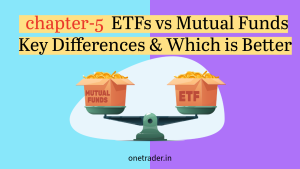
ETFs trade at market prices during exchange hours, unlike conventional mutual funds transacted at applicable NAV. Market prices can differ from indicative NAV. As a hypothetical example, an ETF with indicative NAV of ₹250 might have an ask price of ₹251 and a bid of ₹249.80. Buying 20 units at ₹251 costs ₹5,020 before charges. Compare spreads and indicative NAV where available.
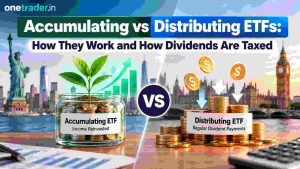
Also Read: Accumulating vs Distributing ETFs: How They Work and How Dividends Are Taxed
Market Orders Versus Limit Orders
A market order seeks immediate execution against available quotes, but the final execution price is not guaranteed. A limit buy order caps the price you will pay; a limit sell order establishes the lowest acceptable sale price. For a thinly traded ETF, a limit order can help control execution price, although it might not fill.
How to Buy an ETF Step by Step
Log in to your broker and fund the trading account. Search for the correct ETF symbol and select the intended exchange listing. Examine the current bid, ask and order-book depth. Enter the quantity, choose the relevant delivery option, and select an appropriate order type. Review price and charges, submit, and check the order book for executed, partial or pending status. A 40-unit purchase at ₹250 has a gross value of ₹10,000. Ordinary equity ETF trades generally settle on a T+1 working-day cycle, subject to applicable rules.
How to Sell ETF Units
Open your holdings, select the ETF and quantity, check live bids, and place the sale order. If 40 units bought at ₹250 are sold at ₹280, the gross proceeds are ₹11,200 and the gross gain is ₹1,200, or 12%, before charges and taxes. Selling the same units at ₹225 instead produces ₹9,000 and a gross loss of ₹1,000. Always verify execution in the order book.
ETF Liquidity and Bid-Ask Spreads
Low liquidity can mean higher execution costs. If the highest bid is ₹248 and the lowest ask ₹252, the ₹4 spread is approximately 1.6% of the ₹250 midpoint. Trading volume helps but is not the only measure: consider the spread, order depth, market-maker participation and premium or discount to indicative NAV.

Also Read: How to Start Investing in ETFs in India
When to Trade ETFs
Indian exchange-traded ETFs generally trade in regular equity hours, 9:15 AM–3:30 PM IST on normal sessions. Opening minutes and the closing period can be volatile, so review current spreads rather than assuming one time is universally best. International ETFs may trade while their underlying foreign markets are closed, complicating fair-value estimates.
Can You Invest Monthly Like an SIP?
Yes. You can buy whole ETF units regularly, either manually or using a broker’s supported scheduled-investment feature. A monthly budget of ₹3,000 may purchase a different number of units each month as prices change. Regular purchases encourage discipline but do not eliminate market risk or guarantee returns.
ETF Charges
The scheme expense ratio is reflected in NAV rather than billed separately for each trade. Additional costs may include brokerage, applicable securities transaction tax, exchange charges, SEBI fees, GST on relevant services, stamp duty and demat-related charges. Check your broker’s current tariff and contract notes.
ETF Taxation in India
Tax treatment depends on the ETF’s underlying assets, legal classification, acquisition date and holding period. Qualifying equity-oriented ETFs generally follow equity capital-gains provisions, while gold, silver, international and debt ETFs may be treated differently. As of October 2026, qualifying short-term equity gains are generally subject to 20% tax and eligible long-term equity gains above the annual threshold generally to 12.5%, plus applicable surcharge and cess, subject to statutory conditions. Verify current rules for your particular ETF.
Also Read: Best ETFs to Buy in India for Long-Term Investment
Mistakes Beginners Should Avoid
Do not assume a lower ETF unit price means a better bargain. Avoid confusing similarly named indices, ignoring bid-ask spreads, using large market orders in illiquid ETFs, chasing recent returns, and trading excessively. Review benchmark exposure, tracking quality, liquidity, costs and personal risk tolerance before investing.
Quick ETF Buying Checklist
Confirm the correct ETF and symbol, underlying benchmark, expense ratio, tracking difference and error, bid-ask spread, order-book depth, price relative to indicative NAV, order type, charges and investment horizon. This short check can prevent avoidable execution mistakes.
Final Thoughts
Buying and selling ETFs is operationally straightforward, but sound decisions require understanding price, liquidity, charges, underlying assets and risk. Choose a product that matches your goal, know the price you are paying, and avoid acting on short-term excitement.
What’s Next? Chapter 10
The final chapter, Future of ETFs in India and ETF Portfolio Building Strategies, will examine ETF adoption, institutional uses, portfolio allocation and rebalancing.
Also Read: How to Select the Right ETF – Step-by-Step Guide for Indian Investors (2026)
Financial Disclaimer
This article is for educational and informational purposes only and is not investment advice or a recommendation to buy or sell securities. Market investments involve risk, including loss of capital. Onetrader is not SEBI registered as an investment adviser or research analyst.



Keep learning with OneTrader
Explore structured lessons and practical guides to build your market knowledge.