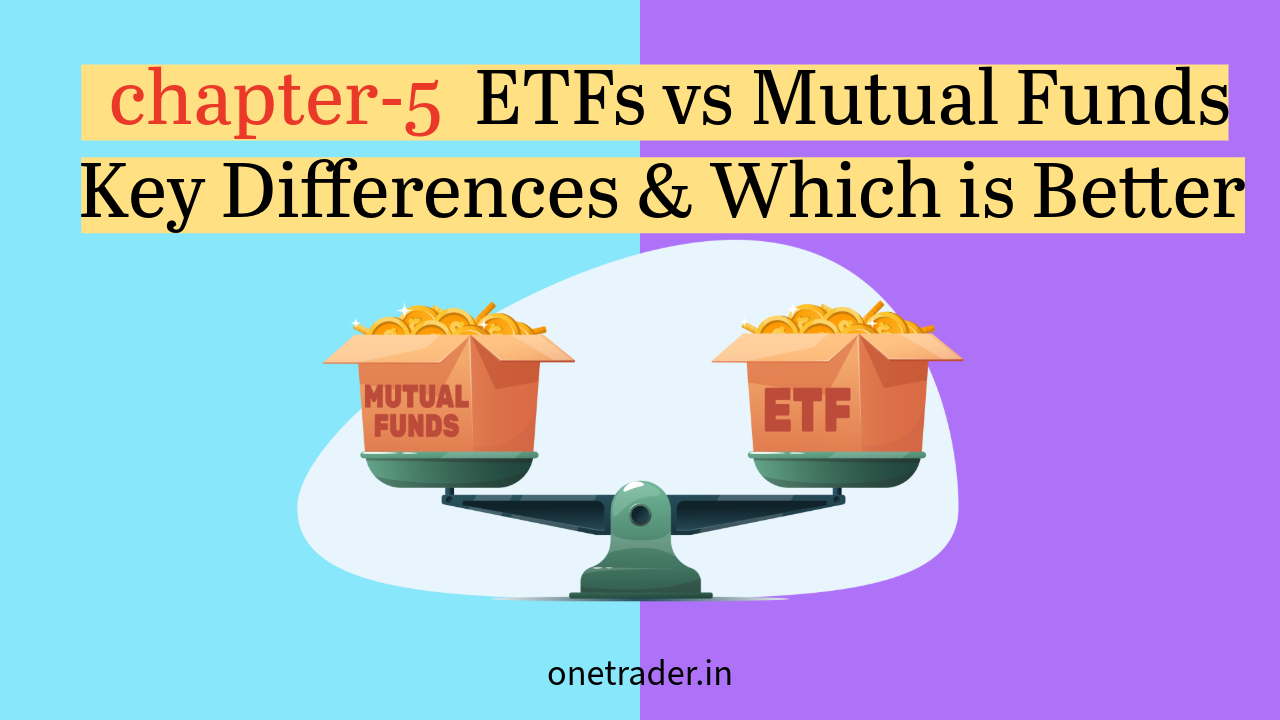
📘 Chapter 5: ETFs vs Mutual Funds – Which is Better for You?
If you’re an investor in India, you’ve surely heard this question:
👉 “Should I invest in ETFs or Mutual Funds?”
Both sound similar — they pool investor money and invest in a basket of assets.
But how they operate, cost, and behave are completely different.
Let’s break this down simply so you’ll never be confused again. 👇
🧩 1. Basic Concept
| Feature | ETF (Exchange Traded Fund) | Mutual Fund |
|---|---|---|
| What it is | Trades like a stock on exchange | Bought/sold through AMC |
| Type | Passive (mostly) | Active or Passive |
| Price | Fluctuates in real-time | Fixed once daily (NAV) |
📌 Example:
Also Read: Best ETFs to Buy in India for Long-Term Investment
- ETF = Nifty 50 ETF (tracks index passively).
- Mutual Fund = Active Fund (fund manager picks stocks manually).
💰 2. Cost Difference (Expense Ratio)
This is the biggest difference between both.
- ETFs are cheaper because they simply track an index.
- Mutual funds pay for fund managers, research teams, and marketing — so they cost more.
| Type | Expense Ratio (Approx.) |
|---|---|
| ETF | 0.05% – 0.3% |
| Mutual Fund | 1% – 2% |
💡 Example:
If you invest ₹1 lakh for 10 years — even a 1.5% cost difference can reduce your returns by ₹1 lakh+ in the long term.
✅ Winner → ETF
💹 3. Trading & Liquidity
| Feature | ETF | Mutual Fund |
|---|---|---|
| Where to Buy | Stock exchange (Zerodha, Upstox, Groww) | AMC / MF platform |
| Pricing | Real-time market price | NAV (once per day) |
| Liquidity | Depends on trading volume | Always redeemable via AMC |
💡 So ETFs behave like shares — you can buy or sell anytime during market hours.
Mutual funds are like end-of-day products.
Also Read: How to Select the Right ETF – Step-by-Step Guide for Indian Investors (2026)
✅ Winner → ETF (for traders) | Mutual Fund (for SIP investors)
📊 4. Transparency
ETFs disclose their holdings daily, while mutual funds do it monthly or quarterly.
That means with ETFs, you always know where your money is parked.
✅ Winner → ETF
Also Read: ETF vs Sukanya Samriddhi Yojana (2025) — Which Is Better for You?
🔄 5. Flexibility
- ETFs → Instant buy/sell + can use Stop Loss, Limit Orders.
- Mutual Funds → Redeem via AMC, no real-time trading options.
ETFs are perfect for investors who want control and speed.
Mutual funds are better for hands-off SIP investors.
📈 6. Returns
Long-term, the difference between passive ETFs and active mutual funds is shrinking.
In fact, most active funds underperform their benchmark index after costs (according to SPIVA India Report).
That means:
👉 A low-cost ETF can sometimes beat a high-cost active fund.
✅ Winner → ETF (for long-term passive investors)
Also Read: Commodity and International ETFs Explained – Gold, Silver, and Global Market Investing
🧠 7. Risk Factor
| Risk Type | ETF | Mutual Fund |
|---|---|---|
| Market Risk | ✅ Yes | ✅ Yes |
| Tracking Error | ⚠️ Small | ❌ Not applicable |
| Fund Manager Risk | ❌ None | ⚠️ High (human decisions) |
✅ ETF has less human error risk.
🧮 Quick Comparison Table
| Feature | ETF | Mutual Fund |
|---|---|---|
| Pricing | Real-time | Once a day |
| Management | Passive | Active/Passive |
| Expense Ratio | Low | High |
| Liquidity | Exchange-based | AMC-based |
| Transparency | Daily | Monthly |
| Risk | Market + Tracking | Market + Human |
| Ideal For | DIY Investors | SIP/Long-term investors |
💡 When to Choose What?
| Investor Type | Best Option | Why |
|---|---|---|
| Beginner | Mutual Fund | Easy to start with SIP |
| Active Trader | ETF | Real-time control |
| Long-term Passive Investor | ETF | Low cost, compounding benefits |
| Retiree / Conservative | Index Mutual Fund | Stable SIP-friendly option |
🧠 Onetrader Insight
“ETFs give you control, speed, and low cost.
Mutual funds give you convenience, simplicity, and automation.”
The best strategy?
Use both together:
- ETFs for long-term core portfolio
- Mutual Funds for disciplined SIPs
🚀 Final Thoughts
ETFs and Mutual Funds are like two routes to the same destination — wealth creation.
The difference is how much control and cost efficiency you prefer.
Also Read: Types of ETFs in India – Equity and Debt ETFs Explained (2025 Guide)
If you love hands-on investing → choose ETFs.
If you prefer automatic growth → go for Mutual Funds.
Either way — consistency wins, not timing. 🕒💸
🔜 What’s Next?
Now that you know the difference between ETFs and Mutual Funds,
the next step is to identify India’s Best ETFs for 2025 — based on performance, volume, and tracking error.
👉 Next Chapter: [Best ETFs in India 2025 – Top Performers & Hidden Gems (Chapter 6)]
Also Read: 📊 How ETFs Work
We’ll reveal:
- Top Equity, Gold, and International ETFs
- Expense ratios & returns
- Best picks for long-term investors 🚀