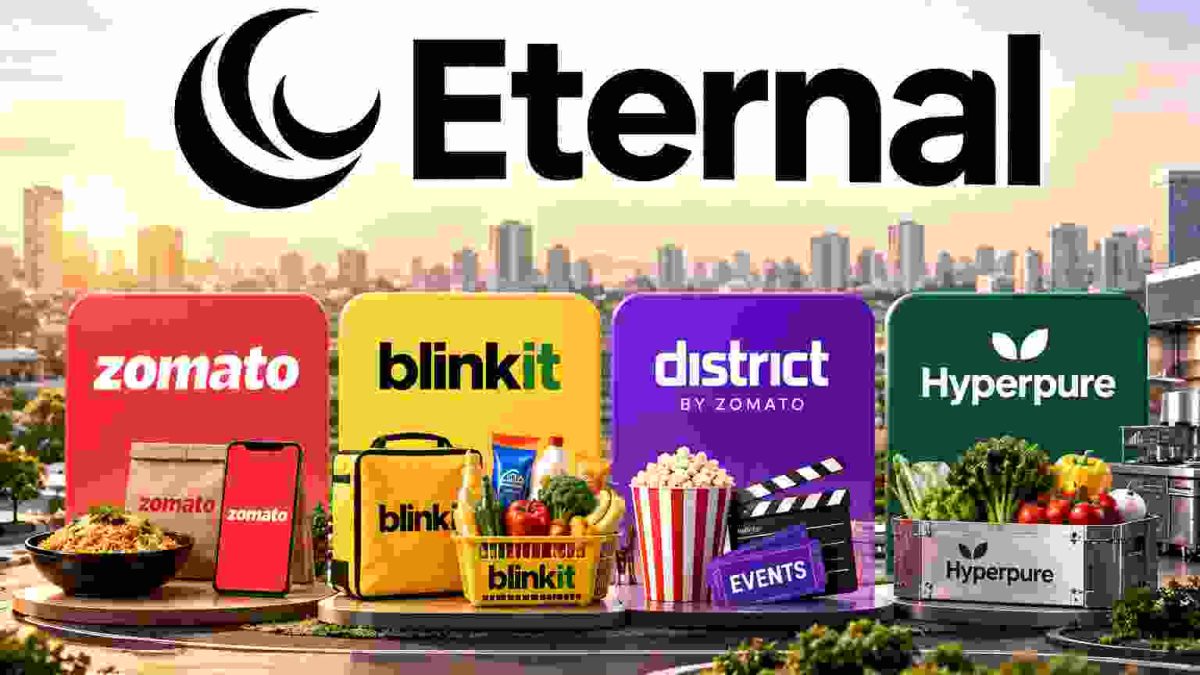
The company once known simply as Zomato is becoming something much larger. After changing its corporate identity to Eternal, the business is no longer built around food delivery alone. It now brings together Zomato, Blinkit, District and Hyperpure under one platform, creating a multi-business consumer ecosystem spanning food, quick commerce, going out and restaurant supply. The biggest change, however, is happening inside Blinkit, where Eternal is building a dense physical network that could eventually make quick commerce a much broader retail infrastructure business.
From Food Delivery to a Consumer Ecosystem
Zomato originally built its business around restaurant discovery and food delivery. The model connected consumers with restaurants through a digital platform, while generating revenue through commissions, advertising and related services. Over time, the company realized that the same consumer relationship could be extended into other categories.
The acquisition and expansion of Blinkit dramatically changed that opportunity. Instead of waiting for customers to order restaurant food, the platform could serve everyday household requirements through rapid grocery and essentials delivery. District added another layer around entertainment, events and going-out experiences, while Hyperpure created a business-to-business connection with restaurants.
Eternal now describes its businesses as a connected ecosystem, with Zomato focused on food, Blinkit on fast commerce, District on consumer experiences and Hyperpure on supplying the food ecosystem.
Also Read: Policybazaar: From Insurance Comparison Website to India’s Digital Insurance Distribution Powerhouse
Blinkit Is Changing the Economics of the Group
The most important transformation is the rapid expansion of Blinkit. Quick commerce requires a fundamentally different operating model from food delivery because the company needs physical dark stores, inventory, warehousing and local supply chains positioned close to customers.
That makes Blinkit more capital-intensive than the original Zomato marketplace model, but it also gives the business control over product assortment, availability and delivery speed. During Q1 FY27, Blinkit’s net order value increased 86.2% year over year to ₹17,132 crore, while revenue increased 552.7% to ₹15,664 crore, partly reflecting the transition toward an inventory-led model. Eternal added a net 200 stores during the quarter, taking the total to 2,443.
This physical network is becoming one of Blinkit’s most important assets. The company is not simply building an app that promises fast delivery; it is building a distributed retail infrastructure positioned close to consumers.
The Dark Store Is the New Retail Building Block
The dark-store model changes how online retail works. Traditional e-commerce generally moves products through large centralized warehouses before sending them to customers. Quick commerce instead places smaller inventories across multiple neighbourhoods, allowing orders to travel a much shorter distance.
Also Read: Raymond: From Suits to High-Precision Engineering — The Transformation Is Just Beginning
The challenge is making each location economically productive. A store needs sufficient order density, an appropriate assortment and efficient inventory management to cover rent, employees, technology and delivery costs. As more customers order from a location, fixed infrastructure can be spread across a larger volume of transactions.
Eternal has been expanding this network aggressively while simultaneously increasing assortment. The company added 200 net stores in Q1 FY27 and said it was continuing geographical expansion, assortment expansion and demand densification. It also expects to reach 3,000 stores by March 2027.
From Groceries to a Larger Retail Platform
The long-term business opportunity for Blinkit extends beyond groceries. Once a dense delivery network exists, the same infrastructure can support a much broader selection of products.
Electronics accessories, beauty products, personal care, household goods, premium foods and other frequently purchased items can potentially be delivered through the same network. Blinkit’s move toward greater assortment and premium formats indicates that the company is attempting to increase what customers can buy through the platform rather than simply delivering the same limited basket faster.
Also Read: DMCC Speciality Chemicals: The 100-Year Chemical Company Building a New Specialty Business
This creates an important strategic shift. Quick commerce can evolve from a convenience service into a local digital retail network, where the value of the business depends on assortment, customer frequency, inventory efficiency and store density.
Zomato Remains an Important Foundation
While Blinkit is growing rapidly, Zomato remains a major part of Eternal’s consumer ecosystem. In Q1 FY27, food-delivery net order value increased 20% year over year to ₹10,769 crore, while adjusted revenue increased 33% to ₹3,537 crore. Monthly transacting customers increased to 27.2 million.
Food delivery also provides Eternal with an established customer relationship and a mature digital marketplace. This creates an interesting combination: the food business generates frequent consumer interactions, while quick commerce can increase the number of everyday use cases attached to the same broader ecosystem.
The opportunity is therefore not simply to make Blinkit larger. It is to increase the frequency with which consumers use Eternal’s different services.
Also Read: Avalon Technologies: The EMS Company Quietly Building India’s Next Manufacturing Engine
District Adds the Going-Out Economy
District extends the platform beyond products delivered to the home. It focuses on experiences such as dining, movies, events and other going-out activities.
The business recorded a 60% increase in net order value during Q1 FY27 to ₹3,218 crore.
This gives Eternal another way to monetize consumer demand. Food delivery addresses meals at home, Blinkit addresses everyday products, and District addresses spending outside the home. The businesses are different operationally, but they share a common foundation: consumer discovery, transactions, payments, technology and a large digital user base.
Hyperpure Connects Eternal to Restaurants
Hyperpure operates on the other side of the food ecosystem. Instead of serving consumers directly, it supplies restaurants with ingredients and other products.
Also Read: IREDA: The Green Financing Powerhouse Funding India’s Renewable Energy Boom
Its revenue declined year over year in Q1 FY27, but the business remained strategically relevant because it connects Eternal with restaurants beyond food-delivery transactions. Hyperpure also reported positive adjusted EBITDA of ₹6 crore in the quarter.
This creates a broader ecosystem around restaurants: Zomato helps restaurants reach consumers, while Hyperpure can supply some of the inputs required to operate those restaurants.
The Bigger Eternal Story
Eternal’s transformation is ultimately about moving from a single digital marketplace into a multi-use consumer platform.
The company’s original strength was its relationship with consumers through food discovery and delivery. Blinkit is now adding a physical retail network to that digital foundation, while District expands the platform into experiences and Hyperpure connects it to the restaurant supply chain.
Also Read: Sona BLW: From Auto Components to a Mobility Technology Company
The scale of this transformation is already visible. Eternal reported consolidated revenue of ₹20,211 crore in Q1 FY27, up 2.8 times year over year, with the quick-commerce business driving much of the expansion.
The central business challenge now is different from the early Zomato years. Eternal has to prove that its expanding physical network can become increasingly productive while maintaining customer frequency, assortment and delivery economics in a highly competitive quick-commerce market. But the business it is building is clearly broader than food delivery: it is an attempt to create a connected consumer ecosystem combining digital discovery, local retail infrastructure, food, experiences and business-to-business supply.
Financial Disclaimer: This article is for educational and informational purposes only and should not be considered investment advice, a recommendation to buy or sell any security, or a guarantee of future returns. Investors should conduct their own research and consider their financial objectives and risk tolerance before making investment decisions.
Also Read: Anlon Healthcare: The Small Pharma Company Building a Bigger Global Opportunity