
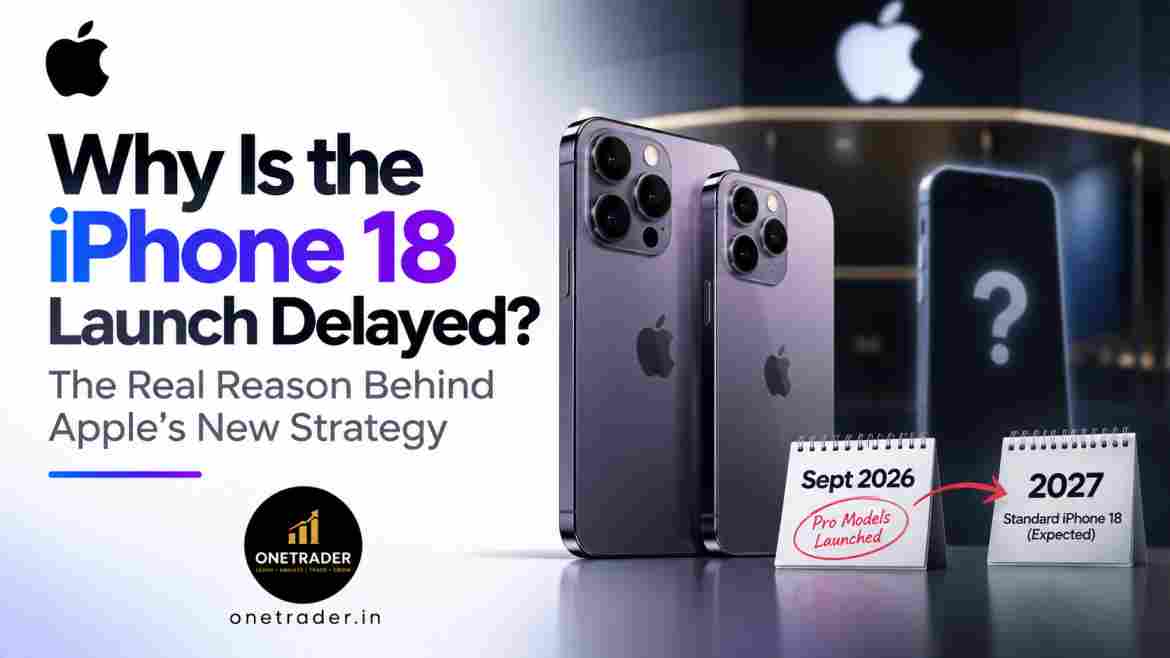
Apple has changed its traditional iPhone launch strategy in 2026, and the biggest surprise from its latest event was not a new camera or processor. It was the absence of the standard iPhone 18. Apple launched the iPhone 18 Pro and iPhone 18 Pro Max on September 9, along with its first foldable iPhone, the iPhone Duo, but the regular iPhone 18 is expected to arrive later, reportedly in spring 2027.
For years, Apple has followed a familiar pattern. The company introduces its new iPhone family in September, with the standard and Pro models launching together. This time, Apple has separated the lineup. The premium iPhone 18 Pro models are taking the September spotlight, while the standard iPhone 18 and other more affordable models are expected later. This could become more than a one-year change because it may represent a new way for Apple to manage its smartphone business.
The Memory Chip Problem
One of the biggest reasons being reported is the current shortage and rising cost of memory chips. The rapid expansion of artificial intelligence has created enormous demand for memory used in AI data centers, particularly high-bandwidth memory. That demand is competing with consumer electronics for manufacturing capacity, pushing memory prices significantly higher. Reports indicate that smartphone DRAM prices have risen sharply, putting pressure on manufacturers across the industry.
Apple is not immune to this pressure. The company has already increased the starting prices of the iPhone 18 Pro and Pro Max by $100, with the models starting at $1,199 and $1,299 respectively. Higher memory costs are being cited as one factor behind the increase.
Also Read: Apple’s First Foldable iPhone: How the iPhone Duo Could Change the Smartphone Market
Launching the standard iPhone 18 later could therefore give Apple more time to manage component availability and pricing. Instead of launching several models simultaneously while dealing with expensive components, Apple can prioritize the products that generate higher revenue and margins.
Apple Is Prioritizing Premium iPhones
The timing of the delay is also interesting because Apple has introduced some of its biggest premium hardware changes at the same time. The iPhone 18 Pro models bring the A20 Pro chip, improved cameras with variable aperture technology and other hardware upgrades, while the new iPhone Duo represents Apple’s entry into the foldable smartphone market.
This gives Apple a reason to put its most expensive products at the center of the September launch. Premium smartphones generate more revenue per device, and the company can concentrate marketing attention on customers willing to pay more for the latest technology.
The strategy could also help Apple avoid having the standard iPhone compete for attention with its most ambitious products. A September event focused on the iPhone 18 Pro and the foldable Duo creates a much clearer premium technology story.
Also Read: Android Gets Smarter: New AI Features That Could Change Everyday Phone Use
The Foldable iPhone Changes Everything
Apple’s first foldable iPhone is another important reason the 2026 lineup feels different. The iPhone Duo opens into a 7.6-inch internal display while retaining a 5.4-inch external display. It uses the A20 Pro platform and starts at $1,999, positioning it far above Apple’s traditional iPhone models.
Apple is entering a market where Samsung, Google and other manufacturers have already spent years developing foldable smartphones. Rather than immediately making foldables a mainstream product, Apple appears to be positioning the Duo as an ultra-premium device.
That makes the separation of the iPhone lineup strategically useful. Apple can establish the Duo and Pro models as its premium technology products first, while the standard iPhone can arrive later as a more accessible option.
What About the Standard iPhone 18?
The delay does not necessarily mean that the standard iPhone 18 has been cancelled. Current reports indicate that Apple is expected to launch the standard iPhone 18 alongside other lower-priced models in spring 2027. The second-generation iPhone Air and an iPhone 18e are also reportedly part of the later cycle.
Also Read: iPhone 18: The Biggest iPhone Upgrade Yet? What Apple Could Change in 2026
This could eventually create two major iPhone seasons. September could become Apple’s premium technology season, featuring the Pro models and potentially new form factors such as foldables. Spring could then focus on standard and more affordable iPhones.
For consumers, that could change the traditional upgrade cycle. Someone looking for the newest standard iPhone may no longer need to follow Apple’s September event. Meanwhile, customers looking for Apple’s most advanced technology will continue to have a reason to watch the fall launch.
The Bigger Technology Story
The iPhone 18 delay also reveals something important about the smartphone industry. Smartphone development is becoming increasingly connected to the AI infrastructure boom.
AI companies are consuming enormous amounts of computing power and memory, and that demand is affecting products that have nothing to do directly with data centers. Memory manufacturers are having to balance demand from AI infrastructure against demand from smartphones, computers and other consumer electronics.
This creates an interesting connection between technology products and technology stocks. Companies involved in memory and semiconductor manufacturing could benefit from strong AI demand, but consumer electronics companies may face higher component costs. Apple has enough scale and purchasing power to manage some of this pressure, but it cannot completely escape the broader semiconductor cycle.
The companies worth watching include Apple, memory manufacturers such as Micron, Samsung and SK Hynix, and semiconductor manufacturing companies involved in advanced processors. The iPhone 18 story therefore isn’t just about Apple’s next smartphone. It also shows how the AI boom is beginning to influence the cost, design and timing of everyday technology products.
What Happens Next?
The delayed iPhone 18 could ultimately become an important experiment for Apple. If consumers accept a two-stage launch strategy, Apple may continue separating its premium and mainstream products in future years. If customers become confused or delay purchases, Apple may eventually return to a more traditional launch cycle.
For now, the message is clear. Apple is putting its most advanced technology at the center of the 2026 launch, while the standard iPhone 18 waits for a later opportunity. The combination of rising component costs, AI-driven semiconductor demand, premium product strategy and Apple’s entry into foldables makes this one of the most significant changes to the iPhone business in years.
Disclaimer: This article is for educational and informational purposes only. Product specifications, launch plans and business implications may change as Apple provides further information.iPhone 18 delayed