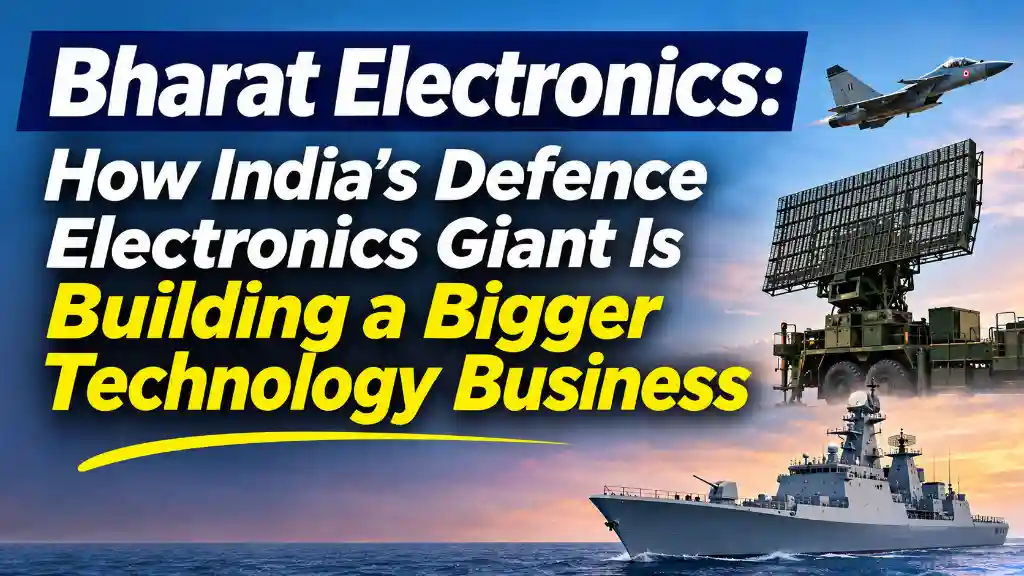
Bharat Electronics Limited, widely known as BEL, occupies a critical position in India’s defence industry. The Bengaluru-based company develops and manufactures electronic systems used by the armed forces, from radars and communication equipment to electronic warfare systems and avionics. Its business sits at the intersection of defence modernisation, domestic manufacturing and the government’s effort to reduce reliance on imported military technology.
Established in 1954 and operating under the Ministry of Defence, BEL has grown into one of India’s largest defence electronics manufacturers. Its importance comes not simply from supplying equipment, but from developing systems that help military platforms detect threats, communicate securely and coordinate operations. These are specialised products that require technical expertise, rigorous testing and long-term support, creating a business that is difficult for new entrants to replicate quickly.
What Bharat Electronics Does
BEL’s core business is designing, developing, manufacturing and supporting electronics for land, naval and air defence applications. Its product portfolio includes surveillance and fire-control radars, electronic warfare equipment, military communication systems, avionics, electro-optical devices, sonar-related systems and command-and-control solutions. The company also works on electronic systems used in missile programmes, armoured vehicles, aircraft and naval platforms.
These products perform different roles but share a common purpose: helping defence forces collect information, make decisions and operate equipment reliably. Radar systems identify and track objects, communication networks connect personnel and command centres, while electronic warfare equipment supports operations in environments where the electromagnetic spectrum is contested. BEL’s ability to work across several of these areas gives it a broad position within India’s defence electronics supply chain.
Also Read: Kalyan Jewellers: How India’s Jewellery Retailer Is Growing Beyond Its Traditional Markets
The company also has a non-defence business. Its products and solutions extend into civilian radar systems, railway and metro technology, cybersecurity, homeland security, space electronics and medical electronics. Electronic voting machines and voter-verified paper audit trail systems are among its notable civilian applications. Although these activities diversify the portfolio, defence remains the principal revenue driver.
Who Its Customers Are
BEL’s most important customers are government defence organisations and India’s armed forces. Its business is closely linked to procurement programmes undertaken by the Ministry of Defence and the requirements of the Army, Navy and Air Force. It also works with public-sector defence manufacturers, research organisations and other industrial partners on projects that involve multiple suppliers and specialised technologies.
Outside defence, customers include government agencies, railway and metro operators, airport and aviation-related organisations, and institutions requiring secure electronic systems. Export customers provide another avenue for growth. BEL supplies products and systems to overseas markets and works with international aerospace and defence companies on components, equipment and technology requirements.
The nature of these relationships shapes how the business operates. Defence equipment is often developed and delivered under detailed technical specifications, testing requirements and project schedules. Contracts can extend over several years, and the relationship may continue after delivery through maintenance, spare parts, upgrades and other support services.
Also Read: Sai Life Sciences: The Hyderabad Pharma Research Company Building a Global Drug Development Business

How Bharat Electronics Makes Money
BEL generates most of its revenue by selling defence electronics products and integrated systems. Some contracts involve supplying equipment developed for a specific military requirement, while others require the company to combine hardware, software and subsystems into a larger operational solution. Engineering, manufacturing, testing and system integration are therefore central to its business model.
After-sales support provides an additional source of income. Defence electronics must remain operational over long service lives, making maintenance, spares, repairs and upgrades important parts of the customer relationship. BEL also earns revenue from non-defence products and services, alongside exports to international customers and original equipment manufacturers.
A major advantage of this model is the technical and regulatory complexity involved in qualifying equipment for defence use. Once a product is integrated into a platform or operational network, replacing it can require extensive evaluation and testing. This can support long-term customer relationships, although it does not remove the risks of delayed orders, price pressure or execution problems.
Financial Performance and Order Book
BEL’s latest reported results show strong revenue growth during the first half of FY2026-27. For the July to September quarter, revenue from operations increased to ₹7,291 crore from ₹5,764 crore a year earlier. Net profit rose to approximately ₹1,541 crore from ₹1,286 crore. For the first six months of the financial year, revenue from operations reached ₹12,824 crore, while profit after tax stood at ₹2,589 crore.
Also Read: Tonbo Imaging: The Indian Defence Technology Company Building Eyes for Modern Warfare
The company’s order book provides another important measure of its business pipeline. BEL reported an order book of ₹68,717 crore as of October 1, 2026. That represents substantial contracted work to be executed over time, although the pace at which it becomes revenue will depend on manufacturing, component availability, testing, customer acceptance and delivery schedules.
| Financial measure | Reported figure |
|---|---|
| Q2 FY2026-27 revenue from operations | ₹7,291 crore |
| Q2 FY2026-27 profit after tax | ₹1,541 crore |
| H1 FY2026-27 revenue from operations | ₹12,824 crore |
| H1 FY2026-27 profit after tax | ₹2,589 crore |
| Order book as of October 1, 2026 | ₹68,717 crore |
The figures point to a business expanding at a healthy pace, but revenue growth and profit growth do not always move together. In the September quarter, profit grew more slowly than revenue, indicating that investors should continue to monitor operating costs and margins alongside headline sales. The order book is encouraging, but it should not be treated as guaranteed near-term revenue or profit.
Competition in Defence Electronics
BEL competes in a market where technical capability, reliability, delivery record and access to major programmes matter as much as manufacturing scale. Indian listed companies such as Data Patterns, Astra Microwave Products, Paras Defence and DCX Systems operate in overlapping areas of defence and aerospace electronics. Their focus may be narrower, with strengths in areas such as specialised subsystems, radio-frequency technology, electronics integration or optical equipment.
Larger industrial groups, including Larsen & Toubro and Tata’s defence businesses, also compete for selected programmes. International companies such as Thales, Saab, Leonardo and Elbit Systems are relevant in advanced defence technology and export markets. BEL’s established relationships with Indian defence customers and broad portfolio give it a strong position, but competition is becoming more sophisticated as private-sector suppliers expand their capabilities.
Also Read: Lupin: How India’s Pharma Giant Is Moving Beyond Generic Medicines
Risks Investors Should Watch
BEL’s dependence on government defence procurement is both a strength and a risk. Orders can provide visibility over several years, but contract awards and project execution depend on government priorities, budget allocations and procurement timelines. Delays in approvals, testing or customer acceptance can shift revenue between reporting periods.
The company also relies on a network of suppliers for electronic components and specialised materials. Supply disruptions can affect production schedules, while cost increases may put pressure on profitability. Large projects require careful coordination across design, manufacturing, testing and delivery, and execution problems can affect working capital as well as margins.
Another consideration is competition. Domestic suppliers are developing more advanced products, and global manufacturers continue to invest in defence electronics. BEL must maintain its research and development capabilities, deliver reliable systems and adapt to changing requirements in areas such as electronic warfare, secure communications, surveillance and unmanned systems.
Outlook: Growth Beyond Traditional Defence Equipment
India’s push to strengthen domestic defence manufacturing creates a long-term opportunity for BEL. As the armed forces modernise equipment and seek more locally developed electronics, demand could extend across radar, communications, electronic warfare, avionics and integrated command systems. A large order book gives the company a platform for future execution, while exports and civilian technology offer avenues to broaden its customer base.
Also Read: Blue Star: The Indian AC Maker Building a Bigger Business Beyond Home Cooling
The opportunity is not limited to winning new contracts. Delivering existing orders on time, maintaining quality and converting sales into cash will be equally important. BEL’s future performance will depend on how effectively it manages a growing project pipeline while protecting margins and continuing to invest in technology.
Bharat Electronics is more than a defence equipment supplier. It is a technology and systems business supporting critical national infrastructure and military capability. Its established position and current order pipeline provide a foundation for growth, but investors should weigh those strengths against procurement delays, execution risks, supply-chain pressures and the valuation at which the shares trade. A strong business outlook does not automatically make a stock attractive at every price.
Financial Disclaimer: This article is for educational and informational purposes only. It is not investment advice or a recommendation to buy or sell any security. Investors should review company disclosures, financial statements, risks and valuations and consult a qualified financial adviser before making investment decisions.
Also Read: Jio Platforms: From India’s Biggest Telecom Network to a Digital Technology Powerhouse






Keep learning with OneTrader
Explore structured lessons and practical guides to build your market knowledge.

Need a laugh after all that money talk?
Paisa LOL: India's funniest finance page, with memes, comics, jokes and long funny stories.