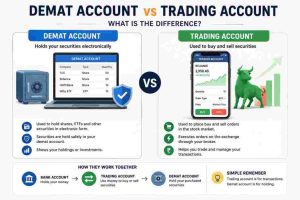
A Demat account is useful when you invest in shares, mutual funds, bonds, ETFs and other securities, but there can be situations where you no longer need an account. You may have opened multiple Demat accounts, moved to another broker, stopped investing, or simply want to avoid maintenance charges on an unused account. In such cases, closing the Demat account can be a practical option. The process is relatively straightforward, although the exact procedure can differ depending on the broker or Depository Participant (DP). Some DPs provide a completely online closure facility, while others may still require a physical closure form.
What Should You Do Before Closing a Demat Account?
Before submitting a closure request, the first thing to check is whether your Demat account has any securities or pending transactions. If you have shares, ETFs, bonds or other securities in the account, you generally need to transfer them to another Demat account or sell them before the account can be closed. If you want to continue holding your investments, transferring them to another Demat account is usually more appropriate than selling them simply to close the old account. Depository closure forms provide options for transferring remaining holdings to another account or, where applicable, rematerialising securities.
You should also check whether there are any unpaid brokerage, maintenance charges or other outstanding dues. An account with pending charges may not be accepted for closure until the dues are settled. It is also important to check whether any securities are pledged, frozen, under lock-in, or involved in pending dematerialisation or rematerialisation requests. These issues can prevent or delay the closure process.
How to Close a Demat Account Online
The first step is to log in to your broker or DP’s website or mobile platform and look for an option such as Account Closure, Close Account, or Demat Account Closure. The exact location of the option differs between providers. Some brokers allow eligible customers to complete the entire process digitally, while others provide an online request that eventually requires additional verification or documentation.
Also Read: Nifty 50 vs Nifty Next 50 vs Midcap 150: Which Is Better for Long-Term Investing?
If your account has no holdings, the online process can be relatively simple. You may need to select the reason for closure, verify your identity through the registered mobile number or email address, and complete the required electronic signing or authentication. For example, some providers offer separate online procedures for Demat accounts with nil holdings. Eligibility can depend on factors such as the type of account, registered contact details and whether the account has any restrictions.
If your Demat account contains securities, you normally need to choose a closure-cum-transfer option if your broker provides one. This allows the securities to be transferred to another Demat account while the old account is closed. You may need to provide the target account’s DP ID and Client ID along with a Client Master Report (CMR). The ownership details generally need to be compatible with the transfer requirements. Some brokers also require the holdings to be free from pledges before the closure-cum-transfer request can be submitted.
What If Your Broker Does Not Offer Online Closure?
Not every Demat account can necessarily be closed through a completely digital process. If your DP requires an offline request, you may have to download the appropriate Demat Account Closure Form, complete it and submit the signed form according to the DP’s instructions. The standard closure form includes details such as the DP ID, Client ID, account-holder information, reason for closure and instructions regarding any remaining securities. For joint accounts, signatures from the required account holders may be necessary.
The closure method can also differ between NSDL and CDSL accounts and between individual brokers. For example, some brokers currently offer online closure for certain accounts while requiring an offline process for others. Therefore, investors should always check their broker’s current closure procedure rather than assuming that every Demat account can be closed through the same method.
Also Read: How to Start Trading in India : A Beginner’s Stock Market Guide
How Long Does It Take to Close a Demat Account?
The time required depends on the broker, verification process and whether the account contains securities. A straightforward account with no holdings and no pending dues can generally be processed faster than an account requiring transfer of securities or additional documentation. Once the closure request is successfully processed, the broker or DP should provide confirmation that the account has been closed.
After receiving confirmation, it is a good idea to retain the closure acknowledgement or confirmation email for your records. You should also check that the account no longer appears as active on the broker’s platform and that there are no remaining charges or unresolved requests.
Can You Close a Demat Account Without Selling Your Shares?
Yes, you do not necessarily have to sell your investments simply because you want to close a Demat account. If you have holdings that you want to keep, they can generally be transferred to another eligible Demat account before closure, subject to the applicable depository and broker requirements. The official CDSL closure form specifically provides for transferring remaining balances to another account.
Closing an unused Demat account can help investors consolidate multiple accounts and avoid unnecessary account-related costs. However, investors should first verify their holdings, settle outstanding dues, complete any pending transactions and understand the transfer procedure. The safest approach is to follow the exact closure instructions provided by your broker or DP and retain proof of successful closure.
Also Read: What Is the Right Time to Invest in the Stock Market?
Disclaimer: This article is for educational and informational purposes only. Demat account closure procedures, eligibility requirements and charges may vary between brokers and Depository Participants. Investors should verify the latest applicable process with their respective broker or DP before submitting a closure request.