

Estimated reading time: 4 minutes
Thank you for reading this post, Please bookmark onetrader.in website for regular updates!

“Anant Raj Limited” is actually a hidden gem real estate + data centre play, and writing a business breakdown article — because 90% investors don’t know how exactly it makes money.
🏢 How Anant Raj Makes Money: Business Model, Revenue Streams & Future Growth Explained:
Anant Raj Limited is one of India’s oldest and most underrated real estate developers — but it’s no longer just a traditional builder. Today, it’s transforming itself into a diversified infrastructure and data-centre powerhouse with deep land banks, recurring rental income, and exposure to next-generation digital infrastructure.
In this article, let’s decode how Anant Raj earns money, its core business model, revenue breakdown, risks, and growth potential — so you can understand the company like a pro investor.
🏙️ Company Overview
| Detail | Info |
|---|---|
| 📍 Founded | 1969 |
| 🏢 Headquarters | New Delhi, India |
| 🏗️ Business Areas | Real Estate, Commercial Leasing, Industrial Parks, Data Centres |
| 📊 Market Cap | ~₹20,000+ crore (2025) |
| 📈 Listed On | NSE & BSE |
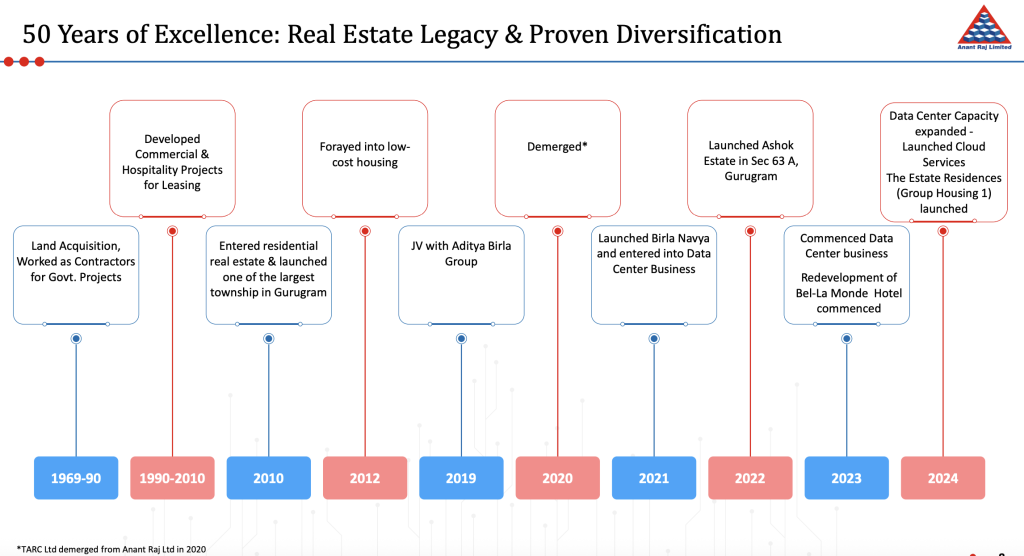
🔑 1. Real Estate Development (Core Business):
This is Anant Raj’s legacy and still its largest revenue contributor.
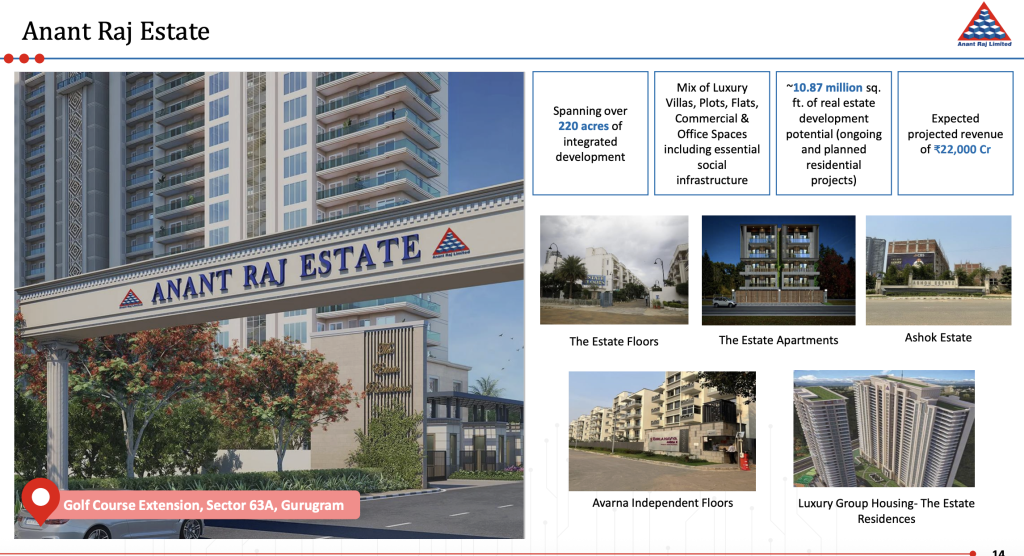
It develops residential, commercial, retail, and township projects across Delhi NCR, Gurugram, and Haryana.
💰 How it makes money:
- Sale of residential apartments, villas, and plotted developments
- Sale of commercial office and retail space
- Development charges, parking fees, and facility services
✅ Key Points:
- Owns massive land bank (~1000+ acres) acquired decades ago at very low cost.
- This gives huge profit margins when land is monetised now.
- Revenue is lumpy but large when projects complete.
How IRCTC Makes Money – Business Model Explained
🏢 2. Commercial Leasing (Recurring Income Engine):
Unlike typical real estate developers, Anant Raj also leases office buildings, retail complexes, and IT parks to corporate tenants.
💰 Revenue Streams:
- Monthly rentals & lease income
- Maintenance and facility charges
- Escalation clauses in long-term contracts
✅ Why it’s important:
- Provides steady cash flow even when property sales slow down.
- Helps reduce cyclicality of real estate revenue.
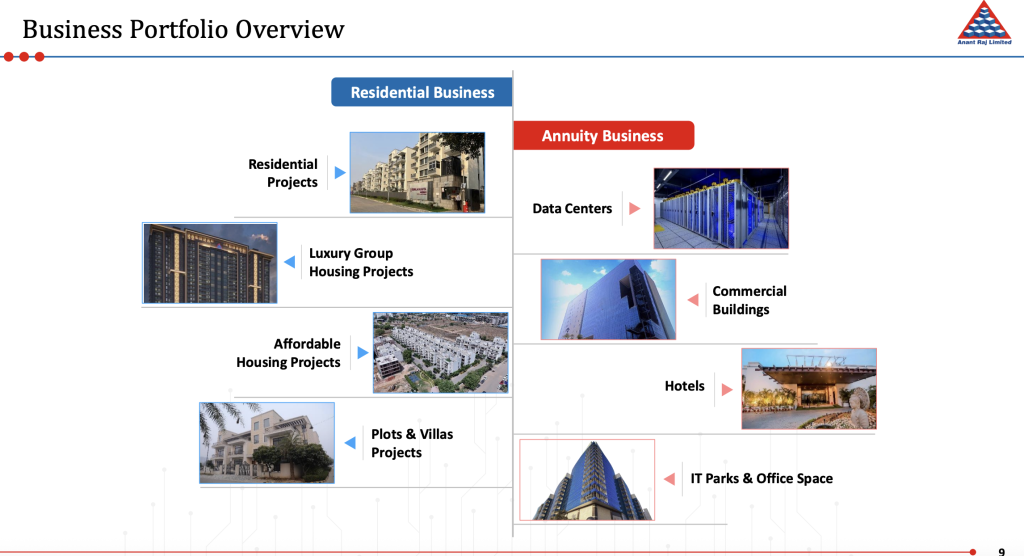
🏭 3. Industrial & IT Parks:
The company builds industrial parks, warehousing, and IT special economic zones (SEZs). These cater to logistics, manufacturing, and tech companies.
💰 Revenue Sources:
- Sale or lease of industrial plots and sheds
- Annual maintenance charges
- Ancillary services (power, utilities, etc.)
✅ Industrial parks are in demand due to “Make in India” and supply-chain localisation — a strong growth driver.
🖥️ 4. Data Centres – The Future Growth Engine: 🚀
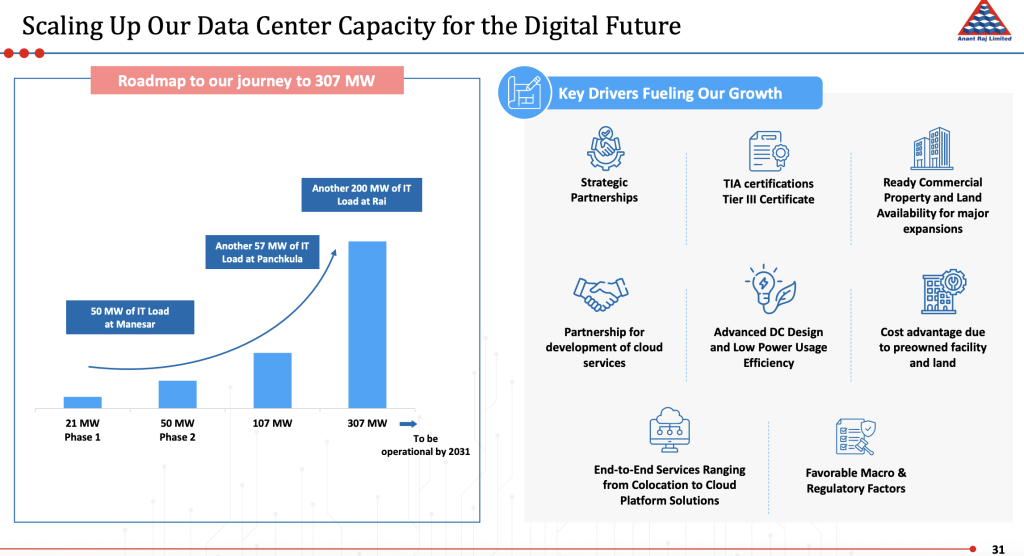
The most exciting part of Anant Raj’s future is its data centre business — run by its subsidiary Anant Raj Cloud Ltd.
📡 Business Model:
- Builds Tier-III & Tier-IV data centre facilities.
- Leases space (“colocation”) to cloud companies, telecom firms, fintech, and enterprises.
- Charges clients for power, cooling, connectivity, and managed services.
✅ Why This Matters:
- Data centres are high-margin, long-term contracts (5–10 years).
- India’s digitalisation + AI boom = huge demand for such capacity.
- Company targets 300+ MW capacity over the next few years.
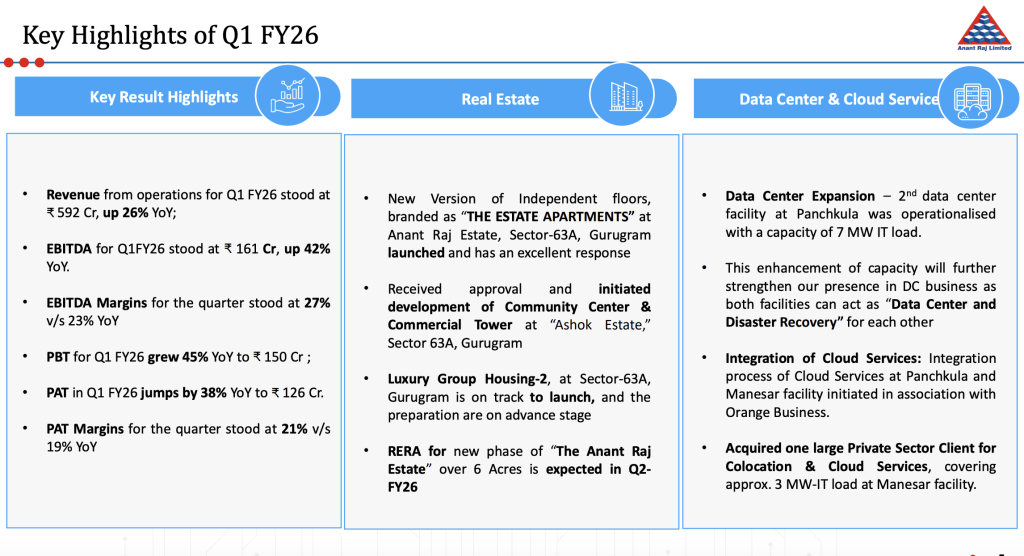
📊 Revenue Mix (Approx.):
| Segment | Contribution |
|---|---|
| Real Estate Sales | ~50–55% |
| Leasing & Rentals | ~15–20% |
| Industrial Parks | ~10% |
| Data Centres & Others | ~15–20% (and rising fast) |
(Varies year to year)
🧠 Moats & Competitive Advantages:
| Advantage | Why It Matters |
|---|---|
| 🏞️ Large Land Bank | Bought decades ago, gives high profit margin |
| 📍 Strategic Locations | NCR-centric land parcels near tech & logistics hubs |
| 🏗️ Integrated Model | Sales + Leasing + Industrial + Data Centre |
| 🔄 Recurring Income | Rental + data centre colocation = stable cash flow |
| 🚀 Future-Ready | Early mover in India’s data centre infrastructure market |
⚠️ Key Risks:
- Real estate remains cyclical — project delays or demand slowdowns can hurt revenue.
- Regulatory approvals and land litigation risks.
- Data centre business requires heavy upfront capex.
- Rising interest rates could impact margins on new projects.
📈 Future Growth Drivers:
- Monetisation of large land bank into new residential & commercial projects.
- Rapid expansion of data centre capacity — one of the most scalable verticals.
- Growth in leasing income as IT/office demand rises.
- Government push for industrial corridors & Make in India.
📊 Investor Takeaway:
Anant Raj is no longer just a typical builder — it’s evolving into a real estate + digital infrastructure hybrid. The company enjoys:
- Deep land reserves
- Recurring cash flows from leasing
- Explosive optionality in the data centre space
While cyclical risks remain, its strong asset base and forward-looking expansion make it a compelling long-term story in India’s infrastructure and digital growth themes.
✅ Verdict:
For investors with a 3–5+ year horizon, Anant Raj is a business worth tracking — especially as data centres start contributing a bigger chunk of profits.
How IRCTC Makes Money – Business Model Explained