
Estimated reading time: 3 minutes
Thank you for reading this post, Please bookmark onetrader.in website for regular updates!
To conduct a comprehensive analysis of price action within a 30-minute timeframe, follow these steps:
1. Set Up Your Chart
- Use a reliable trading platform that allows for 30-minute candlestick charts. Ensure that you can view historical price movements for context.
2. Identify the Market Structure
- Trends: Determine if the market is in an uptrend, downtrend, or ranging. Look for higher highs and higher lows for uptrends and lower highs and lower lows for downtrends.
- Swing Highs and Lows: Mark significant swing points to identify potential support and resistance levels.
3. Analyze Support and Resistance Levels
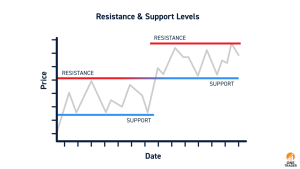
- Identify key support and resistance levels based on previous price movements. These can be horizontal lines or zones where the price has reacted in the past.
4. Look for Candlestick Patterns
- Analyze candlestick formations for signals. Important patterns include:
- Engulfing Patterns: Bullish or bearish engulfing candles can indicate reversals.
- Doji Candles: Show indecision in the market.
- Hammer or Shooting Star: Can signal potential reversals at support or resistance levels.
5. Observe Price Action Signals
- Breakouts: Look for breakout scenarios when the price breaks above resistance or below support, indicating a potential continuation or reversal.
- Pullbacks: Identify retracements in a trend that may offer entry points after a brief reversal.
6. Consider Volume Analysis
- Analyze volume during price moves. A breakout accompanied by high volume can confirm the strength of the move, while low volume may indicate weakness.
7. Apply Risk Management
- Set stop-loss orders to protect against adverse movements. Calculate the position size based on your risk tolerance and the distance of your stop-loss from the entry point.
8. Monitor Time of Day and News Events
- Be aware of the time of day (e.g., opening or closing hours of the market) and any scheduled news events that might affect price action, such as economic reports or earnings releases.
9. Stay Flexible and Adapt
- Price action can be unpredictable. Be ready to adapt your strategy based on changing market conditions. If the price is not behaving as expected, consider reevaluating your approach.
10. Review and Reflect
- After the 30-minute period, take time to review your trades and analyze the outcomes. Reflect on what worked well and what didn’t, and adjust your strategy accordingly for future trades.
Conclusion
Conducting a price action analysis within a 30-minute timeframe requires keen observation and an understanding of market dynamics. By focusing on candlestick patterns, support and resistance levels, and overall market structure, traders can make informed decisions based on real-time price movements.
Also Read: Support & Resistance Trading Strategy – Complete Beginner Guide | Onetrader




Looks impressive even though it is first post. Scrolling also smooth.
Thanks