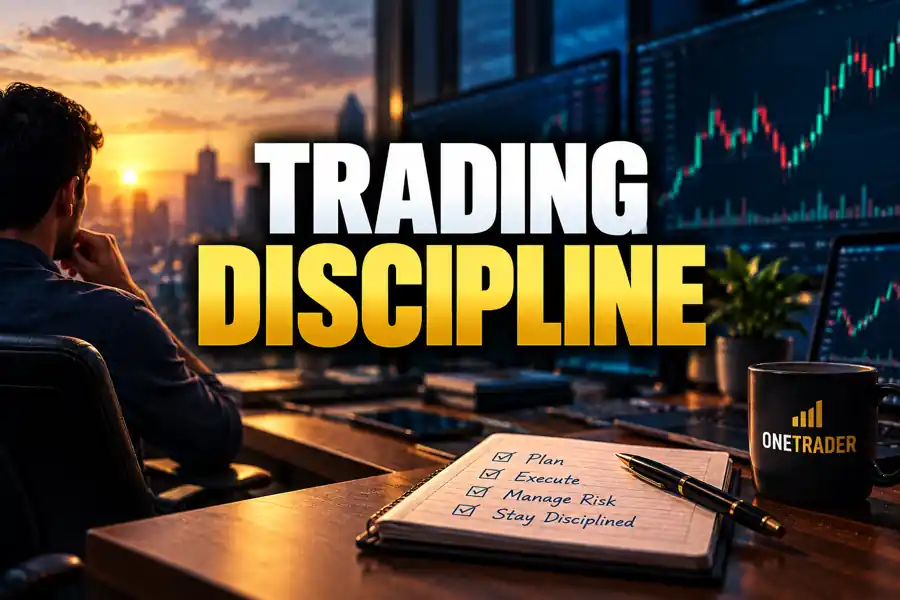
Trading discipline is one of the most important qualities a trader can develop, yet maintaining it consistently is difficult. Many traders spend considerable time learning technical indicators, chart patterns and trading strategies but struggle to follow their own rules when real money is involved. The difference between understanding a strategy and executing it under pressure is where trading discipline becomes essential.
Trading discipline is not about winning every trade. It is about following a structured decision-making process, managing risk and avoiding impulsive actions, regardless of whether the market moves in your favour.
What Is Trading Discipline?
Trading discipline means following predetermined rules for identifying opportunities, entering positions, managing risk and exiting trades. These rules provide a framework for making decisions without allowing temporary emotions to dominate.
For example, a trader may plan to buy a stock only after a confirmed breakout. However, when the price rises rapidly, fear of missing out may encourage an early entry. Even if the trade becomes profitable, the decision violates the original strategy. Repeatedly rewarding such behaviour can gradually weaken discipline and encourage unnecessary risk-taking.
Also Read: Why Traders Keep Making the Same Mistakes
Why Traders Struggle With Discipline
Financial markets create situations where emotions can change quickly. Profitable trades may encourage overconfidence, while losses can trigger frustration, anxiety and the desire to recover money immediately.
Consider an intraday trader dealing in Nifty options. After two consecutive losses, the trader may feel pressured to recover the day’s losses before the market closes. Instead of waiting for another valid setup, a larger position is entered without sufficient analysis. The decision is now driven by emotional urgency rather than the trading plan.
Recognising these emotional triggers is important because knowing the rules does not automatically mean following them during stressful market conditions.
The Importance of a Trading Plan
A trading plan provides structure when market conditions become uncertain. It defines the circumstances under which a position should be considered, the amount of risk permitted and the conditions that would invalidate the original trading idea.
Also Read: How to Eliminate Emotional Decisions in the Stock Market
Without a clear plan, traders may repeatedly change decisions as prices fluctuate. A temporary decline can create panic, while a sudden rally can encourage aggressive buying. Predetermined rules reduce the need to make every decision under pressure.
However, discipline does not mean blindly following an ineffective strategy. Trading rules should be reviewed periodically using sufficient evidence. The objective is to avoid impulsive changes while remaining open to improvements supported by reliable analysis.
Risk Management Supports Trading Discipline
A trader can identify reasonable opportunities and still experience substantial losses through excessive position sizing or poor risk management. Discipline therefore begins with determining how much capital can reasonably be exposed to a particular trade.
For example, a trader with ₹1 lakh in capital who takes an oversized leveraged position may experience significant anxiety from relatively small price movements. This pressure can encourage premature exits, unplanned averaging or removal of stop-losses.
Also Read: How to Develop a Winning Trading Mindset
Appropriate position sizing and predefined risk limits can help reduce these behavioural problems. Stop-loss orders can support risk management, although execution at the intended price is not guaranteed during sharp market movements or periods of limited liquidity.
Why Patience Matters in Trading
Many traders associate frequent activity with productivity. They believe placing more trades creates more opportunities to earn money. However, unnecessary trading can increase transaction costs and exposure to poorly evaluated positions.
Patience allows traders to distinguish between genuine setups and ordinary price fluctuations. A disciplined trader understands that missing an opportunity is not necessarily a failure. Entering without sufficient justification may create greater risk than remaining inactive.
This becomes particularly important during volatile trading sessions, when rapid price movements can encourage decisions based on excitement rather than analysis.
Also Read: How to Control Emotions While Trading
How to Develop Better Trading Discipline
Building discipline requires consistent habits rather than occasional motivation. A practical starting point is creating a written trading plan that defines acceptable setups, position sizes, risk limits and conditions for stopping trading.
As discussed in our Trading Psychology subject, maintaining a trading journal may also help identify recurring behavioural patterns. Recording the reasoning behind each position, the emotions experienced and whether the rules were followed provides useful material for later review.
For instance, a trader may notice that unnecessary trades frequently occur after a profitable morning session. Recognising this pattern can encourage a specific adjustment, such as taking a break before considering another position.
Journaling cannot guarantee better results, but it can support more objective evaluation of decisions and help traders identify habits worth changing.
Also Read: Why Most Traders Lose Money in the Stock Market
Conclusion
Trading discipline does not guarantee profitable or consistent returns. However, it can provide a useful foundation for reducing avoidable mistakes, managing uncertainty and following a structured approach.
A reasonable trading strategy must be supported by appropriate risk management, patience and regular evaluation. Even experienced traders encounter losses, unexpected volatility and changing market conditions. Discipline helps traders respond through established rules rather than immediate emotional reactions.
The purpose of trading discipline is not to control the market. It is to develop greater control over the decisions you make while participating in it.
Disclaimer: This article is for educational and informational purposes only. It is not investment advice or a recommendation to buy or sell securities. Trading involves financial risk, including possible loss of capital. Onetrader is not SEBI registered. Readers should conduct independent research and consider professional advice where appropriate.
Also Read: Gambler’s Fallacy in Trading – Why Traders Think Markets Must Reverse

Also on OurPaisa
Buy, sell and find jobs and services in OurPaisa Market.