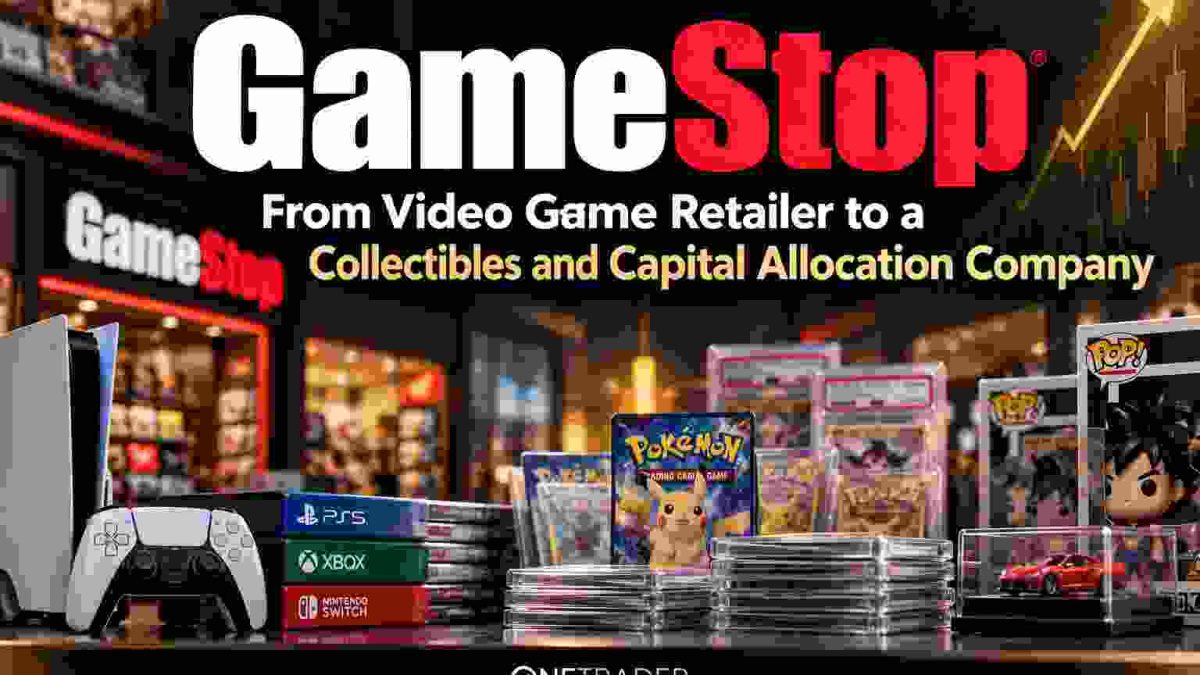
GameStop was once almost synonymous with physical video games, console launches and trade-ins. But that traditional retail model has been under pressure for years as gaming shifted toward digital downloads, online marketplaces and direct-to-consumer platforms. Today, however, GameStop is becoming a very different company. Its transformation is being driven by collectibles, a leaner retail footprint and an increasingly important capital-allocation strategy that could determine what the company ultimately becomes.
The interesting part of the GameStop story is that management is no longer treating the company simply as a video-game retailer. Its latest filings describe two complementary priorities: operating the retail business more efficiently while using its significant capital resources to evaluate investments, acquisitions and control transactions.
The Business GameStop Still Operates
GameStop continues to sell video games, gaming hardware, accessories, collectibles and entertainment products through physical stores and ecommerce channels. Its stores also provide trade-in and pre-owned products, giving the company a business model that is different from pure online retailers.
The physical footprint is increasingly being viewed as more than a network of stores. GameStop describes its locations as potential fulfillment and service anchors, meaning the retail network can support logistics, customer interaction and product distribution rather than simply serving as traditional retail space.
Also Read: How to Read an Option Chain: A Simple Guide for Beginners
That distinction matters because GameStop has been aggressively optimizing its store base. The company closed 727 U.S. stores during fiscal 2025, while management has indicated that it does not currently expect significant additional closures in fiscal 2026. The objective is to make the remaining footprint more productive and strategically useful.
Collectibles Are Changing the Business
The biggest transformation inside GameStop is happening in collectibles.
Trading cards, Pokémon products, graded cards and other collectible merchandise are becoming much more important to the company’s identity. GameStop has expanded dedicated collectibles space inside stores and has introduced services around trading-card submissions and grading, while also developing its own repack offerings.
The scale of the change is significant. In the second quarter of fiscal 2026, collectibles generated $356.3 million of sales, representing 45.1% of GameStop’s total quarterly sales. Collectibles sales increased 57% year over year, compared with 23.4% of sales in the same quarter a year earlier.
Also Read: How Much Does Life Insurance Cost? Factors That Affect Your Premium
This is more than simply adding another product category. Collectibles can potentially create a different retail ecosystem around GameStop because customers can purchase cards, trade them, submit them for grading and return to stores for additional products. That creates more opportunities for engagement than a one-time sale of a new video game.
Why Trading Cards Matter
The collectibles market also fits GameStop’s existing strengths.
Gaming communities overlap with collectors, and physical stores can provide something that purely digital gaming businesses cannot: a place where customers can discover products, exchange items and interact with a physical retail community.
Trading cards also have a different economic dynamic from traditional new-game retail. A new game can quickly move from launch excitement to discounting. Collectibles can have continuing demand based on rarity, franchises, player popularity and community interest.
Also Read: Thinking, Fast and Slow by Daniel Kahneman: Complete Book Summary and Key Lessons
GameStop is therefore attempting to move toward categories where physical retail and community engagement remain valuable.
The Company Is Becoming a Capital Allocation Story
Perhaps the most unusual part of the GameStop transformation is its balance sheet.
Management has increasingly described cash and liquidity as strategic assets that can be deployed into investments, acquisitions and control transactions. This changes the way investors need to think about the company. GameStop is no longer simply trying to fix its retail operations; it is also attempting to become an owner of assets that management believes could create long-term value.
The most visible example is eBay.
Also Read: Credit Cards: The Smartest Financial Tool or the Fastest Way Into Debt?
GameStop converted its previously disclosed derivative position into a direct investment in eBay, and by August 1, 2026, it held approximately 43.4 million eBay shares valued at about $4.9 billion. GameStop had also publicly pursued a much larger acquisition of eBay, although eBay rejected the proposal.
Whether such a transaction ever happens is uncertain. But the strategy reveals the direction Ryan Cohen is pursuing: GameStop’s future may increasingly depend on how effectively it allocates capital rather than simply how many video games it sells.
Ryan Cohen’s Role
Ryan Cohen is central to this transformation. His background in ecommerce and his previous involvement with Chewy have shaped expectations that GameStop could eventually evolve into something broader than a traditional specialty retailer.
His strategy has involved cutting costs, reducing the physical footprint, building the collectibles business and maintaining substantial financial flexibility. Recent purchases of GameStop shares by Cohen have also reinforced his financial alignment with shareholders.
Also Read: Demat Account AMC Charges Explained: What Investors Need to Know
The challenge is that a capital-allocation strategy is only as good as the investments eventually made. Holding large amounts of capital provides flexibility, but shareholders ultimately need to see that capital converted into productive long-term assets.
The Bigger Opportunity
GameStop’s opportunity is not necessarily to defeat Amazon or become another conventional ecommerce company. Its more interesting opportunity could be building a specialized consumer ecosystem around gaming, collectibles and entertainment while using its financial resources to acquire complementary businesses.
The company already has a recognized brand, a large customer community, physical locations and an established presence in gaming culture. If collectibles continue expanding and the retail network becomes more efficient, GameStop could create a business that is less dependent on the declining economics of physical video-game sales.
The company’s latest results provide some evidence that the operational transformation is progressing. Second-quarter operating income reached $160.2 million, the highest second-quarter operating income in GameStop’s history, while management raised its fiscal 2026 adjusted EBITDA outlook to more than $650 million.
Also Read: Biggest Stock Market Crashes in History and Lessons for Investors
The Biggest Risk
The biggest question is whether GameStop can build a durable business beyond its legacy video-game retail model.
Collectibles are growing rapidly, but competition is intense. Online marketplaces already dominate many areas of collectibles trading, while gaming itself continues moving toward digital distribution. Capital allocation also introduces another layer of risk because acquisitions or investments can destroy value if management pays too much or enters businesses it does not understand.
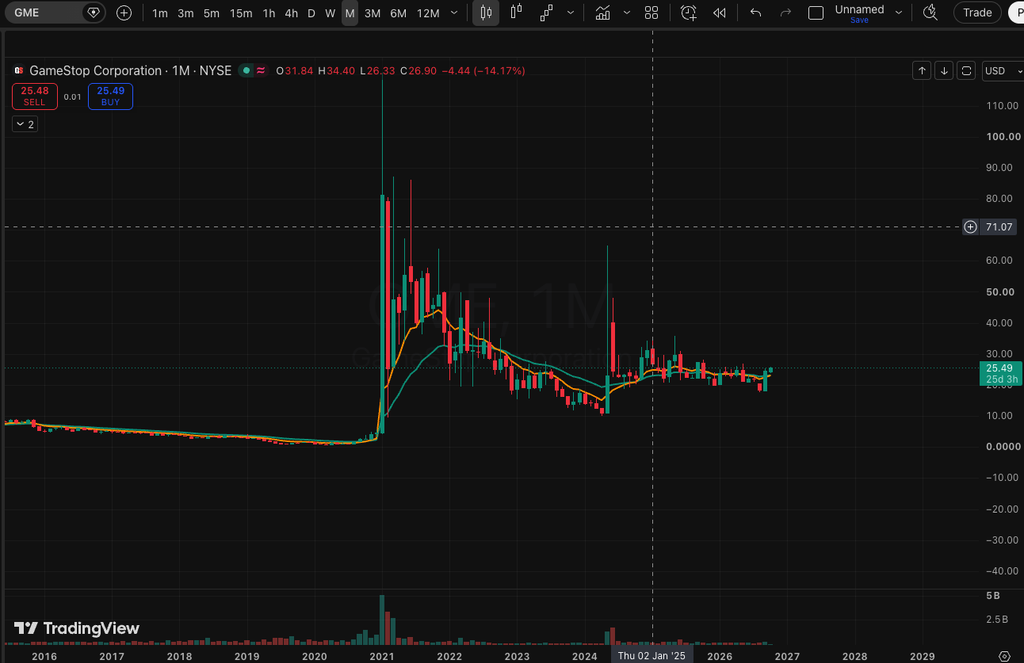
There is also the unique volatility surrounding GME itself. GameStop remains one of the world’s most closely followed retail-investor stocks, meaning its share price can sometimes move far beyond what traditional business fundamentals would suggest.
GameStop’s New Identity
GameStop is no longer simply a story about whether physical video-game retail can survive.
Also Read: Recency Bias in Trading – Why Recent Trends Fool Traders
The more interesting question is what the company can become after shrinking the legacy business.
Collectibles are emerging as a major operating engine. The remaining stores are being repositioned as strategic retail and fulfillment assets. And the company’s large financial resources give management the ability to pursue investments and acquisitions that could reshape the business.
That makes GameStop an unusual transformation story: a legacy gaming retailer attempting to become a collectibles company and, potentially, a capital-allocation platform.
Whether Ryan Cohen can turn that flexibility into a durable consumer business remains the central question. But the GameStop of today is already becoming very different from the GameStop that investors knew a decade ago.
Also Read: SBI AMC IPO 2026 – Draft Analysis, Expected Valuation, Business Model & Investment View | Onetrader
Financial Disclaimer: This article is for educational and informational purposes only and should not be considered investment advice, a recommendation to buy or sell any security, or a guarantee of future returns. Investors should conduct their own research and consider their financial objectives and risk tolerance before making investment decisions.