
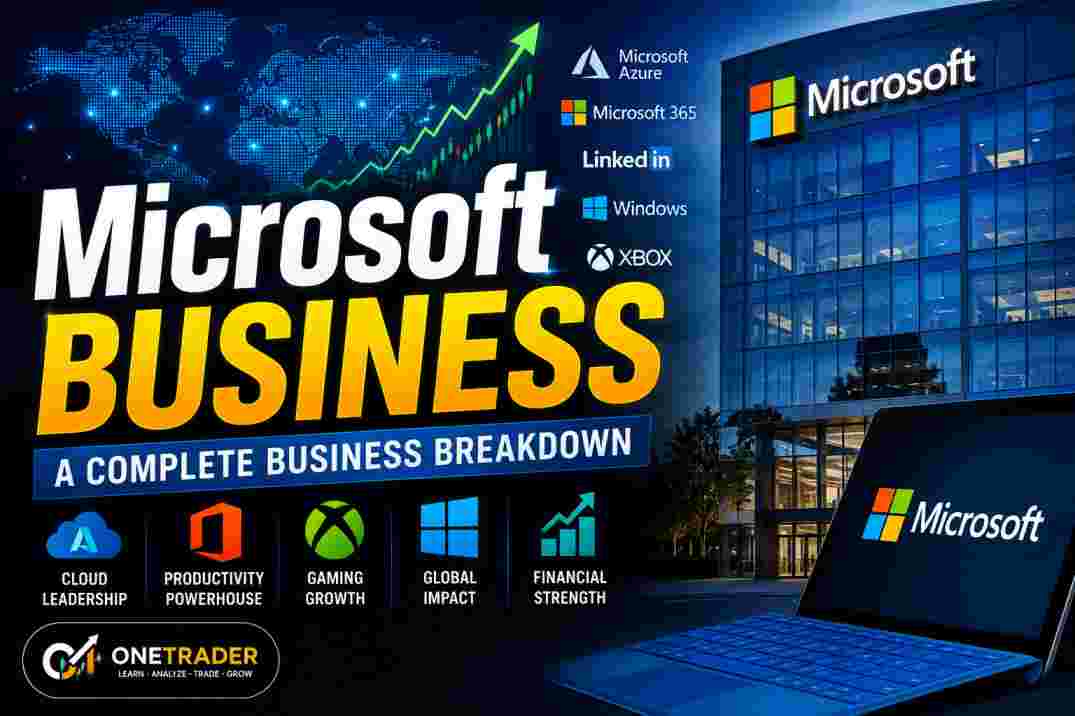
Microsoft: The Indispensable Platform Monopoly of the AI Era
For over four decades, Microsoft Corporation has served as the foundational technology architecture of the global economy. What began as a personal computer operating system monopoly has evolved through strategic platform shifts into the world’s most versatile enterprise software powerhouse. Today, Microsoft is orchestrating its largest structural transformation to date: transitioning from a traditional cloud provider and office software vendor into the central orchestration engine for enterprise artificial intelligence. By leveraging its unparalleled distribution channels, deep corporate integration, and aggressive capital expenditure strategy, Microsoft is converting its established SaaS dominance into an unshakeable ecosystem moat for the next era of computing.
Also Read: The Little Book of Common Sense Investing – Why Index Funds Win
The core engine of Microsoft’s economic resilience lies in its dynamic pricing power and structural switching costs across the global business landscape. Through the Microsoft 365 ecosystem, the company controls the daily workflow interface for over 450 million commercial seats worldwide. Rather than treating AI as a standalone product, Microsoft has systematically embedded its Copilot layer and autonomous agentic workflows directly into tools employees already use—including Office, Teams, Dynamics 365, and GitHub. This strategy allows Microsoft to monetize AI across multiple layers: extracting higher Average Revenue Per User (ARPU) through premium enterprise seat add-ons while locking corporate data securely within the Microsoft Graph. Once an organization’s operational data, internal communications, and security policies are linked to Microsoft’s cloud infrastructure, the friction and cost of migrating to a competitor become practically insurmountable.
Underpinning this software advantage is Intelligent Cloud, led by Azure, which continues to capture structural market share in high-performance cloud compute. With Azure revenue consistently scaling at double-digit rates, Microsoft has emerged as the primary compute platform for training and running complex AI workloads at global scale. Recognizing that compute capacity is the primary bottleneck of the decade, Microsoft has executed an unprecedented infrastructure buildout. By committing over $100 billion in annual capital expenditures toward custom data centers, high-performance silicon, and specialized cooling systems, Microsoft is erecting massive capital barriers to entry. This infrastructure scaling ensures that whether an enterprise builds proprietary AI agents or deploys third-party models, the underlying compute runs on Azure.
Also Read: Why Do Stock Markets Crash? The Real Reasons Behind Market Crashes
Also Read: What Is a Large-Cap Fund and Why Is It Preferable?
However, maintaining an enterprise monopoly at this scale comes with clear market risks and financial trade-offs. The sheer magnitude of Microsoft’s infrastructure capex has led to near-term margin consolidation, as heavy data center investments naturally compress short-term free cash flow margins before full capacity utilization is realized. Additionally, the company faces ongoing scrutiny regarding its high-stakes strategic partnerships and regulatory oversight surrounding cloud competition and platform bundling. Yet, unlike speculative growth companies, Microsoft finances its historic infrastructure investments entirely through organic operational cash flows generated by its legacy software monopolies.
As global enterprises transition from simple generative text experiments into fully integrated, autonomous business processes, Microsoft sits uniquely at the center of the value chain. It controls the user interface, the enterprise data layer, and the underlying cloud infrastructure. For patient, long-term investors, Microsoft does not simply represent a mega-cap tech holding; it functions as a core structural tollbooth on the productivity and data movement of the global economy.
Also Read: Mortgage rates 2026 guide for US homebuyers